Best Cooperative Board Games for Kids

There are a lot of great games for children out there, but what’s great about cooperative board games for kids is that they allow everyone to play on the same team. That means kids can learn how to work together and have fun playing a game at the same time!
Finding the perfect co-op board games for kids can be a challenge. You want games that are light enough for young players to grasp but engaging enough to keep them entertained for more than just a few minutes. That’s where this page comes in!
While I typically create a top 50 list for my board game rankings, this time I’ve decided to break things down by age group. This way, parents can quickly find games that are known to work well for specific age ranges.
So, let’s dive in! Below are some of the best cooperative board games for kids, broken down by age group.
50 Best Cooperative Board Games for Kids In 2026
50. Little Cooperation
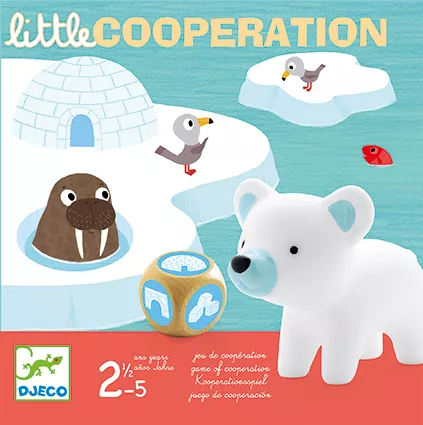
Players: 2-4 | Ages: 2.5+
Little Cooperation has the team moving four animal figures from a fishing hole back to an igloo before the rickety bridge collapses. Players roll the chunky die and decide together which animal moves where.
The teaching value carries this one. My niece picked up turn-taking inside two rounds and started cheering for whoever rolled, which is exactly what a first co-op should do.
A reliable on-ramp for toddlers ready to move past purely silly play, and a sturdy gateway to the cooperative games for kids category.
49. Flashback: Lucy

Players: 1-4 | Ages: 7+
Flashback: Lucy is a storytelling card game where the team pieces together memories of a girl with strange powers inside a creepy old mansion. Cards reveal scenes and the group works backward through her story.
It plays like a Saturday morning mystery cartoon. The puzzles are short, the mood is just spooky enough to feel cinematic, and kids who like talking things out get the most from it.
Good fit for older kids who enjoyed escape room style games but want lighter puzzle pressure and more atmosphere.
48. Lost Puppies
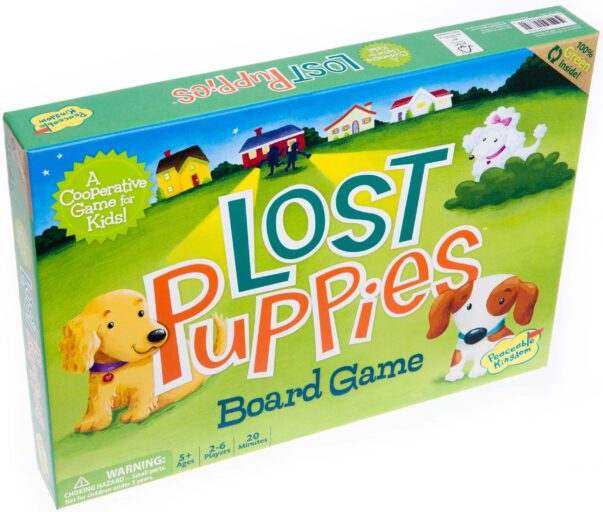
Players: 2-4 | Ages: 4+
Lost Puppies has kids matching color and pattern clues to round up six puppies before nightfall. Cards rotate around the team, and every puppy needs the right collar match before going home.
My group used this as a calm bedtime co-op and it worked. It is short, low-stress, and the win condition feels meaningful even to a four-year-old who is barely awake.
Best for the younger end of the age range. Older siblings will treat it as a warm-up before the main event.
47. Spotlight
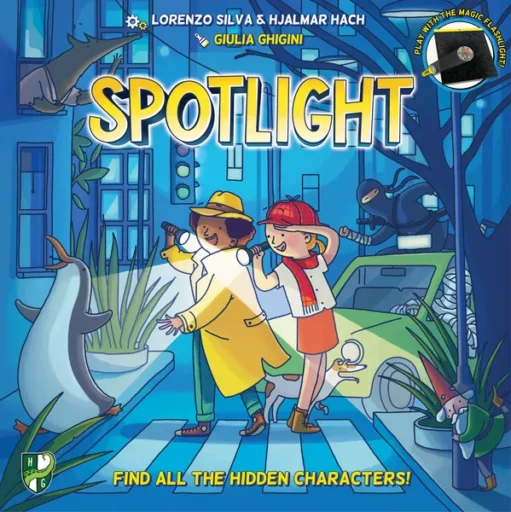
Players: 1-5 | Ages: 6+
Spotlight is a real-time hidden picture hunt with a battery-powered flashlight. You hover the light over an illustrated scene and find specific objects before the timer runs out.
The gimmick lands. Kids who skim past quiet card games will fight over who gets to hold the flashlight, and the search itself feels genuinely satisfying when you spot something first.
A strong pick for kids who loved Where’s Waldo books but want something that actually plays like a game.
46. Raindrop Forest
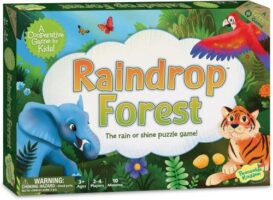
Players: 2-5 | Ages: 3+
Raindrop Forest has the team spinning a wheel and assembling animal puzzles before the rain arrives. Each spin pulls a piece toward the rain cloud or onto the table for the group to use.
The puzzle layer is what keeps this on shelves. Kids who like jigsaws but cannot sit still long enough for one finally have a co-op that channels the same impulse.
Pairs nicely with longer puzzle board games for slightly older siblings, and works well as a first cooperative board game for three-year-olds.
45. Beasts of Balance
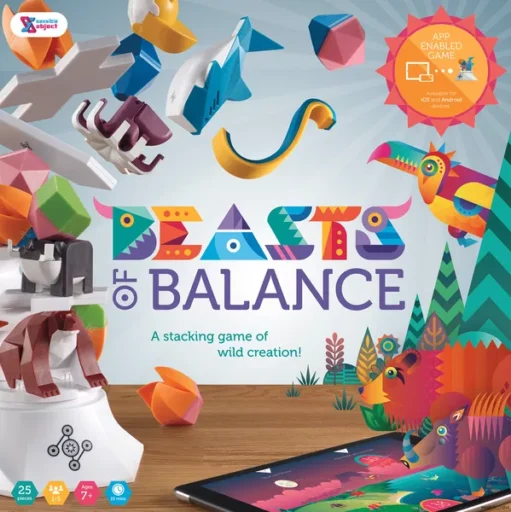
Players: 1-5 | Ages: 7+
Beasts of Balance is a stacking game tied to a companion app. You balance animal pieces on a base and the app reacts by building a world based on what you stack.
The physical and digital layers feed each other well. Kids stack carefully because they care about the world growing on screen, not just the tower of figures in front of them.
Needs a tablet or phone, which is a real cost of entry. Worth it for households already comfortable mixing screens with table time.
44. Capt’n Pepe: Treasure Ahoy!
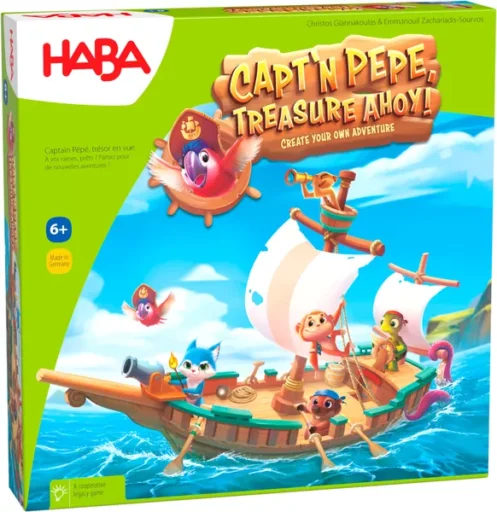
Players: 1-4 | Ages: 6+
Capt’n Pepe: Treasure Ahoy! is a 25-chapter legacy adventure where the team hunts treasure across an unfolding pirate story. Rules and components change as chapters open.
The legacy hook works on kids the same way it works on adults. My nephew kept asking when the next session was, which is rare for a six-year-old with this attention span.
Great for families that liked the idea of a legacy game but found titles like Pandemic Legacy too heavy.
43. Mermaid Island
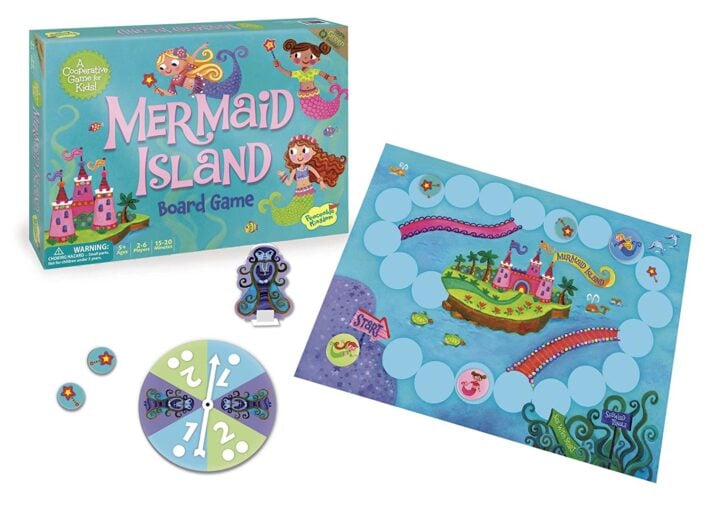
Players: 2-6 | Ages: 5+
Mermaid Island has players racing three mermaids back to the island before the sea witch gets there first. Special spell symbols on the die add a small dose of magic.
It is short, bright, and the witch racing toward you creates real urgency without being scary. Five-year-olds at my table treated every move like a tiny crisis.
A solid gift pick for kids who love the visuals more than the rules. Plays well at six players, rare for this age band.
42. Friends and Neighbors
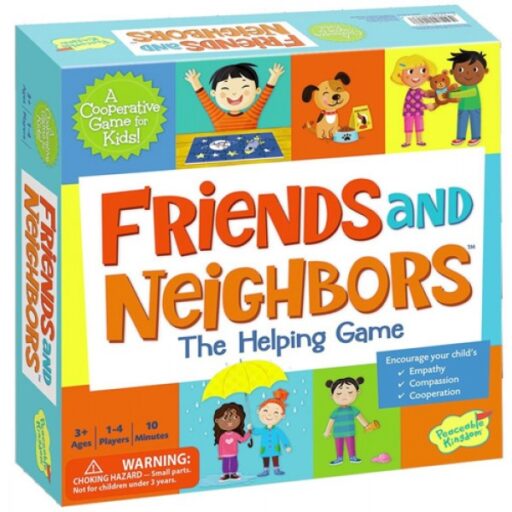
Players: 2-4 | Ages: 3+
Friends and Neighbors is a Peaceable Kingdom co-op about helping characters solve small problems by handing over the right items from a shared pile.
The emotional vocabulary is the real win. Kids pick up that asking for help is a normal request, and the game hands them simple language for offering it back.
A strong choice for preschool teachers and parents who want a game that doubles as a social-emotional learning prompt.
41. Cauldron Quest
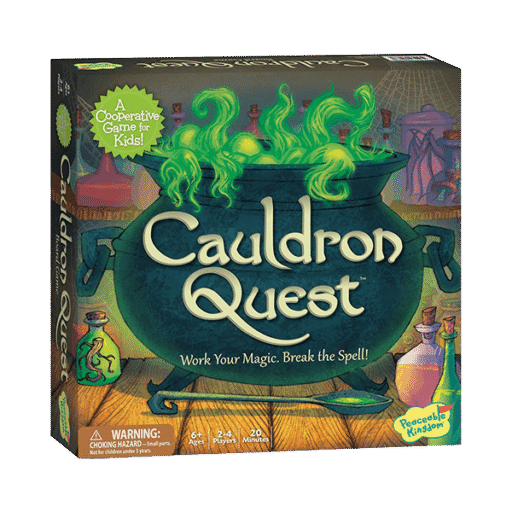
Players: 2-4 | Ages: 6+
Cauldron Quest has the team brewing a potion to break an evil wizard’s spell. Players gather six ingredients while blocking magic spells from reaching the cauldron.
It is more strategic than it looks. Kids figure out quickly that defending the cauldron matters more than chasing ingredients, which is a nice early lesson in priorities.
Plays in 20 minutes and forgives most mistakes. A reliable bridge between very simple kids titles and Outfoxed-tier puzzles.
40. Busytown, Eye Found It!
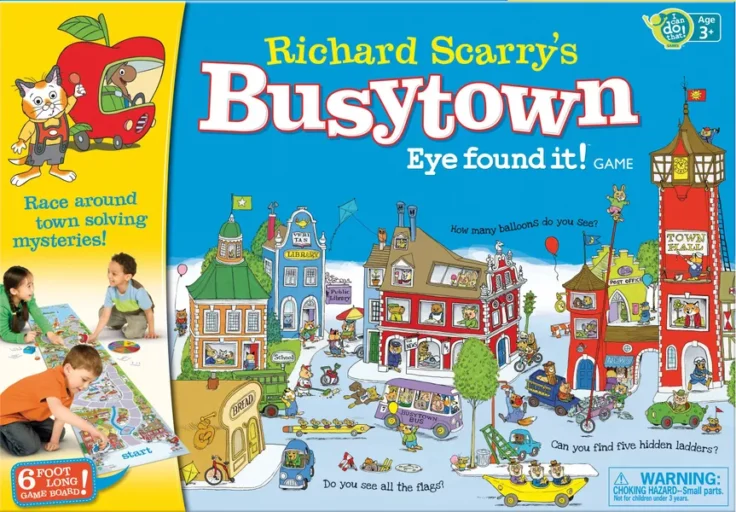
Players: 2-4 | Ages: 3+
Busytown, Eye Found It! has a six-foot-long board where players spin to move toward Picnic Island while hunting hidden objects on the way. Hungry pigs are racing you to the food.
The board is the star. Spreading it across the floor turns the whole experience into a treasure hunt, which is exactly what three-year-olds want from a kids board game.
Sort the storage out before you buy, because the board is huge. Worth the hassle for the visual payoff.
39. Hansel & Gretel
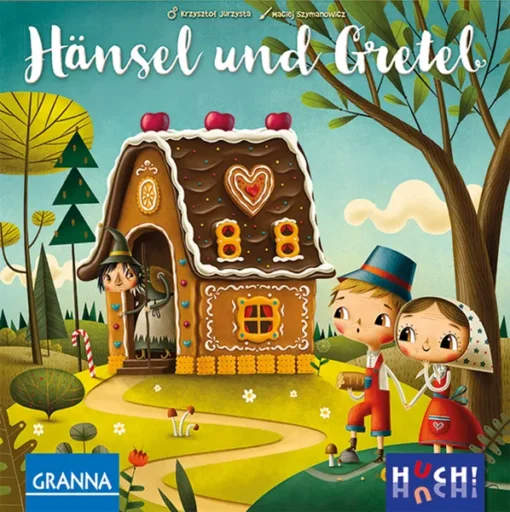
Players: 2-4 | Ages: 6+
Hansel & Gretel has the team escaping the witch by placing tiles to plot a safe route home. Pip counts on the tiles determine how far each character moves.
The math is gentle but real. Kids practice counting and spatial planning without realizing it, which is the best kind of educational design.
Best for kids who liked the fairy tale and want something more thoughtful than a roll-and-move.
38. The Color Monster
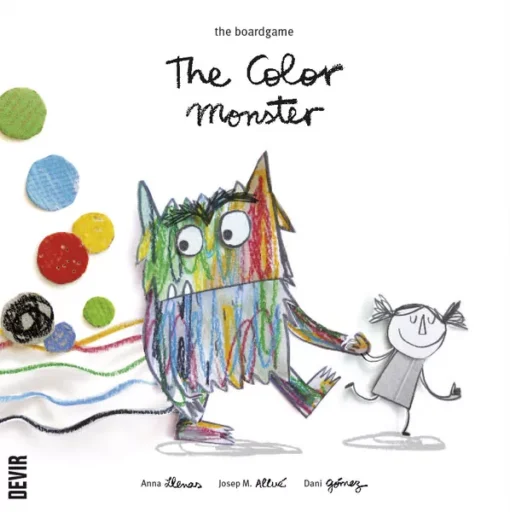
Players: 2-5 | Ages: 3+
The Color Monster is built around the picture book about a creature sorting his feelings into jars. Players move around the board, identify emotions, and place them in matching jars.
The conversation it starts is what sets it apart. Kids who freeze up when asked “how do you feel” point at colors instead, and that opens everything up.
A favorite among kindergarten teachers, and probably the most useful kids board game on the market for emotional literacy.
37. Stone Soup
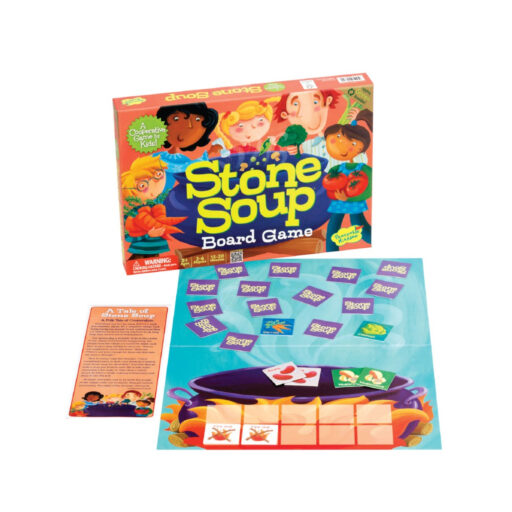
Players: 2-6 | Ages: 4+
Stone Soup is a memory game based on the folk tale where villagers each add an ingredient to a shared pot. Players flip cards two at a time looking for ingredient pairs.
The cooperative spin on memory is clever. Kids stop hoarding good cards and start calling out where matches are, which is the opposite of how competitive memory plays out.
Quick, cheap, and packs into a small box. Useful for road trips with a folding table.
36. Feed the Woozle
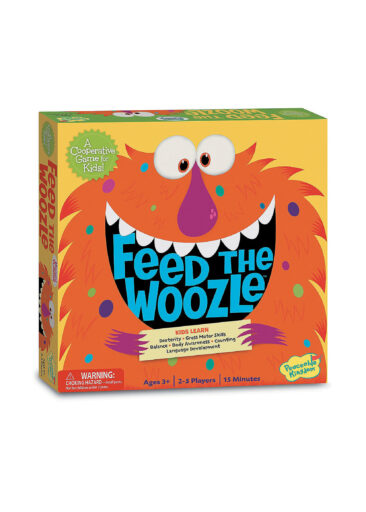
Players: 2-5 | Ages: 3+
Feed the Woozle has players spooning silly snacks into a hungry Woozle’s mouth. Cards dictate dares like spinning around or balancing on one foot while delivering food.
The dexterity element gets kids moving, which is rare for a board game. Three-year-olds laugh through the absurd food names and barely notice they are practicing balance.
Pick this when you want a co-op that doubles as an energy burner. Holds up well at preschool parties.
35. Rory’s Story Cubes
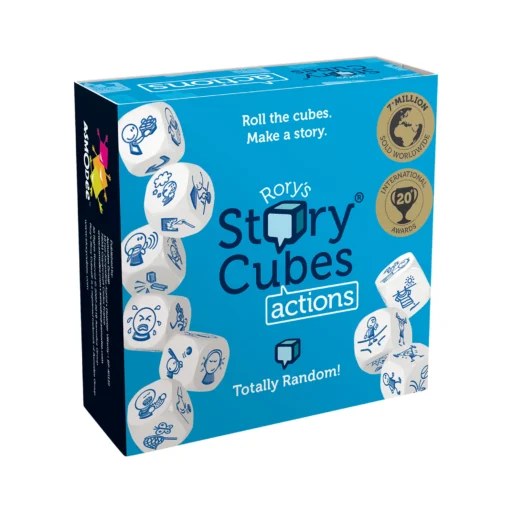
Players: 1-12 | Ages: 6+
Rory’s Story Cubes is a set of nine dice with images on every face. You roll them and weave the icons into a story, alone or as a group.
There is no winning condition, which is freeing. My niece used to dictate twenty-minute stories from a single roll, and the dice never produced the same setup twice.
Pairs well with longer storytelling board games for kids who love narrative play.
34. SOS Dino
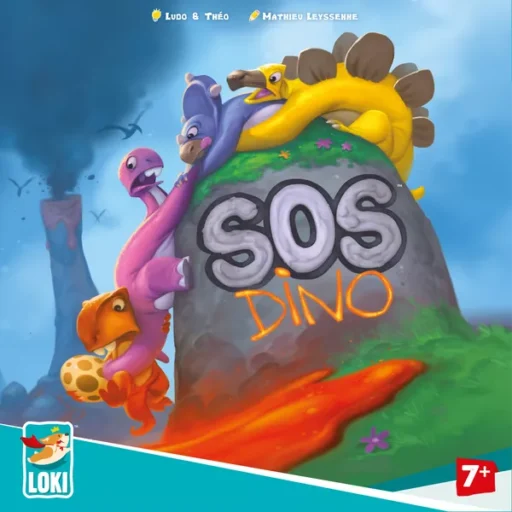
Players: 1-4 | Ages: 6+
SOS Dino is a tile placement game where the team guides four dinosaurs away from erupting volcanoes toward the safety of the mountains. Lava tiles spread each round.
The dinosaur figures look great on the table, and the volcanoes give a clear ticking-clock feel. Kids buy in immediately because the danger is visual rather than abstract.
A solid pick for kids who love prehistoric stuff but find most dinosaur games either too violent or too educational.
33. Count Your Chickens
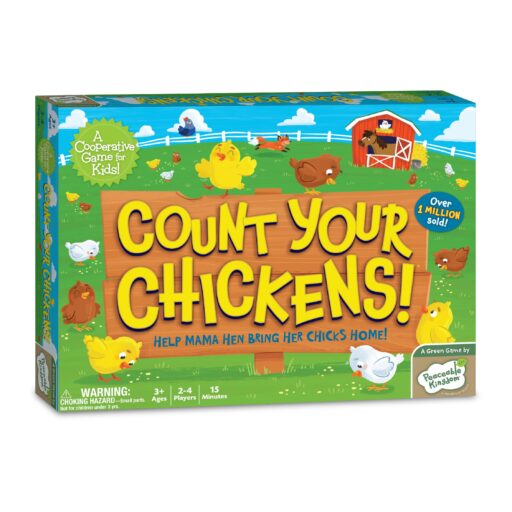
Players: 2-4 | Ages: 4+
Count Your Chickens has players spin a wheel and collect baby chicks back to the coop before the mother hen runs out of moves. Pure cooperative counting practice.
The math is sneaky and effective. My kid was adding “two plus three” out loud before I noticed he was doing arithmetic, which is the whole point.
A dependable first counting game for preschool, and cheap enough to keep a spare copy at grandparents’ houses.
32. Space Escape
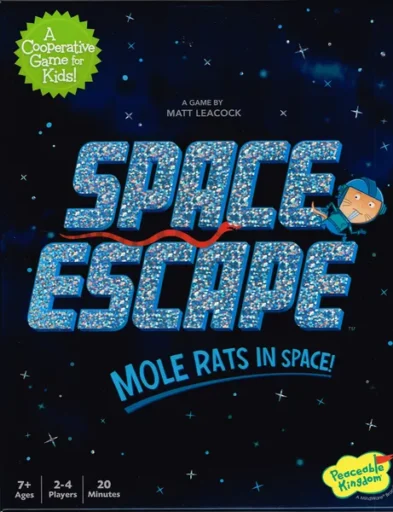
Players: 2-4 | Ages: 7+
Space Escape, formerly sold as Mole Rats in Space, has astronaut mice fleeing a damaged spaceship while collecting gear. Snakes block paths and bite if you land near them.
The character swap rule creates real teamwork. You move your own mouse and a teammate’s, so every turn becomes a quick negotiation. The tension scales with the player count.
Good follow-up for kids who liked Outfoxed and want something with a touch more chaos.
31. Cross Clues
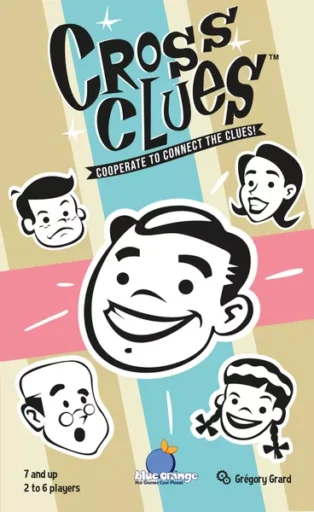
Players: 2-6 | Ages: 7+
Cross Clues is a word association game where you find links between words on a grid. You try to fill the grid before running out of cards, with one-word clues only.
The lack of turn order is what makes it click. Everyone thinks at once, which keeps quiet kids engaged and stops one bossy player from dominating the table.
A standout cooperative card game for travel. Tiny box, ten-minute setup, and the difficulty scales naturally with the group.
30. Race to the Treasure!
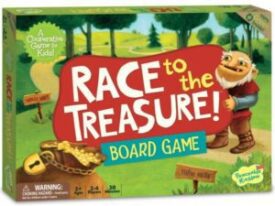
Players: 1-4 | Ages: 5+
Race to the Treasure! has the team placing path tiles to guide an ogre to a treasure chest. Three keys must be collected along the way before the chest opens.
The tile-laying is the strategy. Five-year-olds learn to plan two moves ahead because the ogre never stops advancing, which is a small but real planning win.
One of the better board games for 5 year olds because there is no reading required, just shape recognition and a bit of forethought.
29. Dinosaur Escape
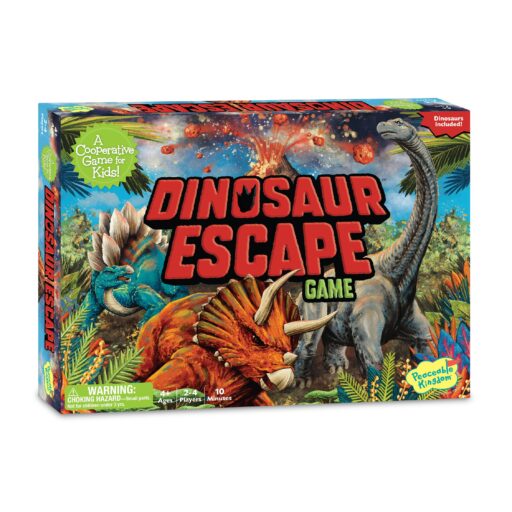
Players: 2-4 | Ages: 4+
Dinosaur Escape has the team helping three dinosaurs reach Dinosaur Island before the volcano erupts. Players roll the die, move dinos, and reveal terrain tiles that may hide the volcano itself.
The memory layer surprises kids. They learn to mentally track which tile probably hides which dinosaur, which is real working-memory practice dressed up as a chase.
A solid first deduction co-op for the four to six range.
28. Snug as a Bug in a Rug
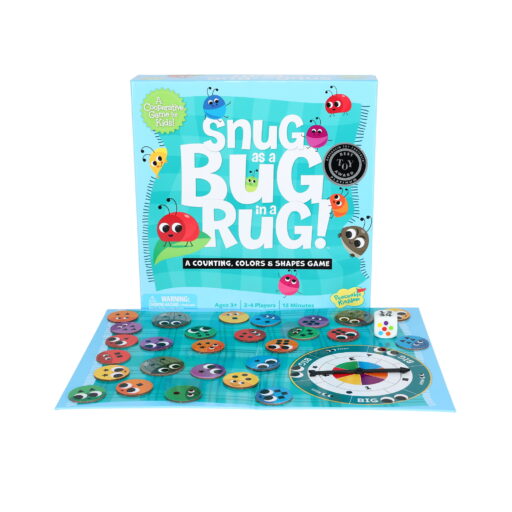
Players: 2-4 | Ages: 3+
Snug as a Bug in a Rug has players spinning to match bug tokens by color, shape, or number and hiding them under the rug before stink bugs end the game.
The three different ways to sort bugs keep the game from feeling stale. Kids get sorting practice from three angles in a single twenty-minute session.
A trusted preschool pick that has stayed on shelves for over a decade for good reason.
27. Pandemic: Hot Zone – North America

Players: 2-4 | Ages: 8+
Pandemic: Hot Zone – North America is a stripped-down version of the classic where the team contains three viruses spreading across North American cities in 30 minutes or less.
The cuts work. Younger players learn the action structure of Pandemic without drowning in the global map, and the shorter timer keeps the table from disengaging mid-game.
The right entry point for families curious about Pandemic but worried their eight-year-old will tap out.
26. Slide Quest
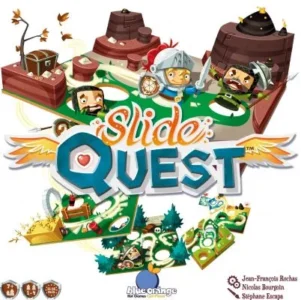
Players: 1-4 | Ages: 7+
Slide Quest is a dexterity co-op where the team moves a knight across a tilting board using four wooden levers attached to the box corners. One wrong tilt and the knight slides off.
The physical control creates real teamwork. You cannot win with one good player carrying the table, because each person owns one corner of the board.
A standout pick for kids who liked Catch the Moon or any game with a tactile, hands-on hook.
25. Unlock! Kids: Detective Stories

Players: 1-4 | Ages: 6+
Unlock! Kids: Detective Stories is a no-app escape room game with three short adventures per box. Card combinations unlock new clues and solutions through pure paper-and-pencil logic.
The app-free design is the right call for this age group. Parents who hated the timer pressure in adult Unlock games will appreciate the more relaxed pacing here.
A reliable bridge to bigger escape room style games once kids hit eight or nine.
24. Zombie Teenz Evolution
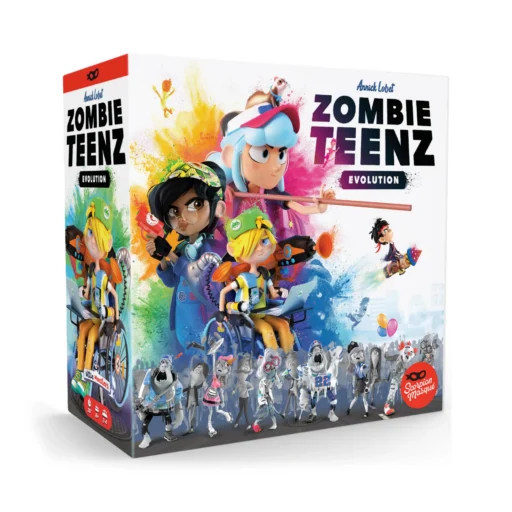
Players: 2-4 | Ages: 8+
Zombie Teenz Evolution is the heavier sibling to Zombie Kidz. The team holds back a zombie invasion across a school while opening sealed envelopes that unlock new rules between sessions.
The campaign hook is genuinely fun. Kids who finished Zombie Kidz Evolution and wanted “more” finally have a sequel that adds depth without losing the original’s tone.
The natural next step for groups that loved Zombie Kidz and are ready for slightly chunkier turns.
23. Concept Kids Animals
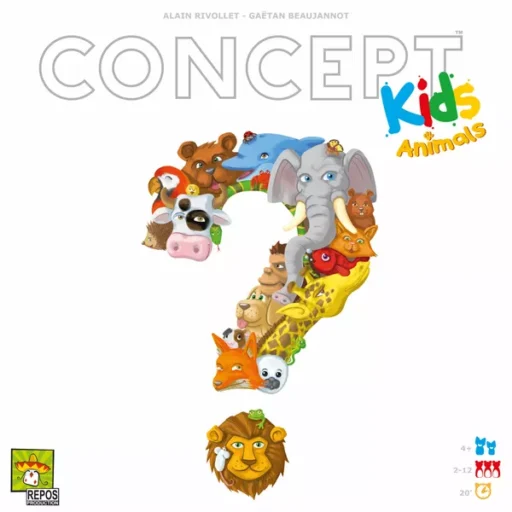
Players: 2-12 | Ages: 4+
Concept Kids Animals has one player using icons on a board to hint at an animal while everyone else guesses. The clue-giver cannot speak, only point.
The Kinderspiel des Jahres win in 2017 was deserved. Few games this simple generate this much problem-solving talk at the four-year-old level.
One of the better kids party games for big family gatherings, since it handles up to twelve players without slowing down.
22. Magic Maze Kids
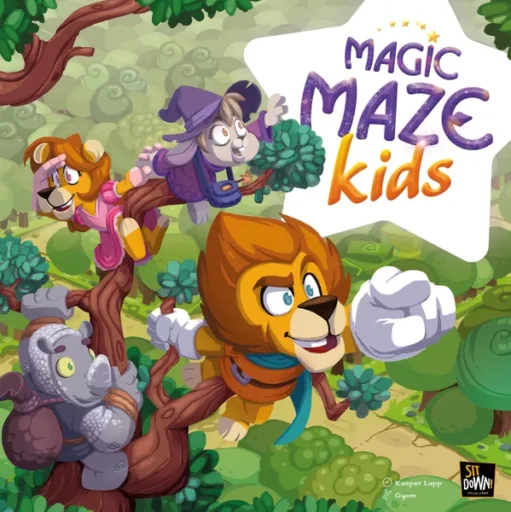
Players: 2-4 | Ages: 5+
Magic Maze Kids is a real-time co-op where everyone controls all the heroes at once. You move pieces only in the direction your arrow tile permits, and you cannot talk during scenarios.
The forced silence is brilliant. Kids learn to communicate through gesture and timing, and the rule against speaking creates more laughter than it stops.
One of the standout board games for kindergarteners that still holds adult attention.
21. Stuffed Fables
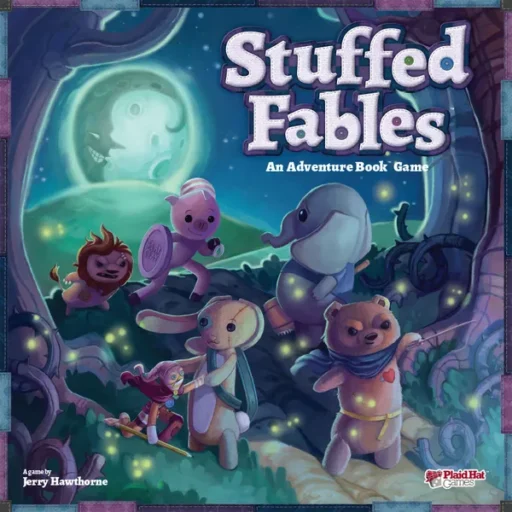
Players: 2-4 | Ages: 7+
Stuffed Fables is a storytelling adventure where players are stuffed animals protecting a sleeping child from nightmares. A book serves as both the map and the script.
The miniatures and artwork raise the bar for kids games. My group has played the whole story arc twice, and the emotional beats still land on second reading.
Sit a parent next to the youngest player so the reading load is shared. Worth the extra setup.
20. Forbidden Sky
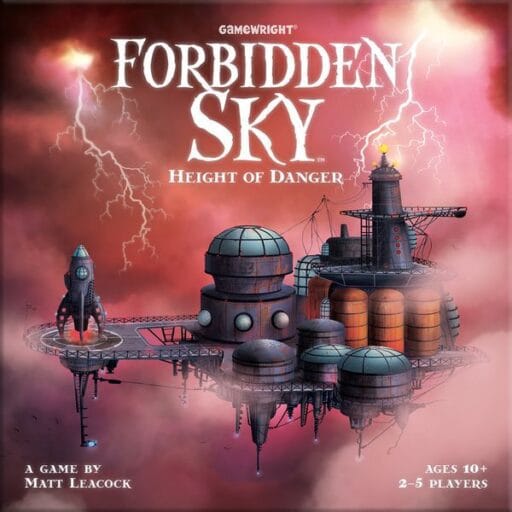
Players: 2-5 | Ages: 10+
Forbidden Sky has the team building an electrical circuit on top of a floating platform during a thunderstorm. Connect the wires correctly and a small rocket actually lights up and launches.
The working circuit is the gimmick that earns its place. Older kids learn parallel and series circuits without realizing they were studying anything.
The hardest of the Forbidden series. Hold off until your group has finished Island or Desert first.
19. My First Castle Panic
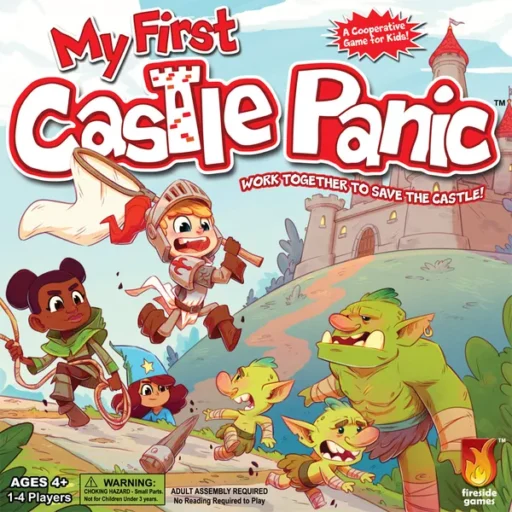
Players: 1-4 | Ages: 4+
My First Castle Panic strips the original Castle Panic down for younger kids. The team defends a castle from monsters using color and symbol matching on cards.
The components are sturdy and the castle in the middle of the table gives kids something to actually defend. Four-year-olds understand the goal in under a minute.
The perfect stepping stone toward the full Castle Panic, which arrives later in this list.
18. Bandido

Players: 1-4 | Ages: 6+
Bandido is a quick card game where the team blocks every tunnel that an escaped prisoner could use. Each card adds new tunnel exits that must all eventually be sealed off.
The puzzle tightens fast. Kids think one card ahead at first, then two, then five, which is a clean progression in spatial reasoning over a single play.
One of the best cheap cooperative card games on the market. Travel-friendly box, ten-minute games.
17. Mysterium Kids: Captain Echo
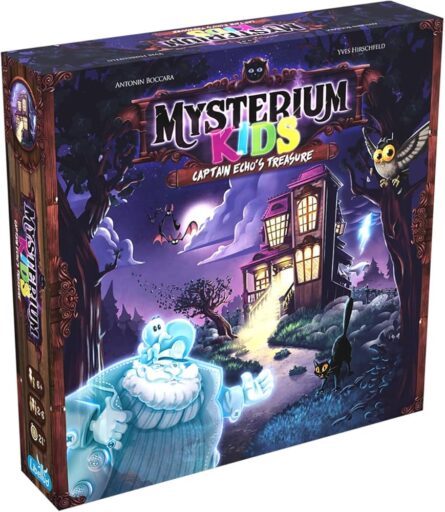
Players: 2-6 | Ages: 6+
Mysterium Kids: Captain Echo has one player tapping a small drum in rhythms that match objects on cards. The other players have to identify which object the drumbeat represents.
The Kinderspiel des Jahres 2023 winner deserves the trophy. The drum is a genuinely new mechanic in this age range, and it gives quiet kids a way to “speak” without words.
A great fit for the six-to-eight age window, and easier to teach than the adult Mysterium.
16. Forbidden Desert
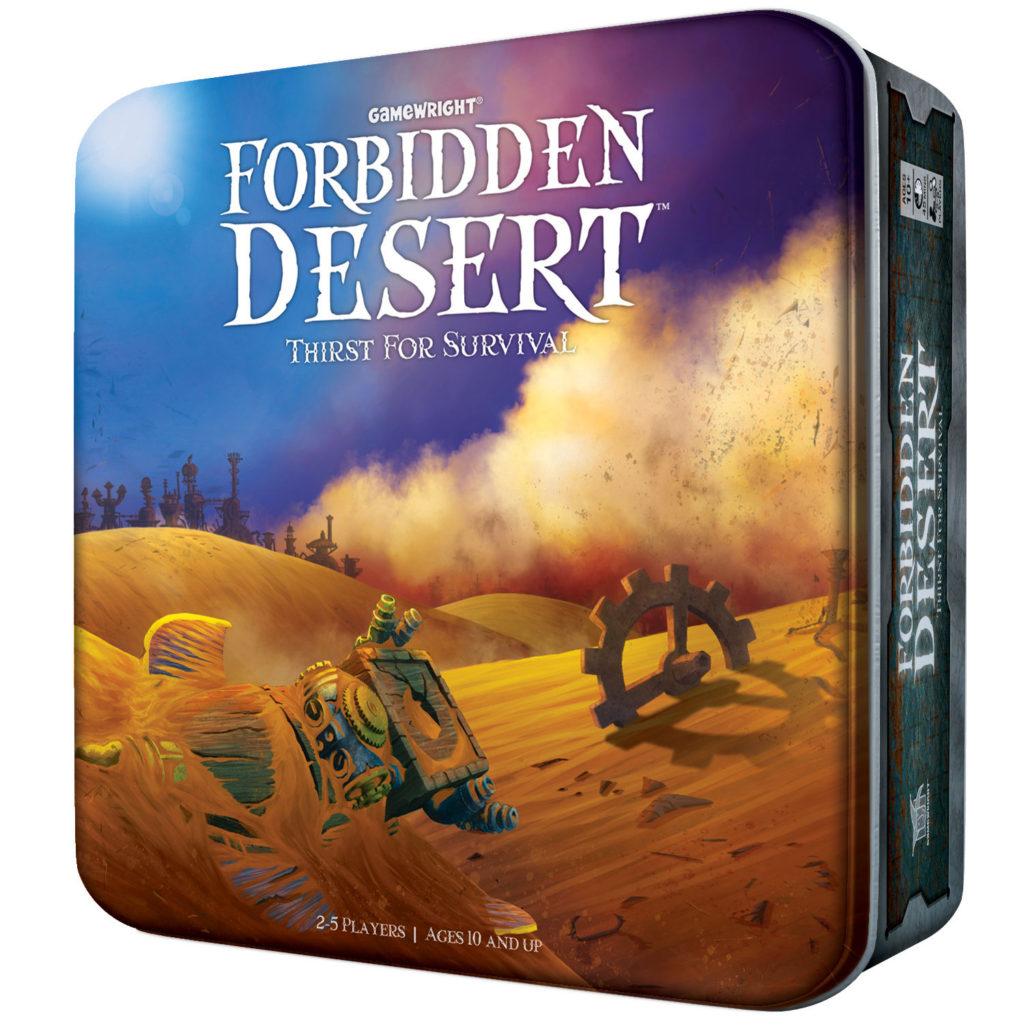
Players: 2-5 | Ages: 10+
Forbidden Desert has the team finding parts of a flying machine buried in shifting desert sands. A sandstorm reshuffles the board every turn while everyone slowly runs out of water.
The stakes feel heavier than the original Forbidden Island, and the puzzle of remembering where each artifact is buried adds a memory layer that older kids enjoy.
The next stop for families that loved Forbidden Island and want something with a few more moving parts.
15. Harry Potter: Hogwarts Battle
Players: 2-4 | Ages: 11+
Harry Potter: Hogwarts Battle is a cooperative deck-building game that walks the team through all seven books across seven sealed boxes of escalating difficulty.
The progression hooks fans hard. Each box introduces new cards, locations, and villains, and beating game seven feels like an actual achievement after a long campaign.
The best gateway deck-builder for tween Harry Potter fans, hands down.
14. Mysterium Park
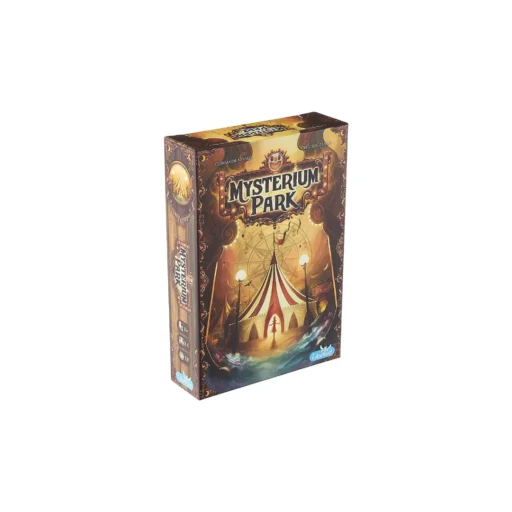
Players: 2-6 | Ages: 10+
Mysterium Park is a faster, lighter Mysterium where a ghost gives surreal image cards to the team, who use them to identify a culprit, a location, and a method.
The art is gorgeous and the shorter playtime fixes the main complaint about the original Mysterium. A full game lands in 25 minutes instead of 50.
The right Mysterium for family game night with kids ten and up.
13. Flash Point: Fire Rescue

Players: 2-6 | Ages: 8+
Flash Point: Fire Rescue puts the team in charge of a burning house. You take roles like medic and driver, then rescue victims before the building collapses.
The fire spreads with a dice roll, which keeps the tension honest. My group lost our first three games in a row, which only made the eventual win sweeter.
One of the better teamwork board games for kids who like the idea of being emergency responders.
12. Codenames: Duet
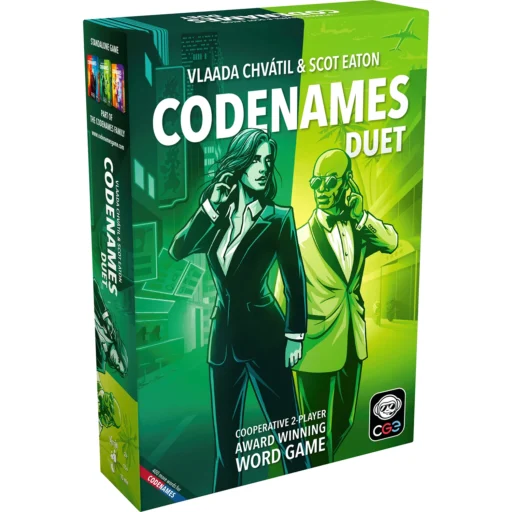
Players: 2+ | Ages: 11+
Codenames: Duet is the cooperative version of Codenames. Two players give each other one-word clues that connect multiple words on a grid, working through a fixed number of turns.
The single-clue-per-turn rule produces some genuinely clever connections. It is the rare two-player word game that does not feel like a chore for one of you.
The best date-night co-op on this list. Older kids and a parent works just as well.
11. Zombie Kidz Evolution
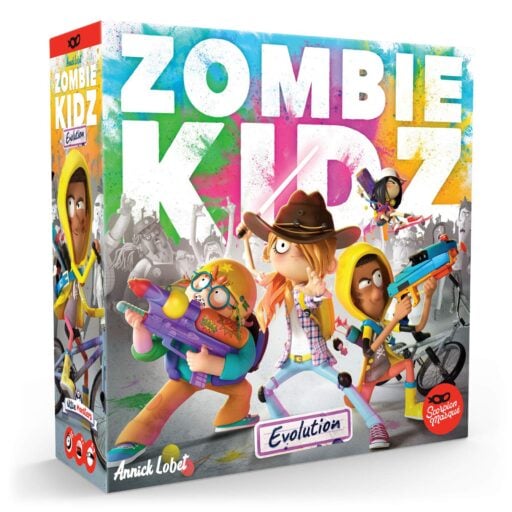
Players: 2-4 | Ages: 7+
Zombie Kidz Evolution is a legacy game where kids defend a school by blocking entrances against zombies. Sealed envelopes open as the team wins, introducing new rules and characters.
The Kinderspiel des Jahres 2018 win was the first time a legacy game took that award, and the design earned it. Games are short, but the campaign keeps kids coming back.
Many parents consider this the single best cooperative board game for kids on the market.
10. Hanabi

Players: 2-5 | Ages: 8+
Hanabi is a cooperative card game where players hold their hands facing outward. You see everyone else’s cards but not your own, and you give limited clues to help teammates play fireworks in order.
The Spiel des Jahres 2013 win was a watershed for co-op card games. The information-management puzzle is elegant and the box fits in a pocket.
One of the few collaborative games that work as well with adults as with eight-year-olds.
9. Just One
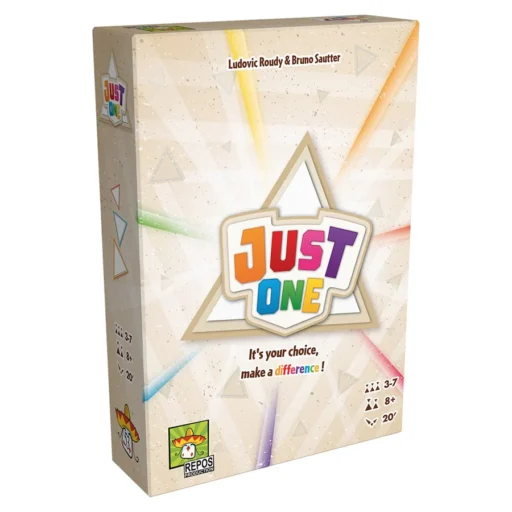
Players: 3-7 | Ages: 8+
Just One has one guesser trying to identify a word while everyone else secretly writes a one-word clue. Duplicate clues cancel out, so the team has to think creatively rather than obviously.
The duplicate cancellation rule is the engine. It punishes the most obvious clue and rewards lateral thinking, which is exactly the lesson you want from a family game.
Spiel des Jahres 2019. Great for mixed-age tables of four to seven players.
8. Pandemic

Players: 2-4 | Ages: 8+
Pandemic is the modern co-op classic. The team plays as disease specialists racing to cure four diseases before any of them spirals out of control across the world map.
Two decades after release it still teaches new players what cooperative strategy feels like. Each role plays differently enough that kids quickly find a favorite.
The single best co-op gift for an eight-to-twelve-year-old who already enjoys family game night.
7. Castle Panic
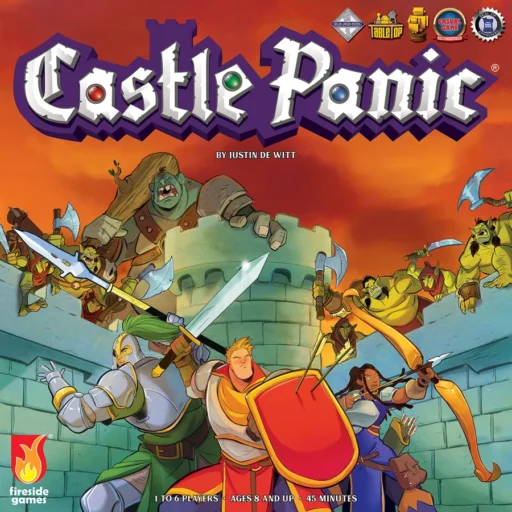
Players: 1-6 | Ages: 8+
Castle Panic is a tower defense co-op where the team holds off goblins, orcs, and trolls before they smash the castle’s six towers. Cards target specific monster zones around the board.
The trade-cards mechanic is the heart of the game. Kids learn to ask for what they need and to give up good cards for the team, which is real cooperative play.
Multiple expansions add wizards, dragons, and dark titans for groups that want more challenge.
6. First Orchard
Players: 1-4 | Ages: 2+
First Orchard has toddlers harvesting fruit before a raven reaches the orchard. A color die tells you which fruit to collect, and a raven face advances the bird one space.
HABA’s flagship preschool co-op has stayed on shelves for decades for a reason. The pieces are chunky, the rules fit on a postcard, and two-year-olds genuinely understand the win condition.
The most reliable first cooperative board game for kids under three.
5. The Mind

Players: 2-4 | Ages: 8+
The Mind has the team playing numbered cards from low to high without speaking, comparing notes, or signaling. You just sense when it is time to play your card.
It sounds impossible and somehow works. The first time a group nails level five with no talking, the whole table cheers. Few cooperative card games create that moment so cheaply.
A standout pick for older kids and adults who want a quick group game that actually feels different.
4. Forbidden Island
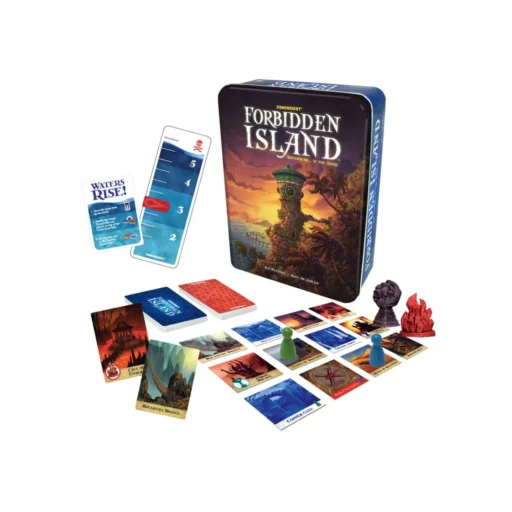
Players: 2-4 | Ages: 10+
Forbidden Island is the gateway co-op for an entire generation. The team grabs four treasures from a sinking island while tiles slip beneath the waves each turn.
The price-to-quality ratio is hard to match. For under twenty dollars, families get a full cooperative experience with adjustable difficulty and roles that genuinely matter.
The book-end pairing with Forbidden Desert makes a strong two-game starter pack for any family library.
3. Outfoxed!
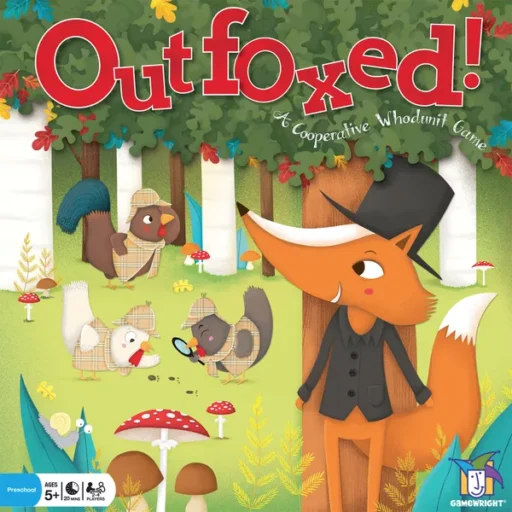
Players: 2-4 | Ages: 5+
Outfoxed! has the team chasing a fox who stole a pot pie. Dice rolls reveal suspect clues, and players narrow down the culprit before the fox escapes the board.
The Mensa Select winner deserves its reputation. Five-year-olds absorb the deductive logic without any explanation, and the chase mechanic keeps every game tense to the last card.
Probably the best deduction game ever made for the five-to-eight age band.
2. The Crew: The Quest for Planet Nine
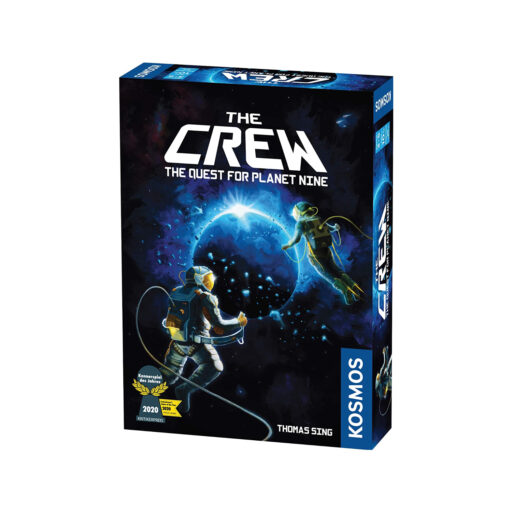
Players: 3-5 | Ages: 10+
The Crew: The Quest for Planet Nine is a 50-mission cooperative trick-taking card game. Each mission gives the team a different goal for which specific cards have to win specific tricks.
The Spiel des Jahres 2020 win signaled how far co-op card games have come. The communication restrictions push trick-taking into puzzle territory, and the campaign hook keeps groups coming back.
The single best collaborative card game for ten-and-up groups that already enjoy Hearts or Spades.
1. Hoot Owl Hoot!
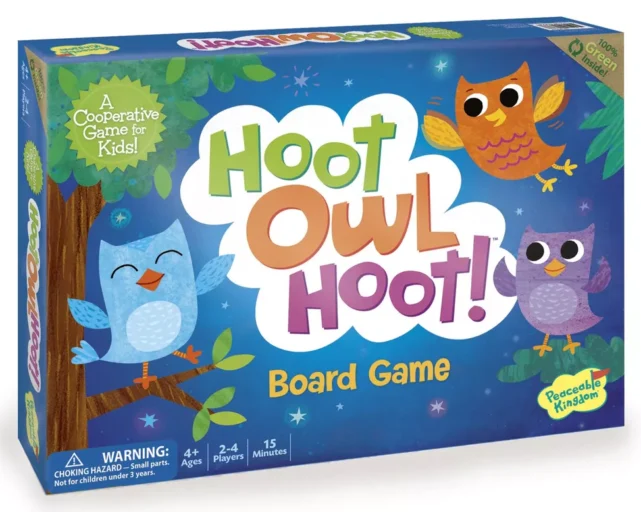
Players: 2-4 | Ages: 4+
Hoot Owl Hoot! has the team flying owls back to the nest before the sun rises. Color cards drive movement, and a single sun card advances the timer.
Over a decade after release, it is still the cooperative kids game I recommend first. The rules fit in 30 seconds, the win-loss balance is calibrated perfectly, and kids cheer the team rather than themselves.
The reigning standard for cooperative board games for kids in the four-to-seven range, and a permanent fixture on family game night shelves.
What are your favorite cooperative board games for kids? Any that didn’t make this list?
Be sure to also take a look at our Best Cooperative Board Games for Adults list and our other board game rankings
FAQs
What is the best cooperative board game for young kids?
Hoot Owl Hoot is the most reliable pick for ages four to seven. For toddlers, First Orchard works from age two and a half. Both teach turn-taking and reward shared wins rather than individual scores.
At what age can kids start playing cooperative board games?
Children can start with simple co-ops around age two and a half with adult help. First Orchard and Little Cooperation are designed for that range, with chunky pieces, basic color matching, and short play times.
What makes a cooperative board game different from a regular board game?
Everyone plays on the same team against the game itself. There is no winner among the players. The group either solves the puzzle together or loses together, which removes most arguments about outcomes.
Are cooperative board games good for teaching kids social skills?
Yes. Children practice communication, turn-taking, and shared problem-solving every round. Teachers and child psychologists often recommend titles like Outfoxed and The Color Monster because the design forces kids to talk things out as a group.
What is a good cooperative board game for the whole family to play together?
Castle Panic and Forbidden Island bridge the age gap well. Both work from age eight through adult, take 30 to 60 minutes, and let parents coach younger players without dominating the table.
