
Top 21 Mystery Board Games Of 2026

What I look for in a mystery board game: evidence chains that require actual reasoning rather than lucky draws, a case length that respects everyone’s time, hidden information distributed so that every player stays involved, and at least one mechanic that makes solving the thing feel earned rather than stumbled into.
The good news is that there are more excellent options across every budget and complexity level right now than there have ever been.
One editorial note: I’ve kept this list to cooperative and semi-cooperative games, so pure social deduction titles like The Resistance don’t appear here. With that said, let’s get into it.
#21 — Scooby-Doo! Mystery Masquerade (June 2026)
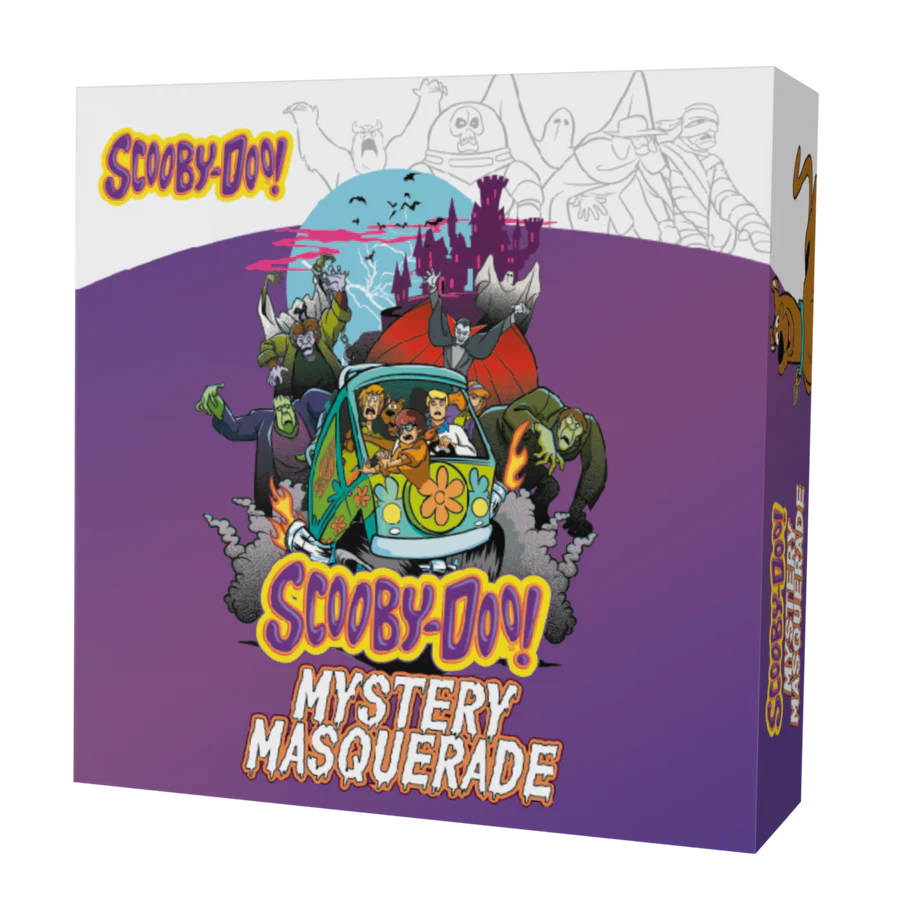
3–5 players | Ages 8+ | ~$38 | 20–30 min | Light
The Coolsville Diamond has been stolen during a grand masquerade ball, and it’s up to Scooby and the gang to unmask the culprit before they escape.
This June 2026 release from Resurrection Games runs on a modular mansion board with a social deduction structure: players search rooms, gather clues, and narrow down a suspect list against the clock.
My group hasn’t sat down with this one yet — it’s not hitting retail until summer — but the specs read like a reliable intro mystery that sets up in under five minutes and doesn’t require any prior experience with the genre.
Get this if you want something accessible for families or need a mystery game that brings younger players into the fold without drowning them in rules.
#20 — 5-Minute Mystery
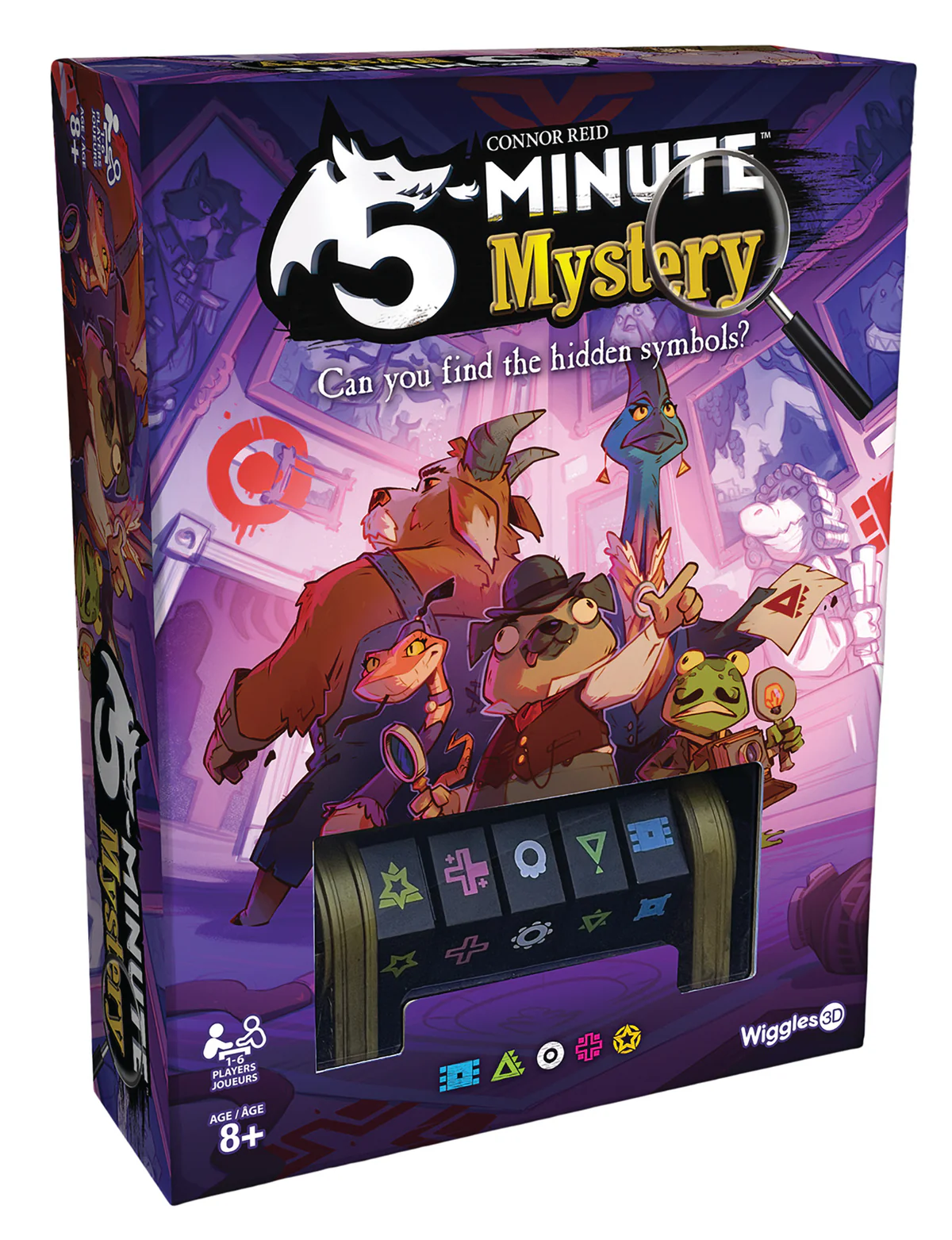
2–5 players | Ages 8+ | ~$30 | 20–30 min | Light
A cooperative game built around speed rather than deliberation. Your team races through the Museum of Everything after a theft, scanning scenes for hidden symbols, matching them against a codex, and unlocking clue tiles before time expires.
It comes with a core set of cases and additional scenarios available through an app, so it doesn’t go stale after one session.
My group found the visual search format genuinely surprising — the stopwatch creates real pressure even when the underlying puzzle is simple, and you end up communicating fast in a way that feels nothing like other detective games.
The depth has limits, but the sessions are short enough that replay is easy.
Get this if your group finds investigation games too slow, or if you want a detective-night opener that gets everyone leaning forward immediately.
#19 — The Sherlock Files: Elementary Entries

2–8 players | Ages 14+ | ~$20 | 45–60 min | Light-Medium
Three unconnected cases sit inside a modest box at a modest price. Players deal out clue cards and decide which to reveal and which to discard, with irrelevant clues counting against the final score.
The Q System behind this forces you to think carefully about what you share, since you’re working from partial information throughout.
My group liked that no single player can dominate — everyone has cards no one else has seen, and the decisions stay distributed. It’s accessible, plays well at five or six people, and it’s the cheapest legitimate entry point into cooperative deduction on this list.
Read our full review here. Get this if you want a low-cost introduction to the genre or you regularly play with larger groups. Once you’re ready to go deeper, our Best Cooperative Deduction Board Games list is a good next stop.
#18 — Awkward Guests
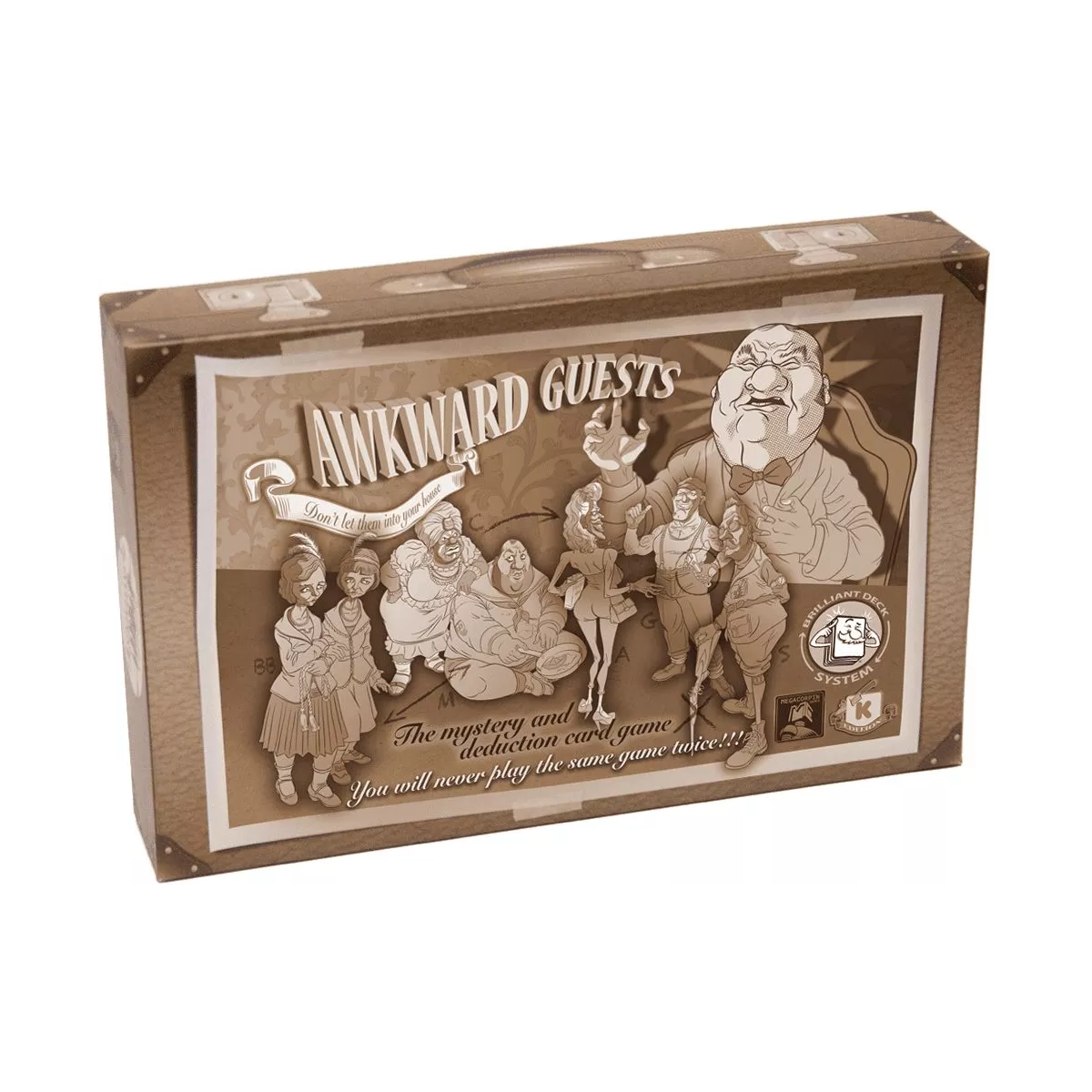
2–6 players | Ages 14+ | ~$35 | 60–90 min | Medium
A deduction game built around trading information rather than following a linear clue chain. Mr. Walton has been murdered, and everyone at the table is simultaneously trying to figure out who did it, with what weapon, and why.
You can only get information by paying for it with cards from your own hand. The setup generates something in the range of 200,000 possible murder combinations, so unlike most mystery games, Awkward Guests doesn’t expire after a handful of plays.
My group has had sessions that were analytical and almost chess-like, and others that turned tense and competitive once everyone sensed someone was close to the answer. The cost-of-information tension is real and never quite goes away.
Get this if you want a mystery game with genuine long-term replay value, or if your group skews competitive.
#17 — Mr. Jack

2 players | Ages 9+ | ~$30 | 30–45 min | Medium
One player is Jack the Ripper, hiding as one of eight characters in Victorian London. The other is a detective trying to narrow down who Jack is before he escapes.
Both players see who is illuminated and who isn’t on each turn, but that information cuts both ways — Jack has to manage it as carefully as the detective does.
My group pulls this out as a palate cleanser between heavier games, and it works reliably. No table talk, minimal setup, every move doing double duty.
It lacks the narrative weight of most games on this list, but as a pure two-player deduction contest it’s hard to beat.
Get this if you want the best two-player mystery game in terms of mechanical tension and short session length.
#16 — Chronicles of Crime: Welcome to Redview
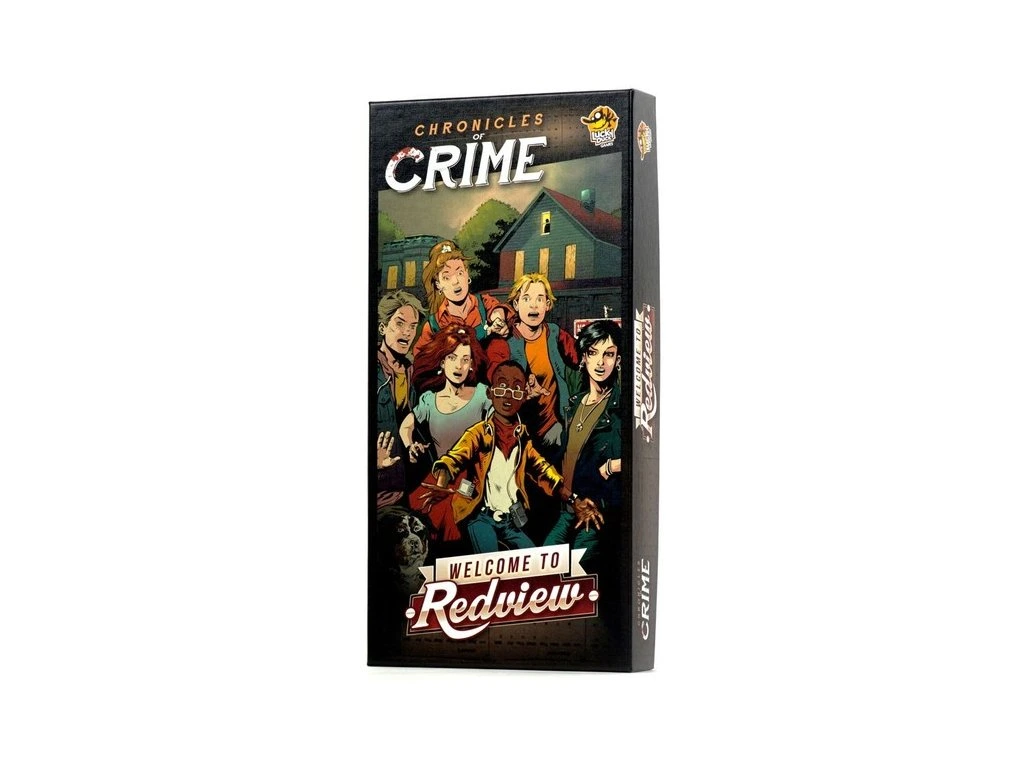
1–4 players | Ages 14+ | ~$40 | 60–90 min per case | Medium
An expansion to Chronicles of Crime that swaps London crime drama for a 1980s Maine small town full of teenagers with skills, secrets, and a four-chapter connected campaign.
Each player controls a character with Fitness, Speech, and Mind stats, and the app-driven skill tests add real uncertainty to each case — rolling to intimidate someone and failing has consequences.
The Stranger Things-adjacent tone won my group over immediately. The first three cases sit in the middle of the series quality-wise, but the fourth is probably the single best case in the entire Chronicles of Crime line.
Read our full review here. Get this if you already own the Chronicles of Crime base game and want something that leans more into character-driven storytelling. You’ll need the app.
#15 — Unlock! Series

1–6 players | Ages 10+ | ~$15–20 per box | 60 min | Medium
Not strictly a mystery game in the traditional sense — Unlock! is an escape room card series paired with a free companion app. You solve puzzles by combining numbered cards, discovering hidden items, and working through branching logic chains.
Each box contains three adventures at varying difficulty, and there are now dozens of sets across the series. My group has played maybe a dozen boxes and the quality holds up; the harder scenarios have genuinely stumped us more than once.
The one-and-done nature stings a little, but each box is cheap enough that the math still works out.
Read our full review here. Get this if you want a mystery-adjacent puzzle night that plays fast and travels well. If you’d rather destroy the box components than use an app, Exit: The Game is the better alternative.
#14 — Exit: The Game Series
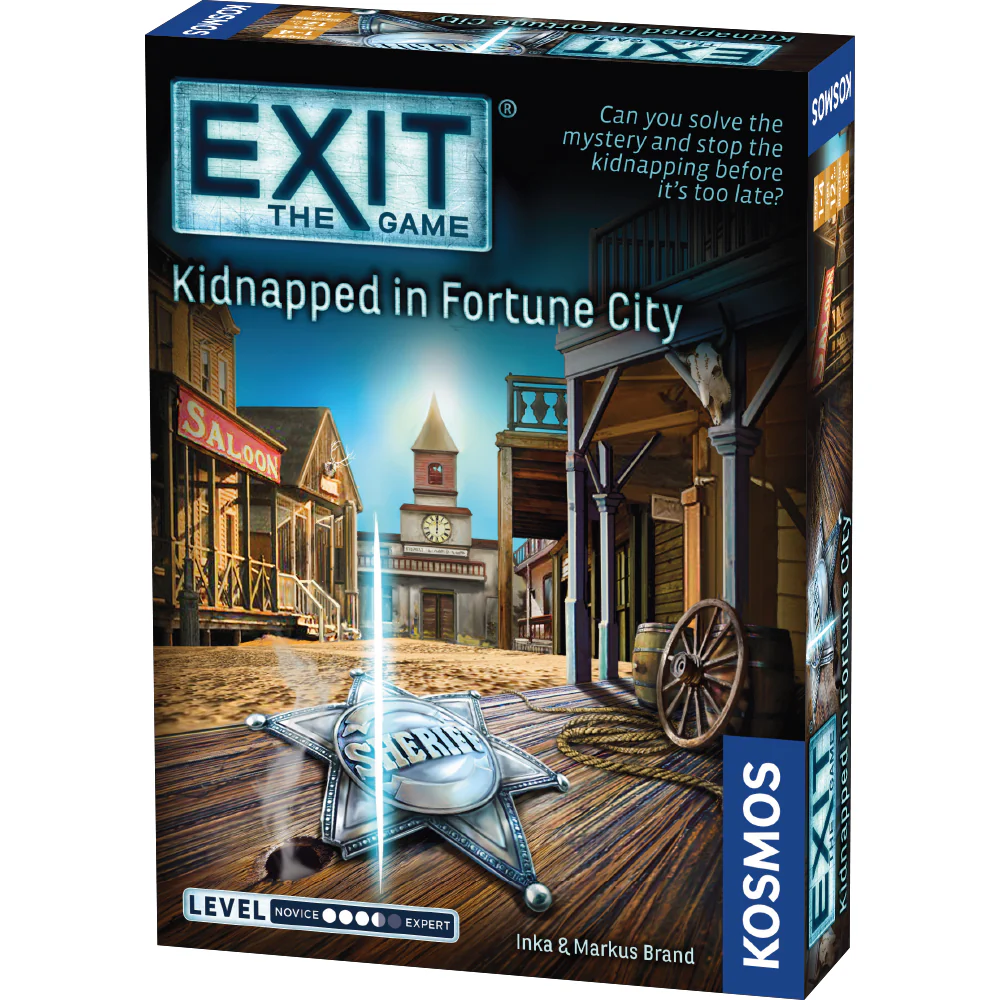
1–4 players | Ages 10+ | ~$15 | 45–120 min | Light to Hard (varies)
The KOSMOS escape room series that famously asks you to tear, fold, and mark your components as part of solving the puzzle — each box is single-use by design.
The puzzles run denser than Unlock! and lean more toward pure logic. My group prefers the medium-to-hard boxes; The Abandoned Cabin and The Secret Lab are both worth grabbing. The theme varies across the series from cozy heist settings to full horror.
Get this if you want your escape room experience without any screens and you’re comfortable with the one-play limit. First-time players should start with a difficulty rated 3 out of 5 — the easy boxes feel thin in retrospect.
#13 — Mysterium Park
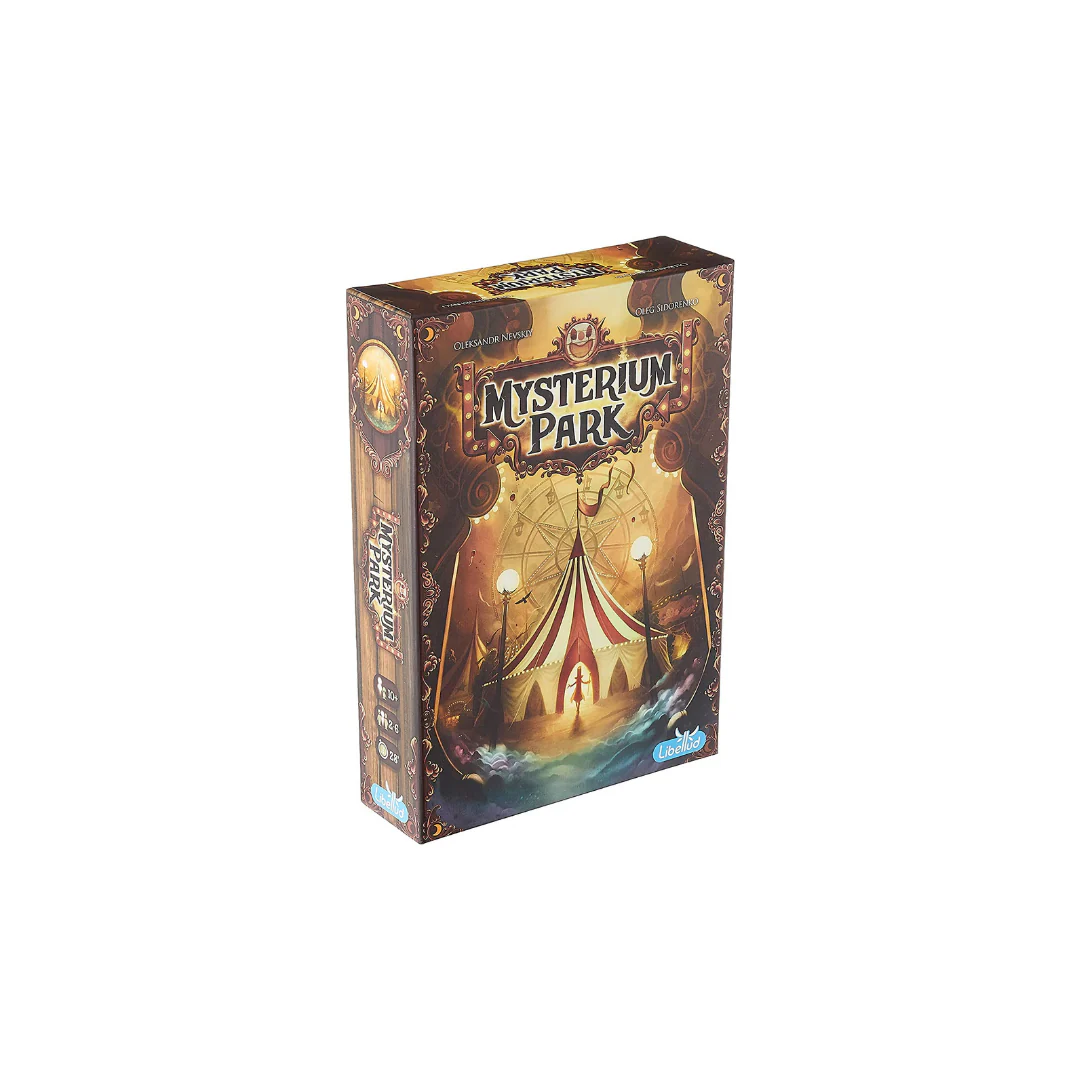
2–6 players | Ages 10+ | ~$30 | 30–45 min | Light-Medium
A streamlined standalone take on Mysterium, set at a carnival rather than a haunted mansion. One player is the ghost of the park’s murdered director; the other players are psychic investigators who interpret dream vision cards to narrow down suspect and location.
The setup is faster, the rule phases are fewer, and the whole thing clicks with new players sooner than almost any deduction game I know. My group has run this with complete newcomers several times.
The ghost role is where the cognitive work concentrates, and some people find it stressful — in a good way.
Read our full review here. Get this if you want the Mysterium experience in half the time, or if you’re buying for a mixed group that includes casual gamers. See the original Mysterium at #3 for the fuller version.
#12 — MicroMacro: Crime City
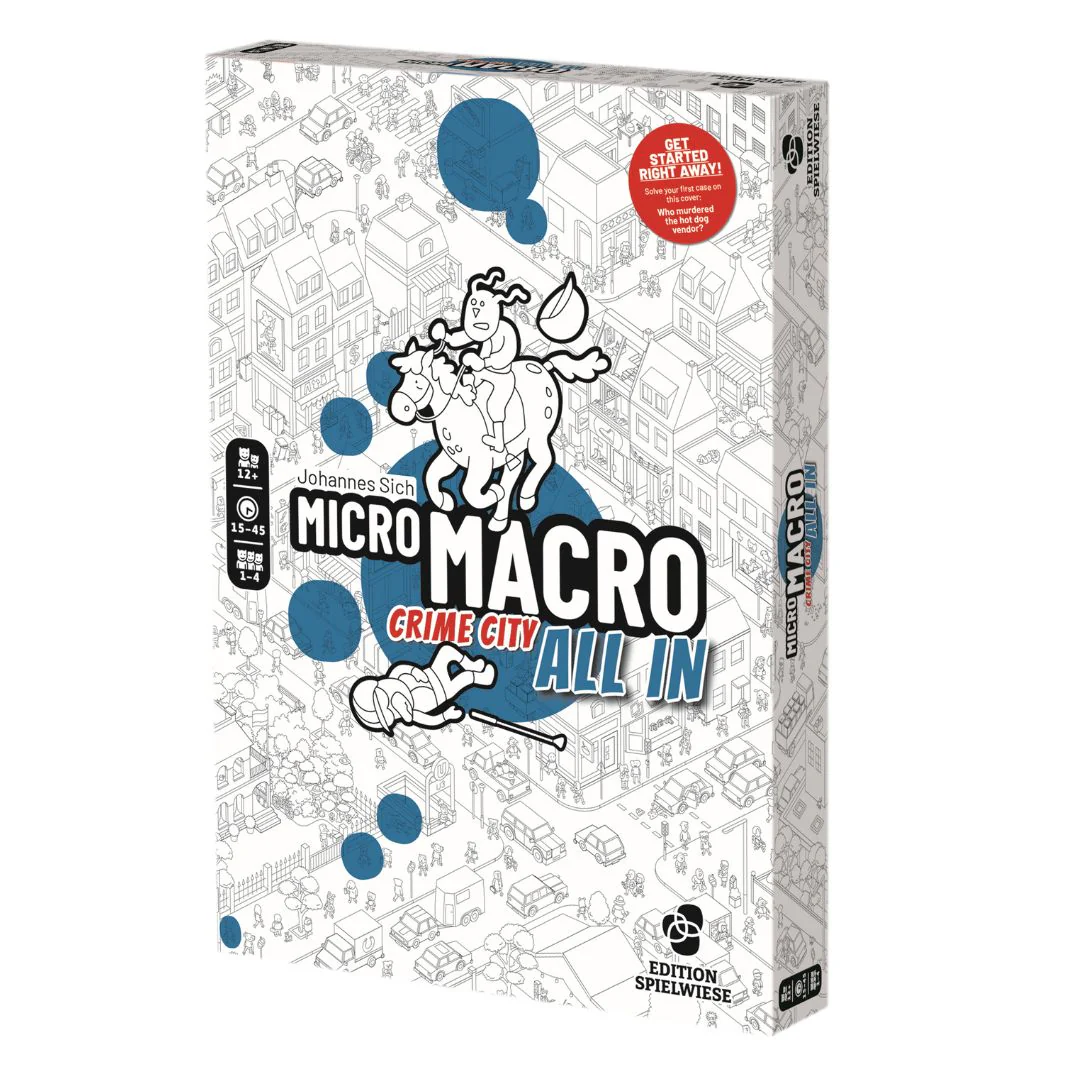
1–4 players | Ages 10+ | ~$25 | 15–45 min per case | Light
A 75 x 110 cm illustrated city map packed with characters, scenes, and overlapping stories. Solving a case means tracking specific characters across the map and spotting exactly what happened to them, guided only by a set of case cards.
There are no cards to shuffle, no app to load, and almost no rules — just the map and careful observation. My group’s enthusiasm has cooled a little after heavy rotation, but it earns its place for what it delivers at this price point.
The city has a remarkable amount of murder in it, but the art style is busy enough that it never feels grim. The Full House expansion adds more cases and a larger map if you exhaust the base game.
Get this if you want mystery gaming that works for any age with zero setup overhead.
#11 — Winnie the Pooh: Serious Detective (2026)

Players/Price TBD | 2026 release | Narrative detective format
A 2026 narrative detective game in which players take on the roles of characters from the Hundred Acre Wood — now reimagined as investigators — solving mysteries spanning both the Hundred Acre Wood and Camelot.
Full player count and pricing details were still pending at time of writing, and my group hasn’t gotten hands on it yet. The premise is more interesting than the IP alone suggests: attaching a proper deductive framework to a story-driven format with characters this universally known could produce something that lands for mixed-age groups in a way most mystery games never quite manage.
The announced artwork looks excellent.
Get this if you want a narrative-forward mystery suitable for family play once it releases — and keep an eye on it as a candidate to move up this list once more information comes in.
#10 — Batman: Everybody Lies
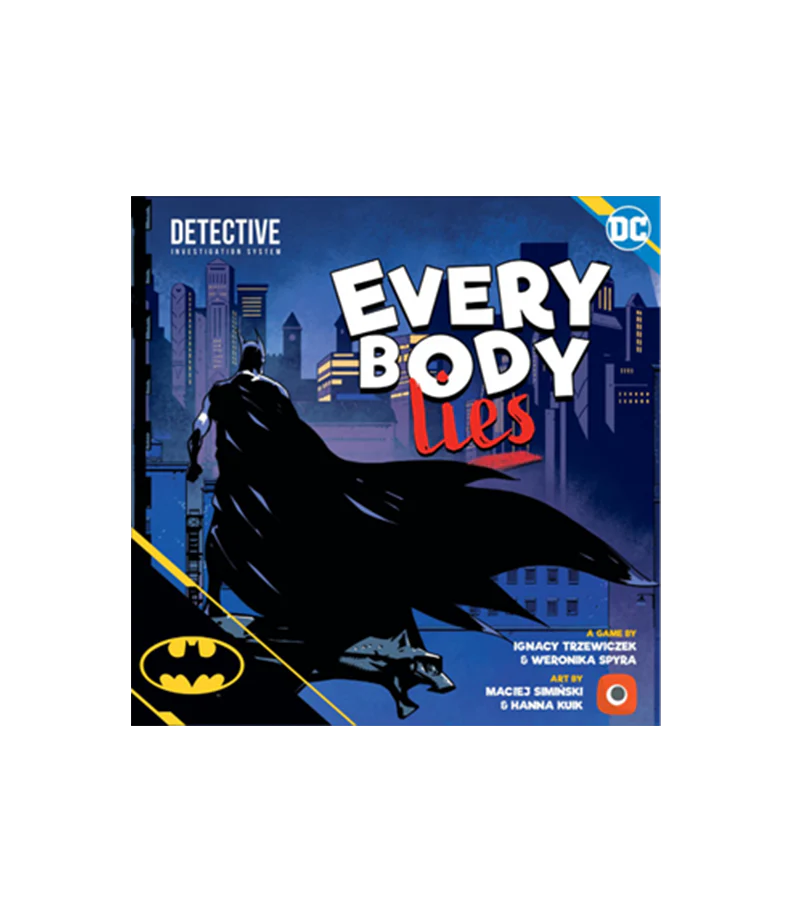
1–4 players | Ages 14+ | ~$50 | 90–120 min | Medium-Heavy
Players become key investigators in Gotham City — journalist, reporter, detective, Catwoman — working cooperatively through cases while visiting iconic locations and talking to Batman’s usual cast.
The hidden agenda mechanic gives each character a secret goal tied to their role, so even though you’re nominally on the same side, the motivations are never perfectly aligned.
My group found that the hidden agenda layer adds exactly the friction that makes cases feel like more than information collection — who’s asking the question changes what you can actually learn.
Get this if you want a thematic deduction game where character choice shapes what you can investigate, and if the DC universe appeals to your group.
#9 — Chronicles of Crime: 1900
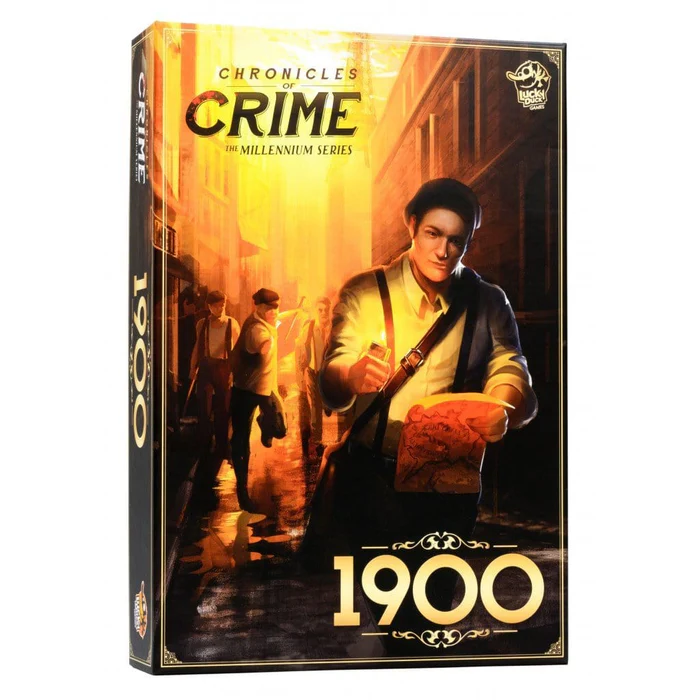
1–4 players | Ages 14+ | ~$50 | 60–120 min per case | Medium |Read our full review here.
The second Millennium Series standalone drops you into Belle Époque Paris as Victor Lavel, a young investigative journalist racing to crack each case before the next morning’s print deadline.
Four full cases plus a tutorial, all app-driven, but this entry adds escape room-style puzzle cards that push the investigation beyond pure interrogation.
My group liked the Lavel family’s voice more than any other protagonist in the Chronicles of Crime series — the dialogue has a warmth the earlier games sometimes lacked — and the 1900 Paris setting earns its place.
Get this if you’ve already worked through the base game and want the best single-protagonist experience in the series. For the medieval setting with its Vision Card mechanic, Chronicles of Crime: 1400 is also worth considering.
#8 — Horror on the Orient Express (2026)
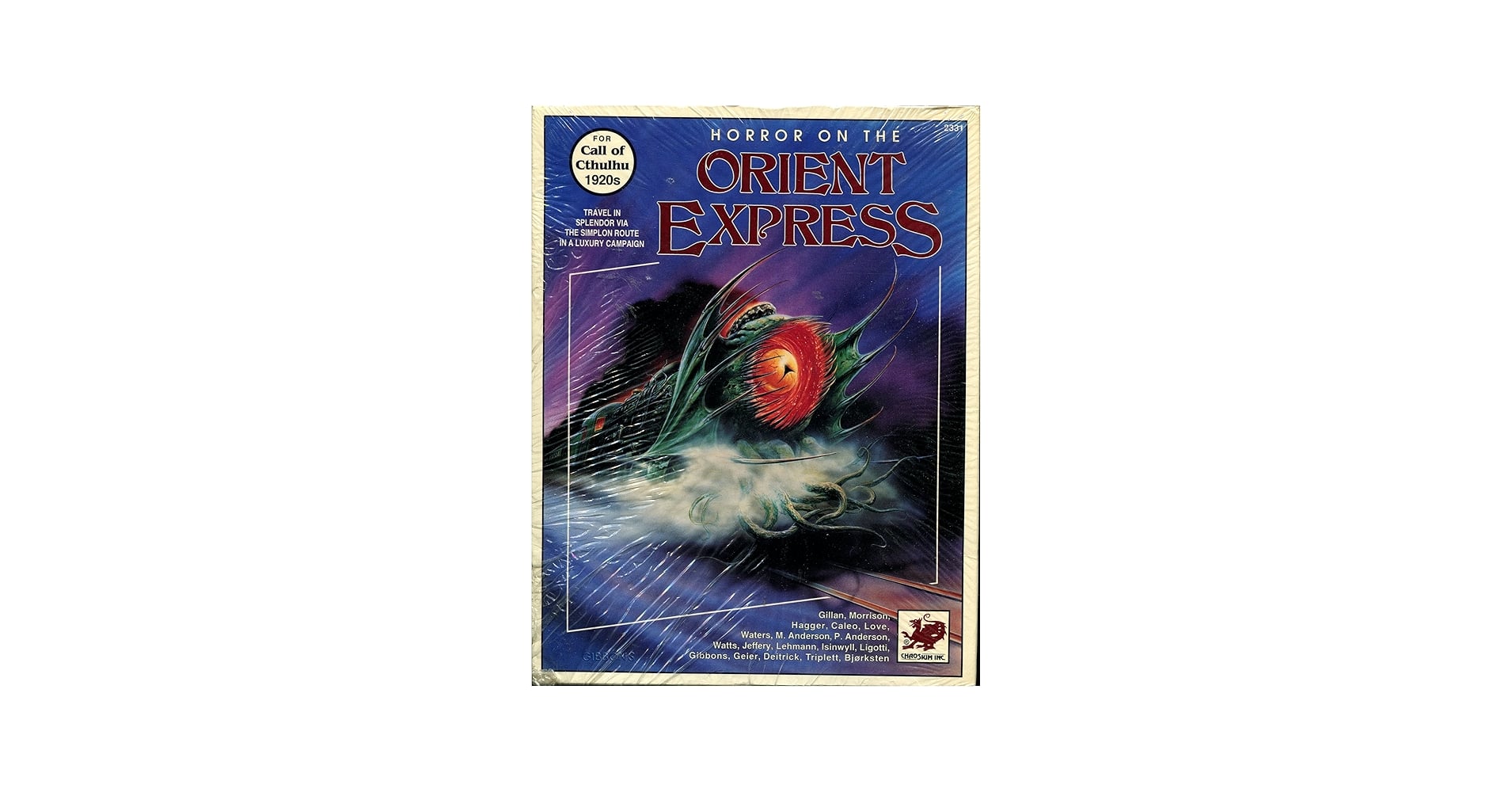
1–5 players | Ages 16+ | Chaosium | Price TBD
A board game adaptation set on the famous train, published by Chaosium — the company behind Call of Cthulhu. Players travel the route trying to identify which passengers are secretly cultists planning a ritual, while eldritch creatures attack the train from outside.
The pressure of the train’s schedule — you can’t linger at every compartment indefinitely — forces commitment to your deductions in a way most mystery games never demand.
My group got a session in and found the ticking structure more interesting than another static “gather clues at the table” design.
Get this if you want a mystery game where the stakes feel physical, or if you’re a Cthulhu Mythos fan looking for something with investigative weight. See our Best Cooperative Horror Board Games list for related picks.
#7 — Chronicles of Crime: Noir

1–4 players | Ages 16+ | ~$35 | 60–120 min per case | Medium | Read our full review here.
Post-World War II California, and you’re playing Sam Spader, a solo private eye hired by clients who may not be giving you the full story.
The new action cards — Spy, Break-In, Bribe, Intimidate — replace the forensic scientist system from the base game, and every choice carries more weight because you’re working alone without institutional backup.
My group’s honest take: three of the four cases here are better than anything in the base Chronicles of Crime game. The film noir tone is so consistent that even the card art feels right.
Get this as your first Chronicles of Crime expansion — it improves on the base game in nearly every respect. Chronicles of Crime: 1400 is worth adding afterward for the Vision Card system and medieval Paris setting.
#6 — Mansions of Madness: Second Edition
1–5 players | Ages 14+ | ~$80 | 2–3 hours | Heavy |Read our full review here.
Investigators enter mansions, search for items, solve puzzles, and fight monsters, with an app handling the storytelling and bookkeeping throughout.
It’s heavier than almost anything else on this list and requires a charged device at the table, but the atmosphere it creates is worth both costs. My group has had sessions where the app’s timing and writing worked well enough that someone actually jumped at a reveal.
The mystery layer here is about piecing together what happened in a scenario — less about identifying a suspect from a list, more about surviving long enough to understand what you walked into. Numerous expansions extend the scenario library substantially.
Get this if your group likes big productions and a 2-to-3-hour session is a genuine option. It’s also one of the top picks on our Best Cooperative Horror Board Games list.
#5 — Perspectives Blue
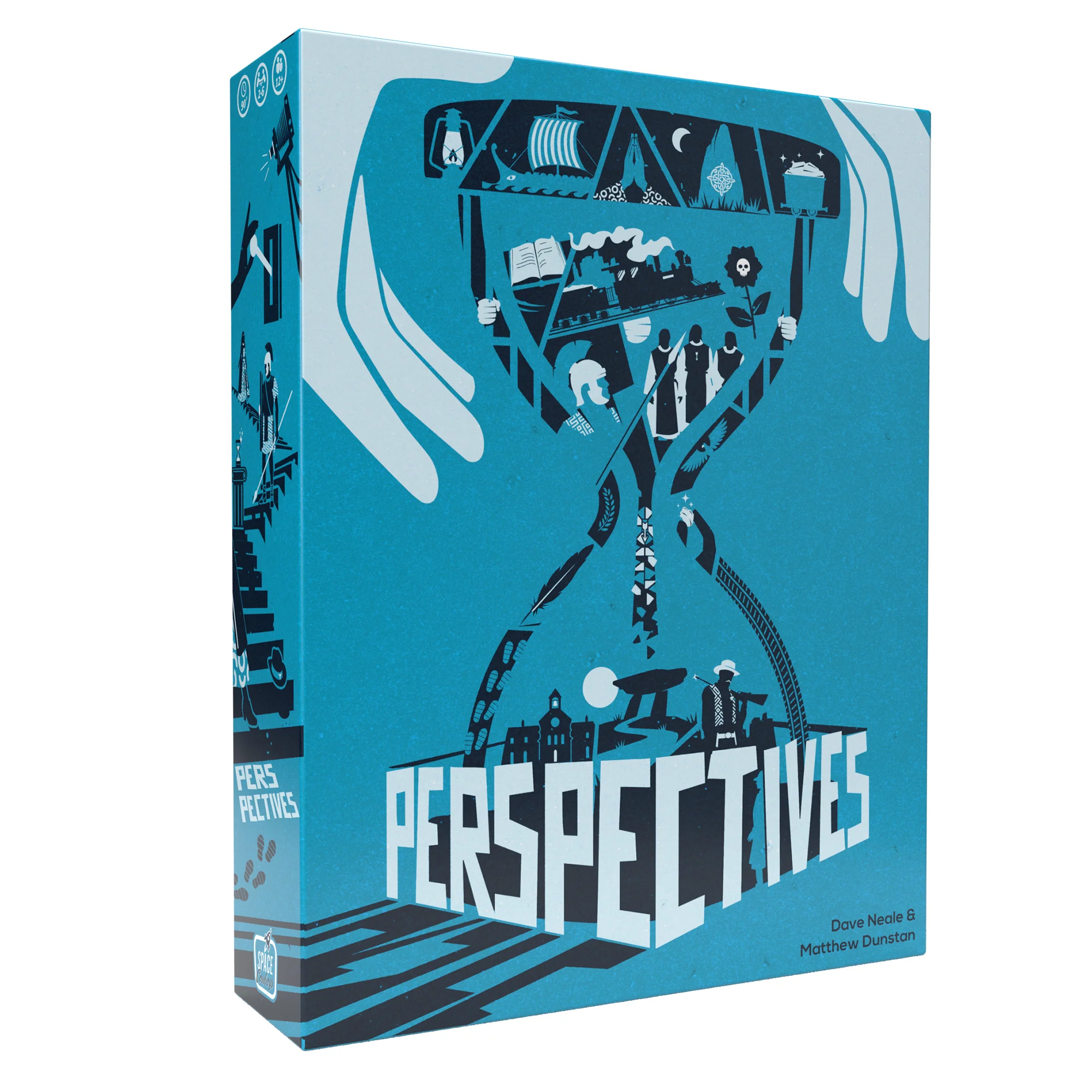
2–4 players | Ages 14+ | ~$35 | 90–120 min | Medium-Heavy |Read our full review here.
Three four-act cases where the central rule is that nobody has the full picture. Clue cards are split among players and you cannot share them directly — you describe what you’re seeing and rely on everyone else to construct their half of the image.
The challenge isn’t only reasoning from clues, it’s communicating clearly enough that the whole table builds an accurate picture together.
My group scored average on two of the three cases and still found one of them — the second case — to be the best detective scenario we’ve played in a board game.
Get this if you want communication to be as central to solving the mystery as the deduction itself. Perspectives Orange is a standalone companion with three more cases if you want to continue. It also plays well as a two-person game, which is rarer than it should be in this genre.
#4 — Chronicles of Crime
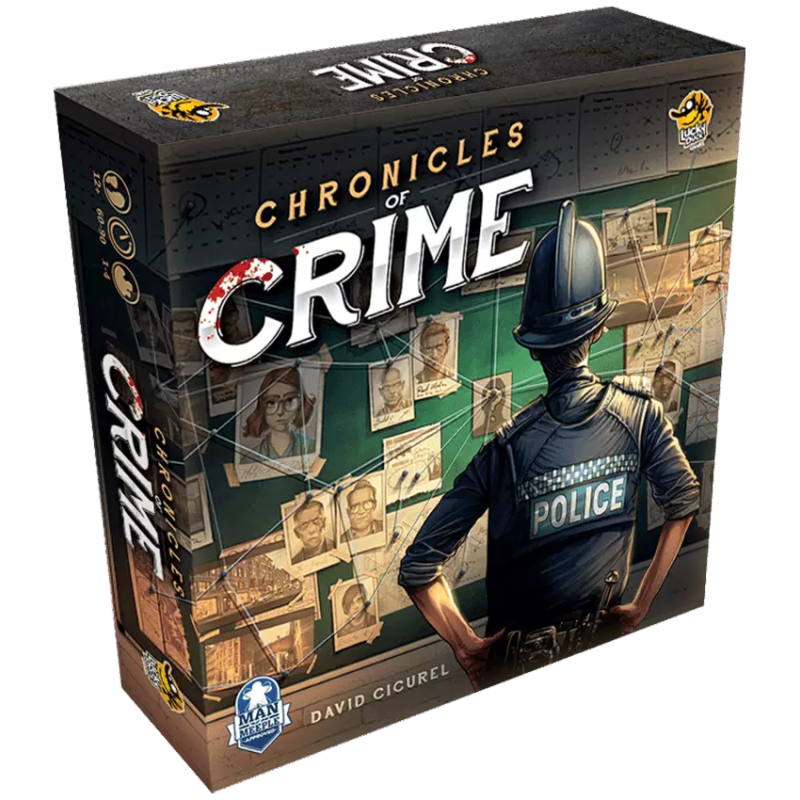
1–4 players | Ages 14+ | ~$45 | 60–120 min per case | Medium | Read our full review here.
The base game that launched the entire Chronicles of Crime universe: London detective work driven by a QR-code app, with optional VR glasses for exploring crime scenes in 360 degrees.
You choose which leads to follow, visit locations in the casebook, and choose who to interrogate and in what order — all against a ticking time clock. The open-world structure means getting stuck is genuinely possible, and my group has found that the stuck moments are often where the best table discussions happen.
Get this as your entry point to the series — then move to Chronicles of Crime: Noir first, or into the standalone 1400 and 1900 titles. Three new 2026 spinoffs — Chronicles of Crime: Eldritch Secrets, Cryptid Cases, and Courtroom Justice — are also arriving later this year.
#3 — Mysterium
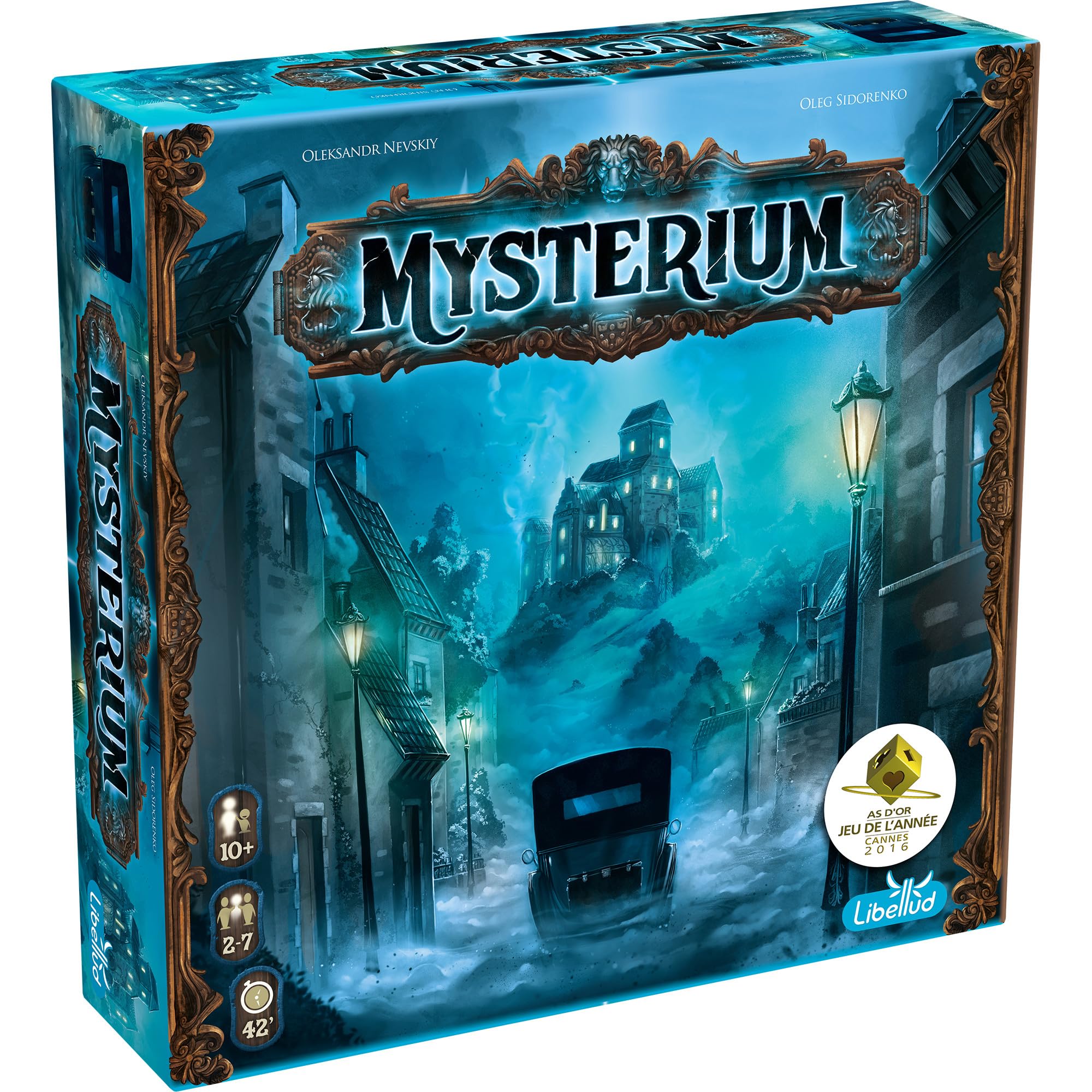
2–7 players | Ages 10+ | ~$45 | 45–75 min | Medium |Read our full review here.
One player is the ghost of a murdered manor resident, sending dream vision cards to psychic investigators who are trying to identify the suspect, location, and weapon. No words from the ghost — just surreal imagery and whatever your group can make of it.
The artwork is exceptional, and unlike most mystery games, the clue-giving role is where the real challenge sits. My group has had sessions that ended in arguments about what a card obviously meant and sessions where someone locked in instantly for reasons nobody could explain.
It scales well from two to seven players, which is genuinely rare for a deduction game, and it tops our Best Cooperative Horror Board Games list.
Get this if you want the fuller, richer version of what Mysterium Park offers — and if you don’t mind the longer setup. Expansions add more cards if the base game starts to feel familiar.
#2 — Detective: A Modern Crime Board Game

1–5 players | Ages 16+ | ~$60 | 3+ hours per case | Heavy |Read our full review here.
Five interconnected cases, a physical casebook, and access to Antares — an online database where you run real searches to pull suspect records, forensic reports, and location histories.
Each case runs on a limited number of work hours, meaning you can’t investigate everything and the choices of what to pursue feel like they matter. The overarching story connects across all five cases, so the fifth pays off threads planted in the first.
My group has mostly lost, scoring Cs and Ds, but the post-game review — where you find out what you missed and why — is almost as interesting as the case itself.
One caveat: it’s best at two or three players. Five is too many voices for the decision-making to stay coherent.
Get this if your group has the patience for a long, genuinely difficult investigation and wants the cases to feel consequential. It’s on our Top 40 Cooperative Board Games list for good reason.
#1 — Sherlock Holmes Consulting Detective

1–8 players | Ages 16+ | ~$55 | 90–180 min | Medium-Heavy |Read our full review here.
Still the best. Players work through Victorian London cases using a casebook, a London directory, a map, and a newspaper — all in print, no app, no QR codes.
You choose which leads to follow, visit locations in the casebook, and try to solve the case in fewer steps than Sherlock himself. The writing is exceptional, the cases are difficult without being arbitrary, and the post-game reveal is often a small masterpiece of plotting.
My group has played through multiple editions and returns to it still. No other mystery game produces the same quality of post-session conversation.
It tops both our Best Cooperative Deduction Board Games andBest Cooperative Storytelling Board Games rankings.
Get this if you want one mystery game that will challenge your group, reward careful reasoning, and stay on the shelf for years — mostly because you’ll want to replay cases after finding out everything you got wrong.
