Canvas Board Game Review

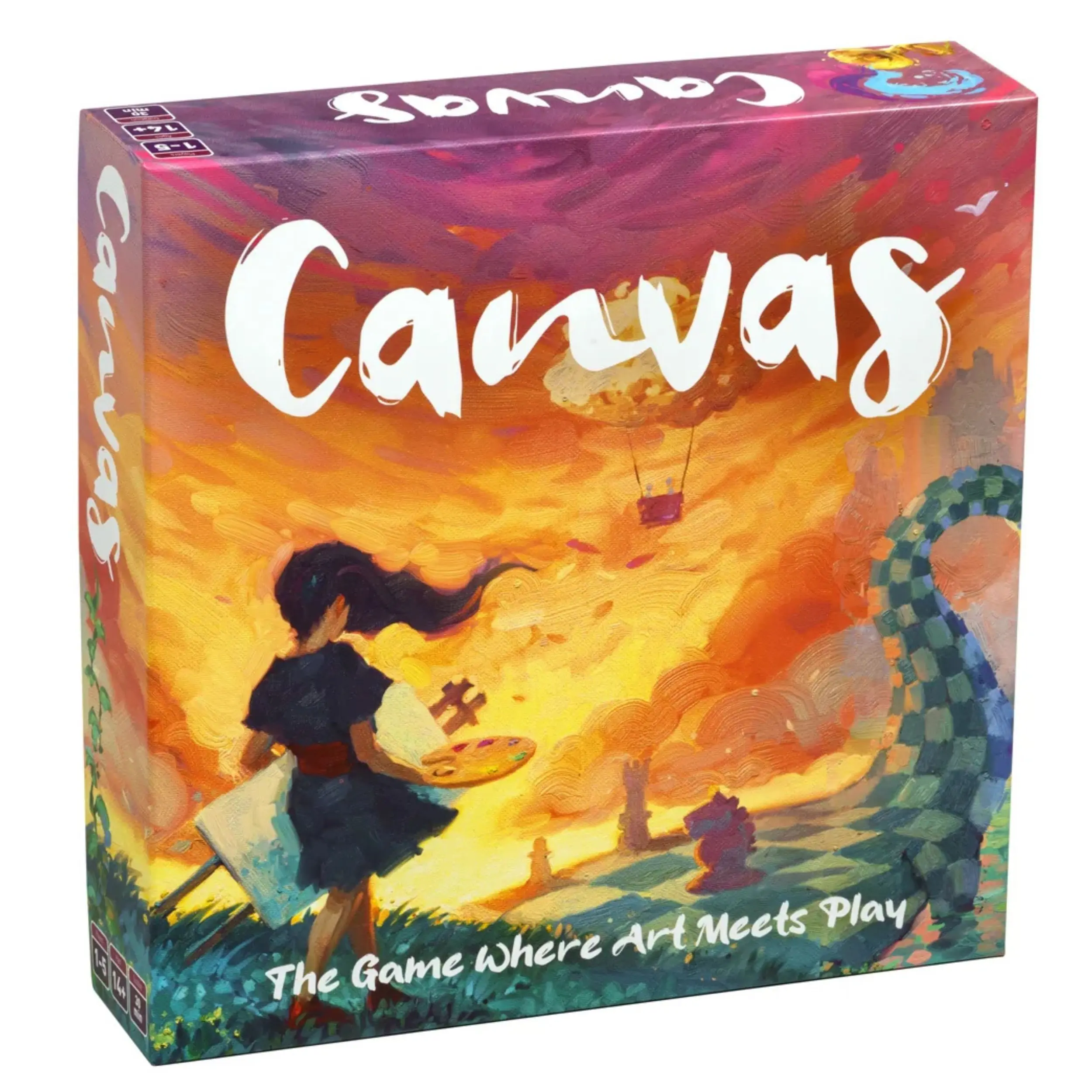
Canvas is a card game by Jeff Chin and Andrew Nerger, published by Road To Infamy Games (R2i Games) in 2021. You build paintings by stacking three clear plastic cards in a sleeve, and the art on each layer shows through the others. It plays 1 to 5 players, ages 10 and up, in about 30 minutes. This review covers rules, components and who it suits.
Canvas Board Game Overview
Each player is a painter entering an art competition. You collect Art cards, layer three of them into a painting, and score ribbons for meeting the goals on the Scoring cards in play.
After everyone finishes three paintings, the player with the most points wins Best in Show. With a short rulebook and a 1.73 out of 5 weight, it sits at the lighter end of family board games for all ages.
| Designer | Jeff Chin, Andrew Nerger |
|---|---|
| Artist | Luan Huynh |
| Publisher | Road To Infamy Games (R2i Games) |
| Year Released | 2021 |
| Players | 1 to 5 |
| Age Range | 10+ (some retail listings say 14+) |
| Playing Time | 30 minutes |
| Game Type | Family, card game, puzzle |
| Complexity Rating | 1.73 / 5 (BoardGameGeek weight) |
What’s in the Canvas Box: Components
| Component | Count | Notes |
|---|---|---|
| Transparent Art cards | 60 | Each has a piece of art and scoring icons |
| Scoring cards | 12 | Four are used each game |
| Background cards | 20 | The base layer behind each painting |
| Tarot-size sleeves | 32 | Hold a background plus three Art cards |
| Ribbon tokens | 100 | Cardboard, in colors matching the Scoring cards |
| Inspiration tokens | 20 | Paint palette shape, used to pay for cards |
| Play mat | 1 | Cloth mat with slots for the card row |
A finished painting looks like one illustration, and it gets a title built from words printed on each card.
The box opens like a drawer. The Deluxe Edition adds wooden tokens and 10 bonus Art cards.
Canvas Review: Pros and Cons
What works:
- Finished paintings look good on the table, and players often read their titles out loud.
- Twelve Scoring cards with four used per game give plenty of combinations.
- The card row pricing rewards patience, since skipped cards gain tokens.
- Two solo modes are in the box, including a bot named Vincent, so it holds up next to dedicated solo board games.
What does not:
- Player interaction is light, limited to taking cards others need.
- Scoring icons are small, and players new to it often misread which are covered.
- Sleeving and unsleeving cards between games adds setup time.
How to Play Canvas: Rules and Gameplay
Canvas Setup
Lay out the mat, place four Scoring cards on it and put ribbon piles beside them. The rulebook suggests Variety, Repetition, Unity and Composition for a first game.
Shuffle the Art deck into the deck box and deal five cards face up in the row. Each player takes three sleeved backgrounds and four Inspiration tokens.
Taking a Turn in Canvas
On your turn you take an Art card or complete a painting. To take a card, place one Inspiration token on each card to its left. The leftmost card is free. Any tokens already on your chosen card go to you.
To complete a painting, slide three Art cards into a sleeve in any order. Only visible icons count. You take a ribbon each time the painting meets a Scoring card condition. Once you hold five cards, you must paint on your next turn.
How to Win Canvas
The game ends when every player has made three paintings. Ribbon sets score more as they grow, and Bonus icons add a point per matching element. Ties go to the player with more Inspiration tokens.
Where to Buy Canvas
| Platform | What You Get |
|---|---|
| R2i Games online store | Base game, Deluxe Edition and expansions from the publisher |
| Amazon | Base game |
| Miniature Market | Base game and expansions |
| Local game stores | Stock varies |
| Board Game Arena, App Store, Google Play | Digital versions |
Canvas Game Mechanics
The main puzzle is layering. Each Art card has icons in five color-coded slots, and a card on top can cover icons below it.
The icons are four design elements: Hue, Shape, Texture and Tone. Scoring cards ask for patterns such as Texture next to Tone (Proximity) or icons in all five slots (Composition).
The card row works like the market in Patchwork or Century: Spice Road. Cards further right cost more, and ignored cards collect tokens until someone takes them for a payout.
Ribbons use escalating set scoring, so a fourth ribbon of one color is worth far more than the first. That pushes you to chase the same goals in all three paintings.
Who Should Play Canvas?
Canvas works for families, couples and people who like art. Parents can teach it to kids around age 10, and groups with mixed experience levels stay on equal footing.
If you enjoy the pattern building in Azul, Canvas has a similar calm pace with less blocking.
Skip it if your group wants direct conflict or long-term planning.
FAQ
Is Canvas good for beginners?
Yes. Each turn has two choices, and the Scoring cards spell out their goals in plain terms. The hardest part for new players is spotting which icons stay visible after layering. Most groups stop checking the rulebook after the first round.
How long does Canvas take to play?
Most games run 30 minutes, as listed on the box. Five players can push it closer to 45 minutes, mostly because people spend time arranging their final paintings. Setup takes around 10 minutes if you need to put backgrounds into sleeves first.
What’s the best player count for Canvas?
Two to four players works best. At two, the card row changes slowly and you can plan around it, which makes it a solid pick among board games for couples. At five, good cards vanish before your turn and downtime grows a little. The solo modes are a decent way to learn the Scoring cards.
Does Canvas have expansions?
Yes. R2i Games released two expansions, Reflections and Finishing Touches, which add new Art cards and scoring options. Their box covers line up with the base game box to form one wide scene. A Deluxe Edition upgrades the tokens to wood and adds bonus cards.
What games are similar to Canvas?
Azul, Cascadia and Harmonies share the calm pattern-building feel and variable scoring goals. Mystic Vale uses clear cards in sleeves too, though it is a deck builder with more rules. For a two-player option with a similar card row, try Patchwork.
