20 Top Couples Board Games 2026

Finding a good two-player game takes more than just checking the “2+” box on the back of the box. What I actually look for: games that genuinely work with exactly two people rather than feeling like a shrunken version of something designed for four, session lengths that fit a weeknight (under 90 minutes, usually), mechanics that create real decisions for both players without one person quietly running the table, and enough replayability that you’re not burned out after three sessions.
The good news is there are more quality options right now than there were even five years ago, and the range is genuinely wide.
A quick note on scope: I’ve left out games that technically support two players but feel hollow without a bigger group, and I’ve skipped anything that’s out of print or sitting at an inflated secondary market price.
This list mixes competitive and cooperative titles — if you’re mostly here for the cooperative side, our top 40 cooperative board games goes much deeper into that category specifically. Otherwise, let’s get into it.
#20 — Forbidden Island
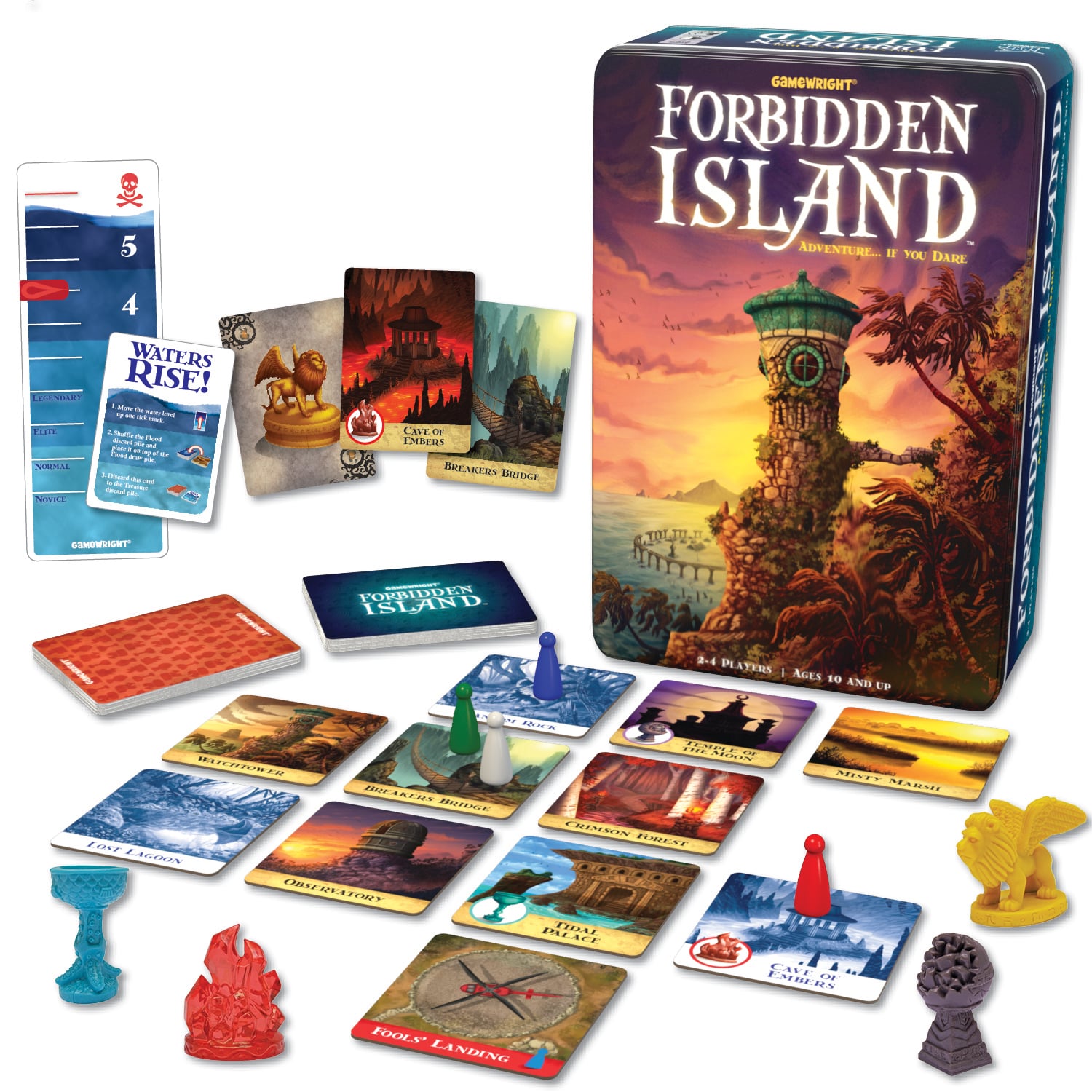
2-4 players | ~$17 | Cooperative | 30-45 min | Light
Forbidden Island is a Matt Leacock cooperative game where players collect four treasures and escape an island that’s steadily sinking beneath them. Cards drive the flooding mechanic, each player has a unique role, and the whole thing fits in a small tin that sets up in about five minutes.
My partner and I played this constantly when we first got into board games together. It’s not deep, but the escalating tension in those final few rounds is real — we’ve had plenty of “one more turn and we would’ve won” moments that kept us coming back. It also teaches cooperative vocabulary naturally: role coordination, communication under pressure, when to abandon a plan.
Get this if you’re new to cooperative games and want something quick, cheap, and still capable of generating genuine stakes.
See also: Forbidden Desert, a slightly more complex standalone follow-up that adds interesting mechanics without much added complexity.
#19 — Sushi Go!
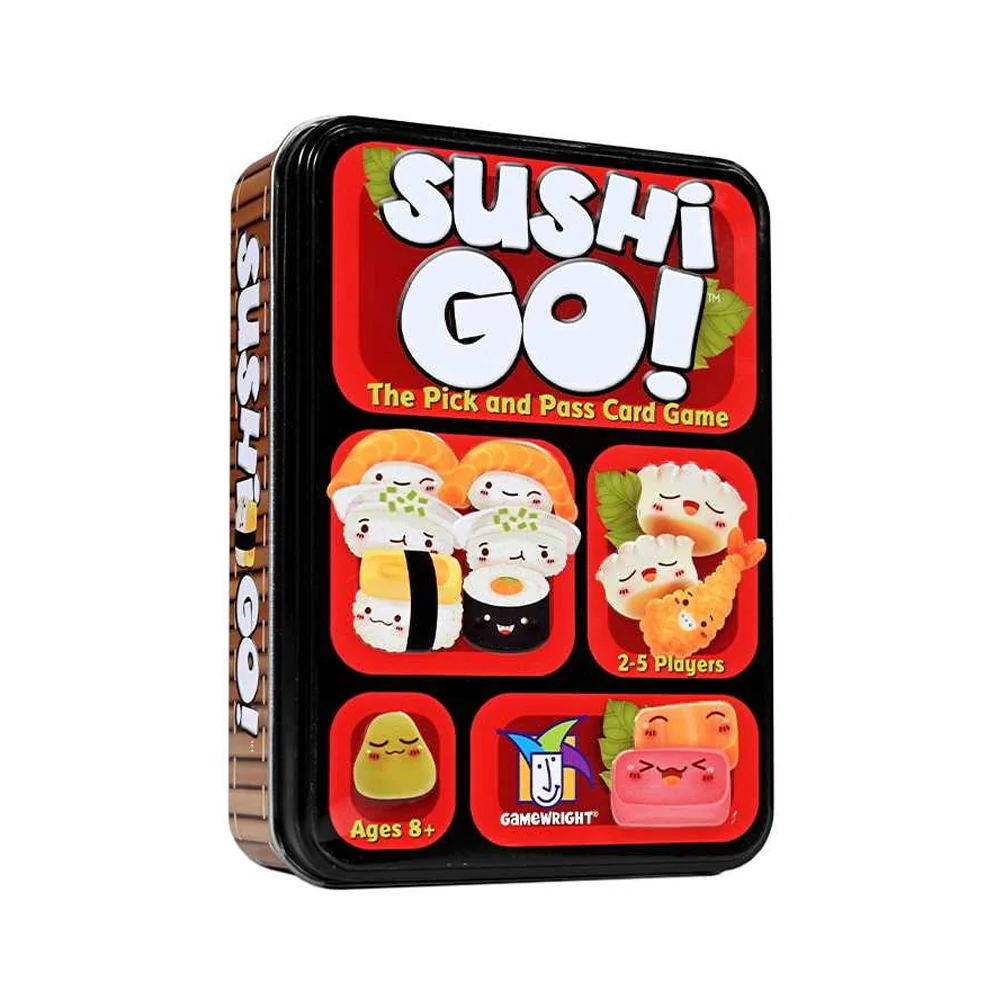
2-5 players | ~$15 | Competitive | 15-20 min | Light
Sushi Go! is a card-drafting game where you pass hands around the table, picking cards that score in different combinations. A full game runs about 15 minutes and the rules fit on a single page.
This sits firmly in filler territory, but it earns its place here because it’s genuinely fun at two and we reach for it when we have 15 minutes before something else.
The scoring has more variety than it first looks — you’re always making small decisions about whether to contest a category or cut your losses and pivot to something else.
Get this if you want something low-stakes that plays fast enough to squeeze in before or after dinner.
Sushi Go Party! is worth the upgrade if you want more card variety in the draft.
#18 — Jaipur
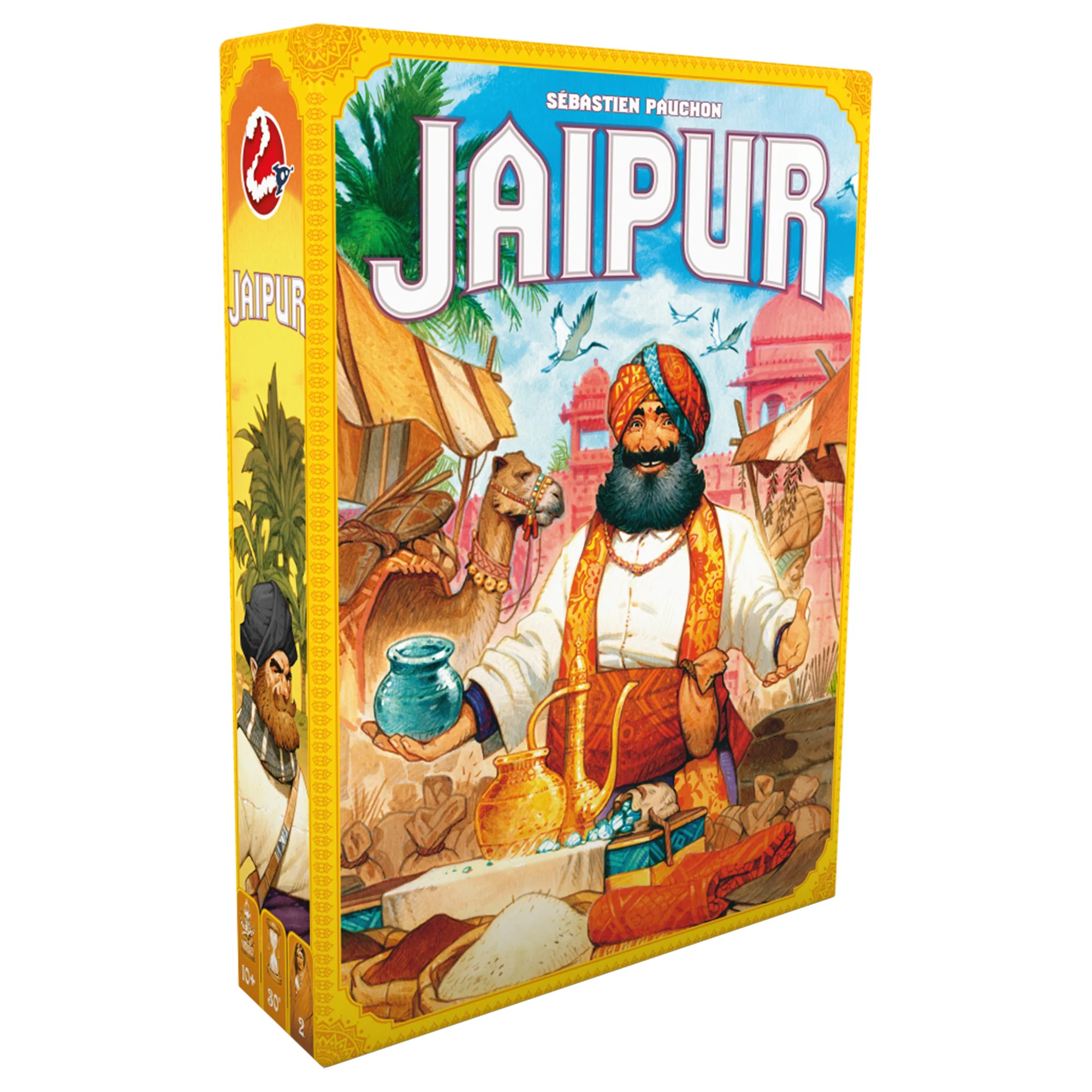
2 players only | ~$30 | Competitive | 25-35 min | Light-Medium
Jaipur is a two-player-only card game set in an Indian spice market. You’re trading goods, managing your hand, and timing your sales to grab bonus tokens before your opponent does. The game plays over three rounds, with the first to win two rounds taking the match.
It’s been around since 2009 and still holds up. The push-your-luck element in the camel herd mechanic adds timing decisions that keep it interesting across rounds, and it’s tight enough that you’re always watching what the other person is doing. We travel with it regularly because it packs flat and needs no table space to speak of.
Get this if you want a dedicated two-player competitive game that finishes in under 40 minutes and travels well.
#17 — Ticket to Ride: New York
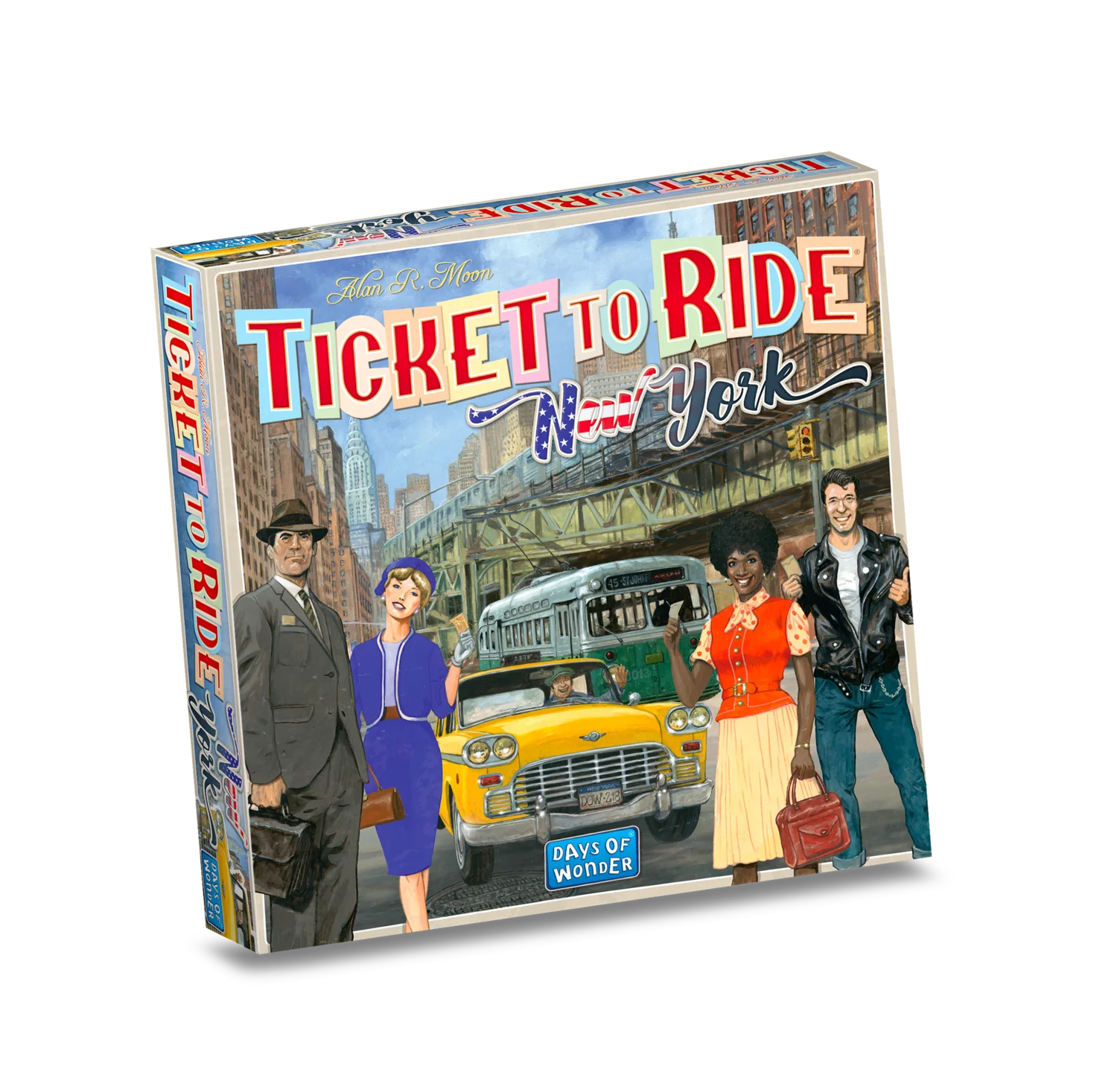
2-4 players | ~$22 | Competitive | 15-30 min | Light
Ticket to Ride: New York strips the full game down to Manhattan. The map is small, routes are short, and a full game wraps up in about 20 minutes. You’re still collecting colored cards and completing destination tickets, just on a much tighter board.
The smaller map means more conflict over routes, which actually improves the two-player experience compared to the original.
We’ve had turns where one blocked route knocked out three connections simultaneously, which was infuriating and funny in equal measure. For a quick competitive filler, it’s hard to beat.
Get this if you like Ticket to Ride but want a version that doesn’t require clearing your whole evening.
#16 — Codenames: Duet
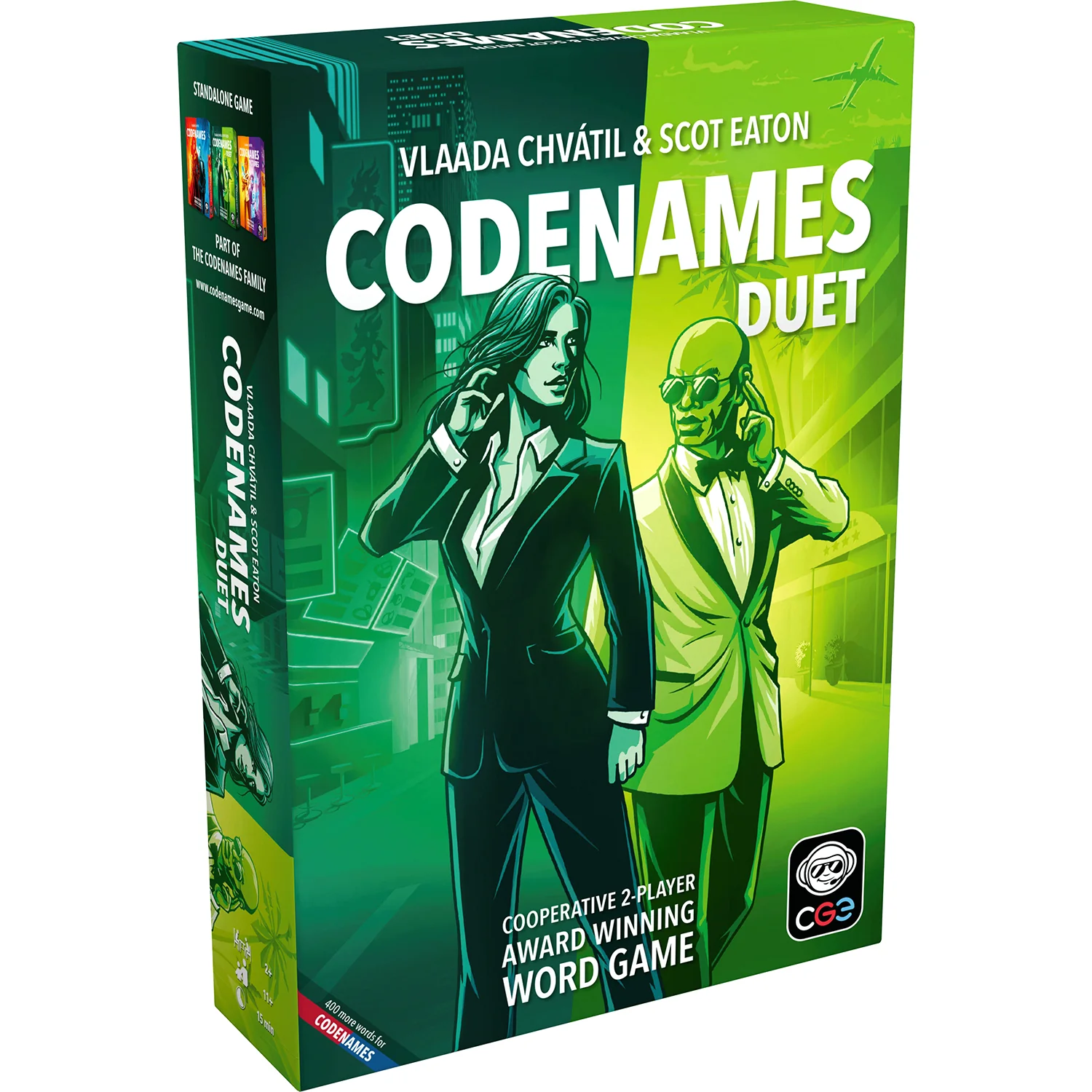
2+ players | ~$20 | Cooperative | 20-30 min | Light-Medium
Codenames: Duet adapts the original word-clue format into a fully cooperative two-player game. Each person gives one-word clues to guide the other toward specific words on a shared grid, and you both need to find all 15 target words before running out of turns.
The dual-sided clue cards are the clever bit — each person can see which words are “innocent” on their side but not the other’s, so you’re always working with incomplete information.
We’ve had rounds where a single clue unlocked four words at once, and rounds where we talked ourselves into hitting the assassin on the last turn. It plays fast enough to run two or three games back to back.
Get this if you like word games and want something cooperative that needs zero setup time.
#15 — Hive Pocket
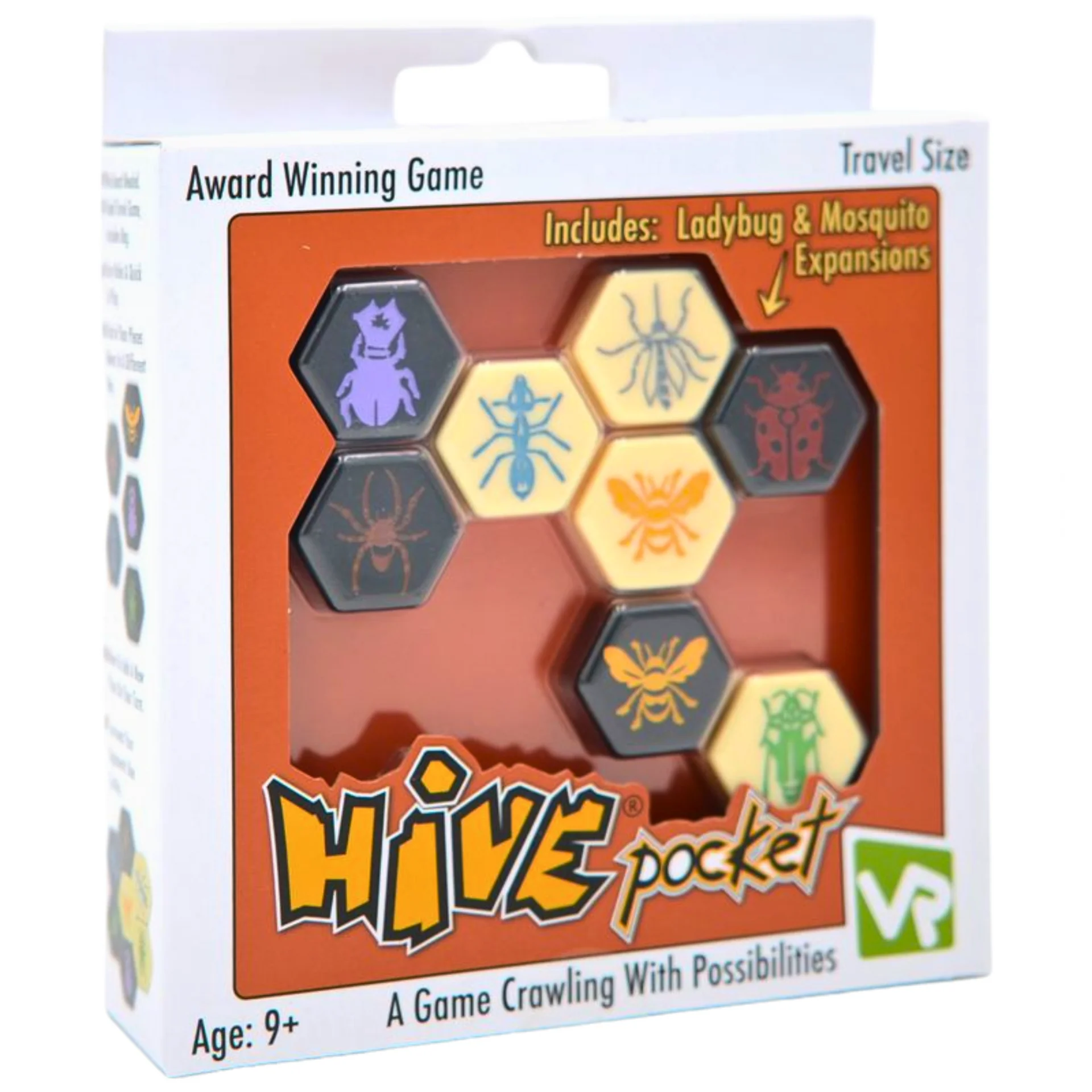
2 players only | ~$25 | Competitive | 20-30 min | Medium
Hive is an abstract strategy game played directly on a table — no board needed. Each player places insect tiles with different movement rules, trying to surround the opponent’s queen while protecting their own. The Pocket edition is smaller and includes the Ladybug and Mosquito expansions.
Abstract strategy isn’t for everyone, but Hive rewards pattern recognition and lookahead in a way that resembles chess without requiring years of study.
We play it mostly when traveling because it fits in a bag and needs nothing except a flat surface. The games are short, but there’s real depth once you understand how each piece type behaves.
Get this if one of you likes chess-style abstract games and wants something with a shorter learning curve and no board to lug around.
#14 — Azul
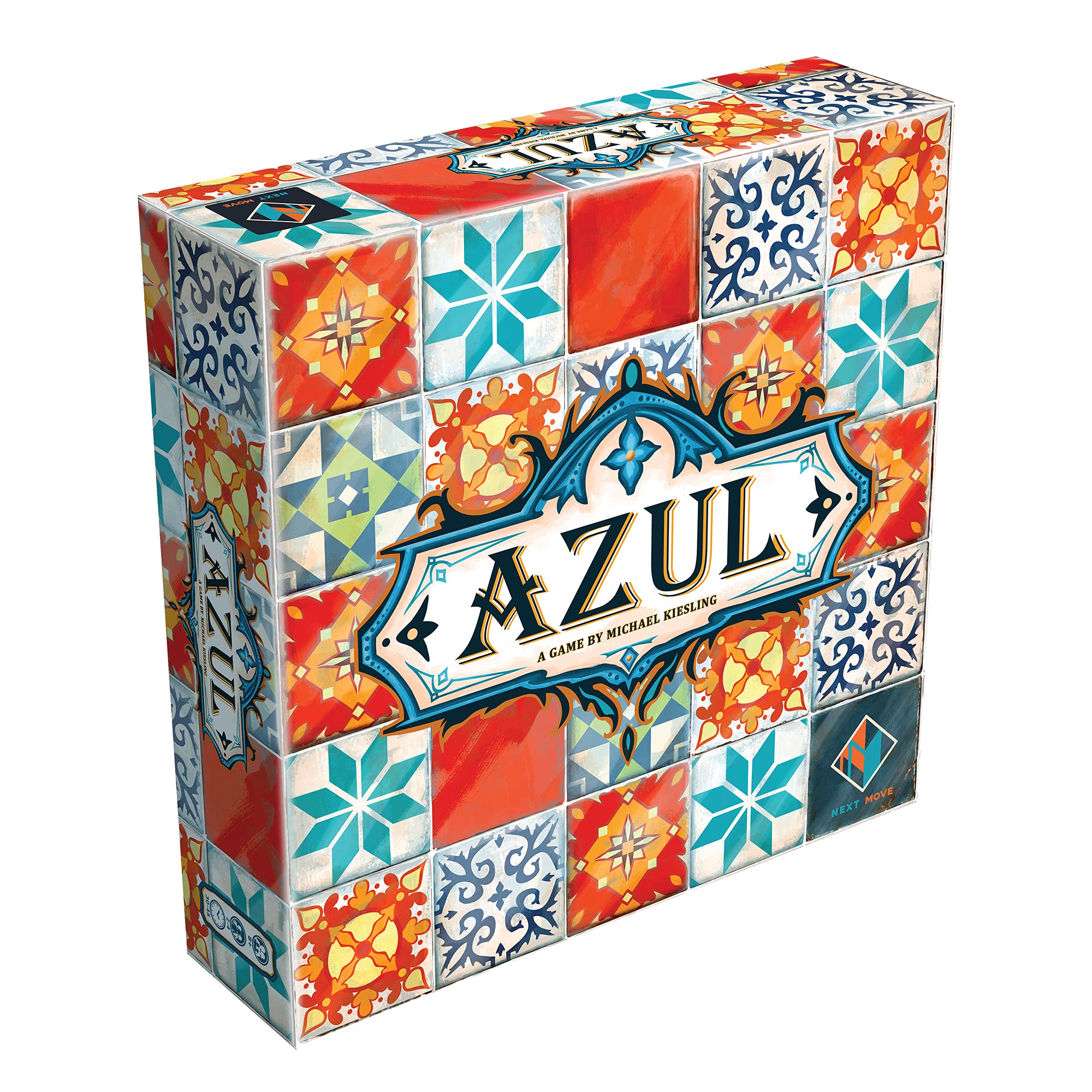
2-4 players | ~$38 | Competitive | 30-45 min | Medium
Azul is a tile-drafting game where you pull colored tiles from a central factory and arrange them on your personal board to score points. Incomplete rows carry a penalty at the end of each round, so you’re constantly managing risk alongside opportunity.
This is one of the better-looking games on the list, and that matters when you’re leaving it out on a coffee table. The player interaction is subtle — you’re rarely attacking anyone directly, but timing your drafts to leave bad options for the other person is a real part of how the game works. We usually play multiple rounds in a sitting, which is generally a good sign.
Get this if you want something with physical components that feel genuinely satisfying and a ruleset that takes about five minutes to learn.
Azul: Summer Pavilion is a more forgiving variant worth trying if you find the base game too punishing.
#13 — Cascadia
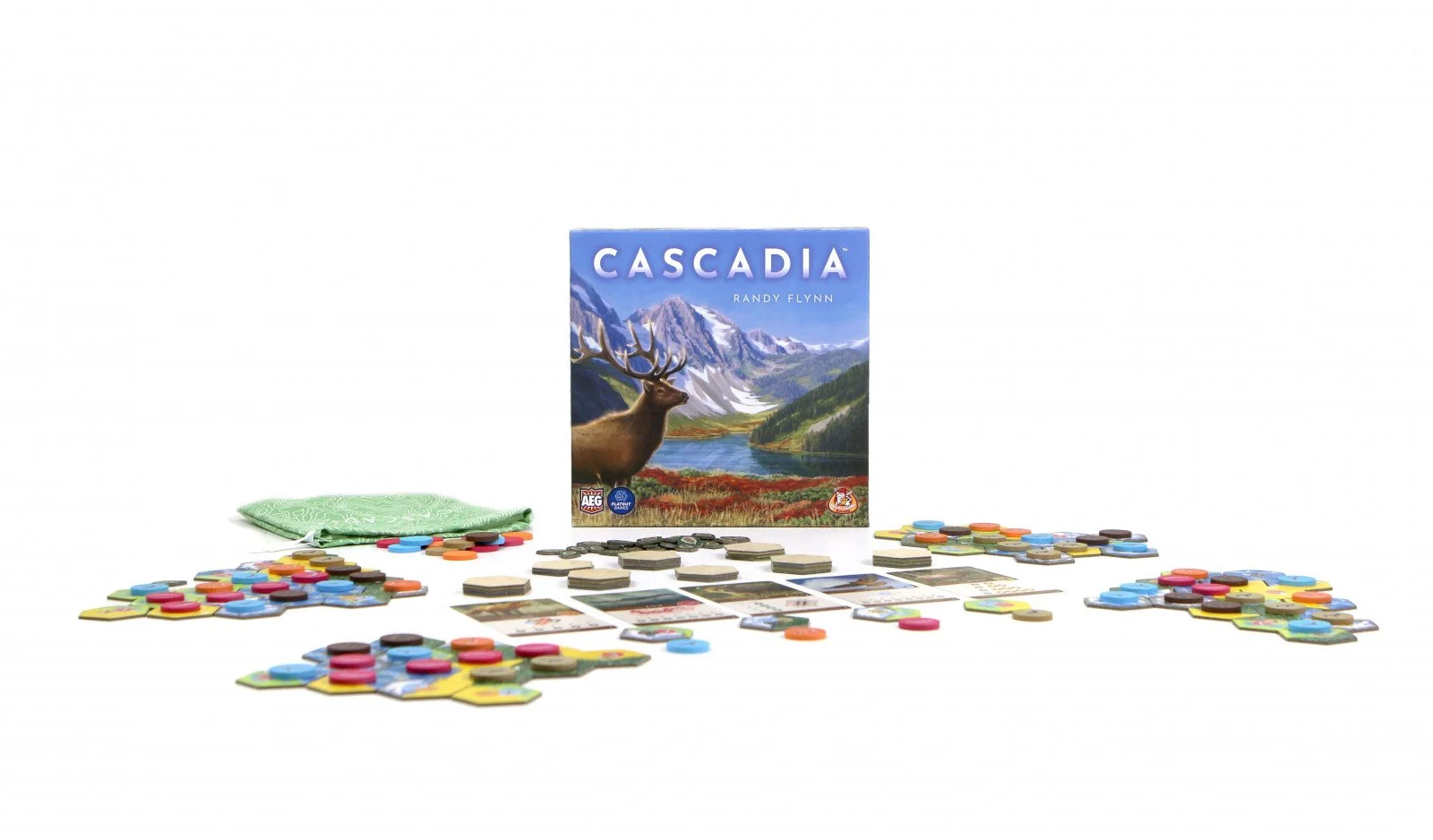
1-4 players | ~$38 | Competitive | 30-45 min | Light-Medium
Cascadia is a tile-laying and token-placement game set in the Pacific Northwest. You’re building a habitat corridor and populating it with wildlife according to scoring cards that rotate between games. Seven terrain types and five animal species create a lot of variety between sessions.
It plays calm. That’s not a knock — sometimes you want a game that doesn’t require intense focus and still gives you interesting decisions.
The rotating scoring cards mean no two games score quite the same way, which keeps it fresh across many plays. We pull this out when we want to be competitive without the game feeling adversarial.
Get this if you want a low-stress, visually satisfying game that holds up past 20 plays.
#12 — Dorfromantik: The Board Game
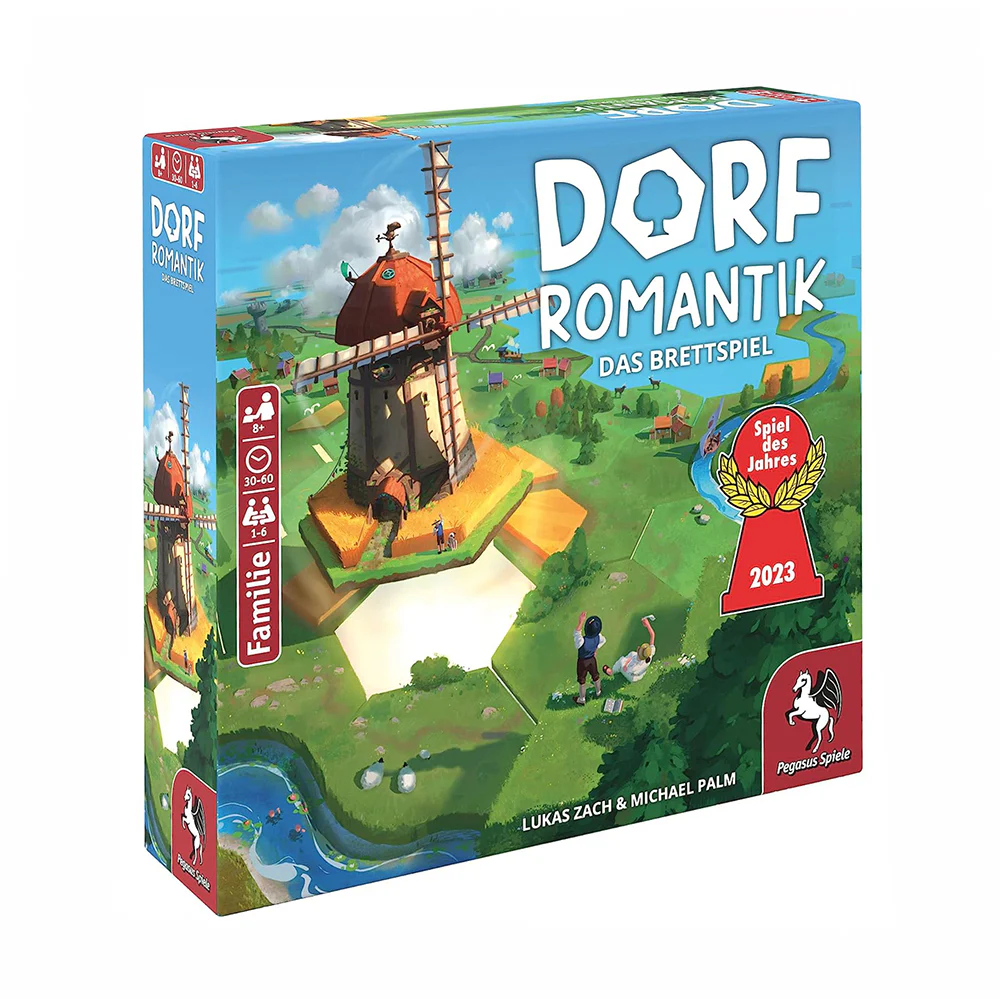
1-6 players | ~$38 | Cooperative | 60-90 min | Light-Medium
Dorfromantik adapts the relaxing city-building video game into a cooperative board game. Players take turns placing hexagonal tiles to build a continuous landscape, completing villages, forests, and railway lines to score points and unlock new tiles across a campaign.
The campaign structure is the hook here. Each session unlocks a small amount of new content that carries forward, and the whole thing has a satisfying arc without requiring a huge time investment.
It works especially well when one person is newer to board games — the rules are simple, decisions are low-pressure, and it’s cooperative without any single person driving the strategy.
Get this if you want a campaign game that isn’t heavy, particularly if one of you comes more from video games than board games.
#11 — Patchwork
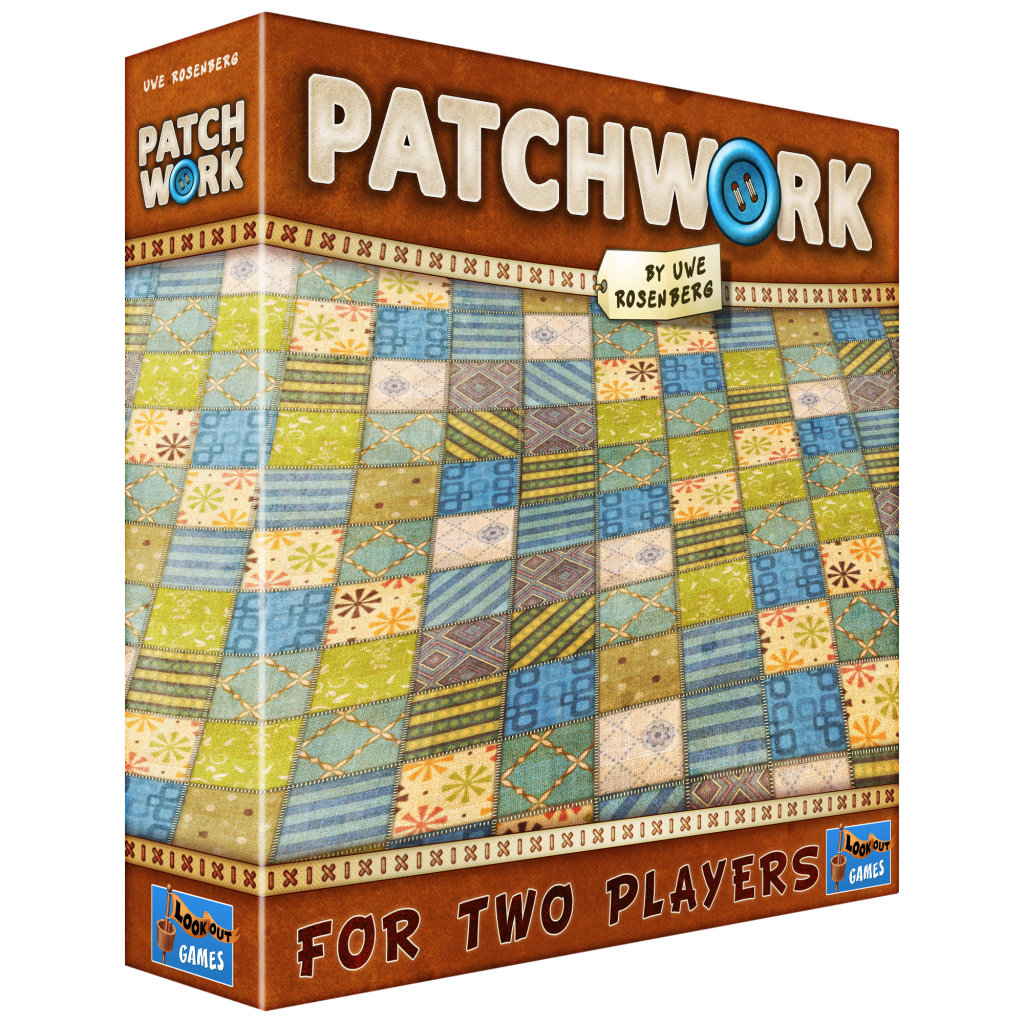
2 players only | ~$28 | Competitive | 20-30 min | Light-Medium
Patchwork is a two-player-only game about building a quilt out of Tetris-like fabric pieces. You’re buying patches from a revolving market, managing both buttons (currency) and time simultaneously. The goal is to cover as much of your personal board as possible before time runs out.
The dual-resource management is smarter than the theme suggests. Time is also currency here — taking larger patches costs more of it, which gives your opponent more opportunities to draft pieces you want.
We’ve played this for years and it still generates genuinely interesting decisions. The games are fast, the rules take two minutes to explain, and there’s a 7×7 patch that everyone fights over.
Get this if you want a two-player exclusive that takes 25 minutes and rewards coming back to it.
#10 — Pandemic
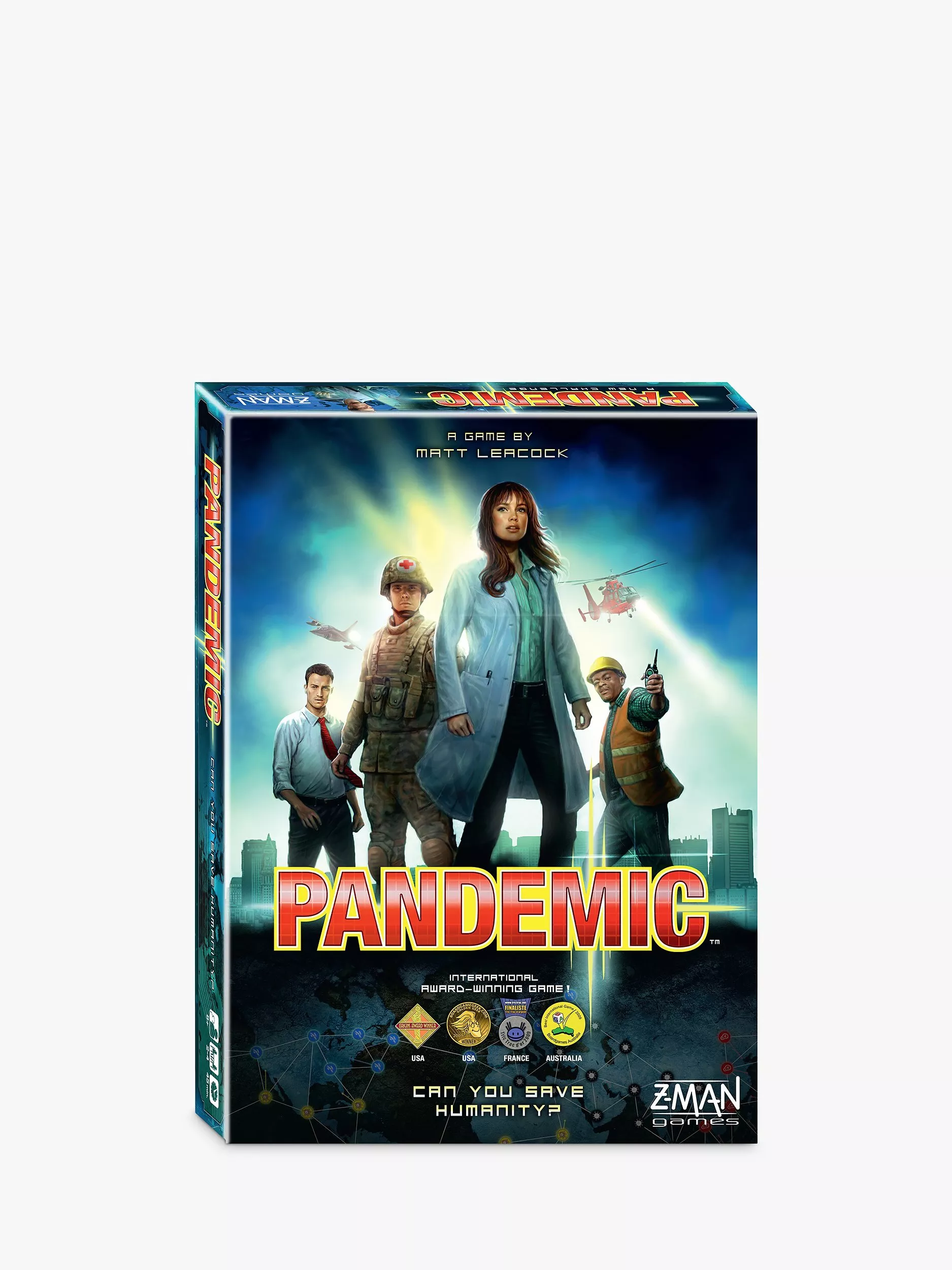
2-4 players | ~$42 | Cooperative | 45-60 min | Medium
Pandemic is a cooperative game where players work as disease specialists trying to cure four global outbreaks before the situation spirals. Each player has a role with a unique ability, you travel between city cards, and a deck drives disease spread each turn.
It’s the game that introduced a lot of people to cooperative board gaming, and there’s a reason for that. The role synergy is well-designed, and difficulty scales cleanly through the epidemic card count.
The quarterbacking problem — one experienced player directing everyone else — can appear at two players, but it’s more manageable than at four.
We’ve been playing it on and off since the early 2010s and still lose occasionally, which says something about the design holding up.
Get this if you want a reliable cooperative game that’s easy to teach and still challenging after dozens of plays. For more options in this space, our cooperative board games for two players ranking has additional titles worth considering.
#9 — Wingspan
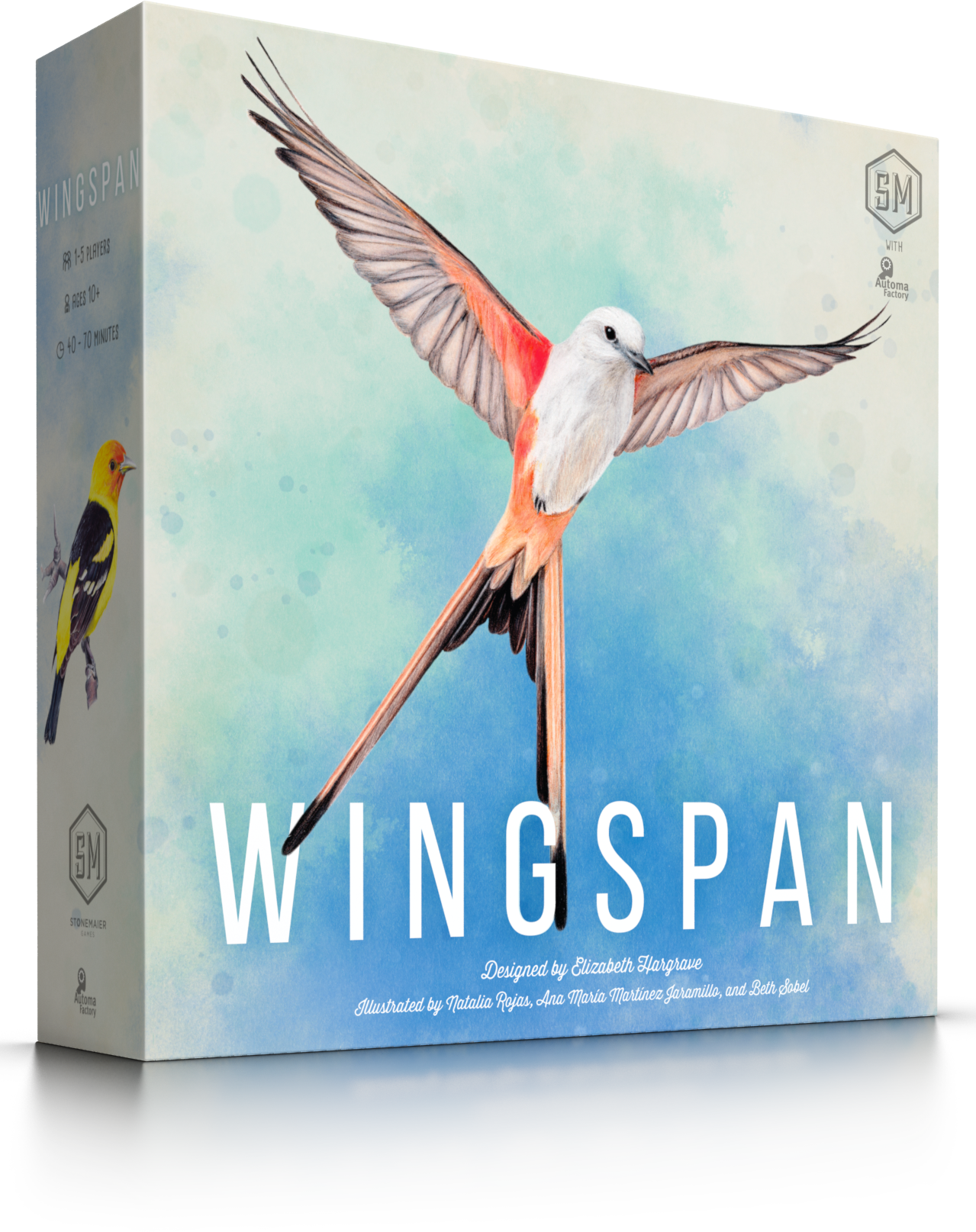
1-5 players | ~$60 | Competitive | 45-70 min | Medium
Wingspan is an engine-building game centered on bird habitats. Each turn you’re placing birds, gathering resources, laying eggs, or drawing cards.
Birds have special abilities that activate when their habitat row is used, and your engine becomes more efficient as the game progresses.
The card pool is large enough that each game plays differently depending on what’s available in the draft. It runs a bit slower at two than at higher player counts, but the strategic space is the same.
The component quality is high — the eggs are satisfying to handle — and the approachable theme means it travels well with couples who have different gaming backgrounds.
Get this if you want a medium-weight game with a large card pool that doesn’t intimidate non-gamers.
The European Expansion is worth picking up once you’ve played the base game a dozen times.
#8 — Everdell
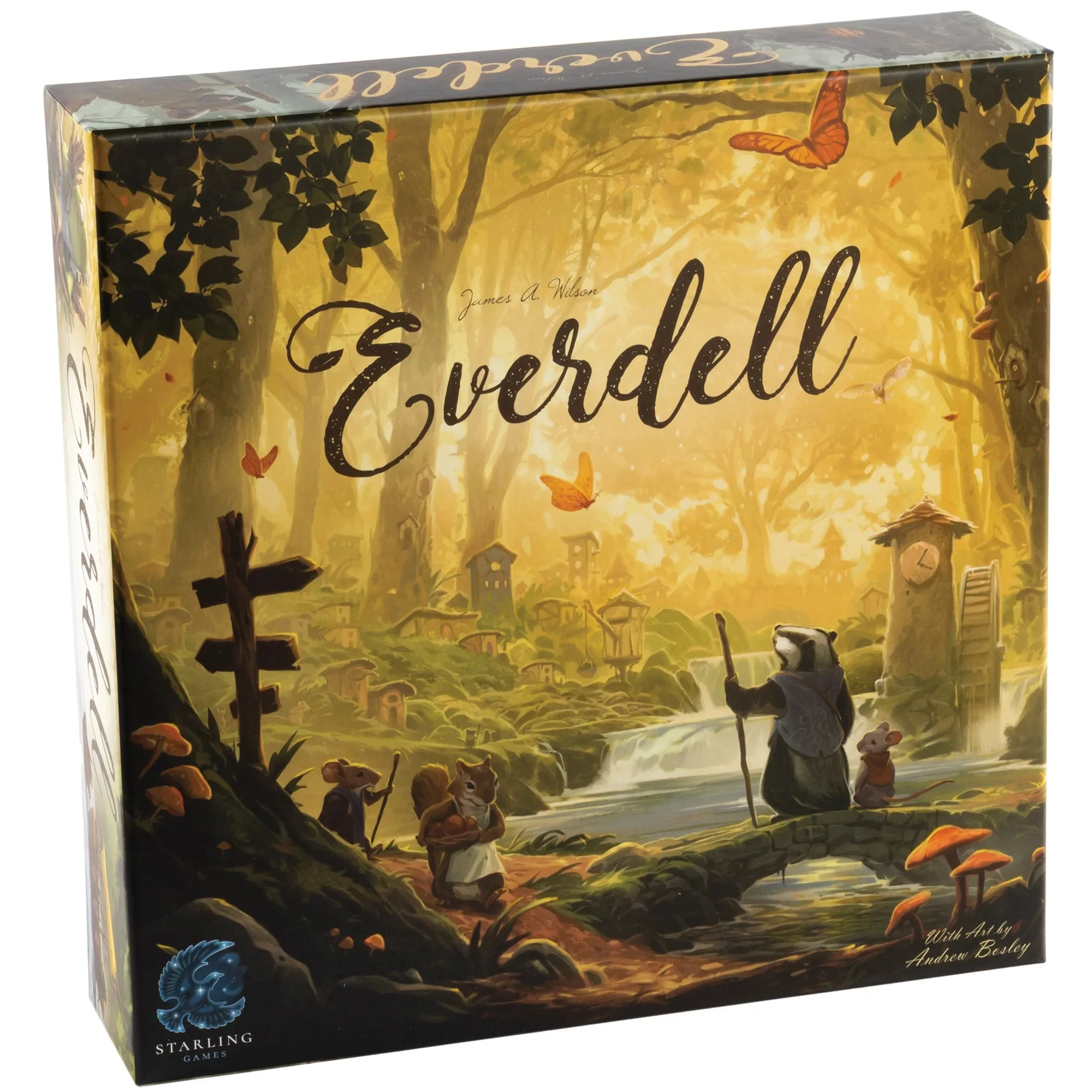
1-4 players | ~$60 | Competitive | 60-80 min | Medium
Everdell is a worker placement and card drafting game set in a forest city full of animal citizens. You’re building a city of up to 15 cards across three seasons, placing workers to gather resources and playing critter and construction cards that interact in chains.
The card synergies are the main draw. Getting a chain of cards that trigger across a season feels genuinely satisfying, and there are enough card types that you rarely see the same city twice.
At two players, competition for the shared meadow (a row of open cards) is tighter than at higher counts, which we’ve found actually improves the game rather than hindering it.
Get this if you want a mid-weight game with strong visual presence and card-driven strategy you’ll want to optimize across multiple plays.
#7 — 7 Wonders Duel
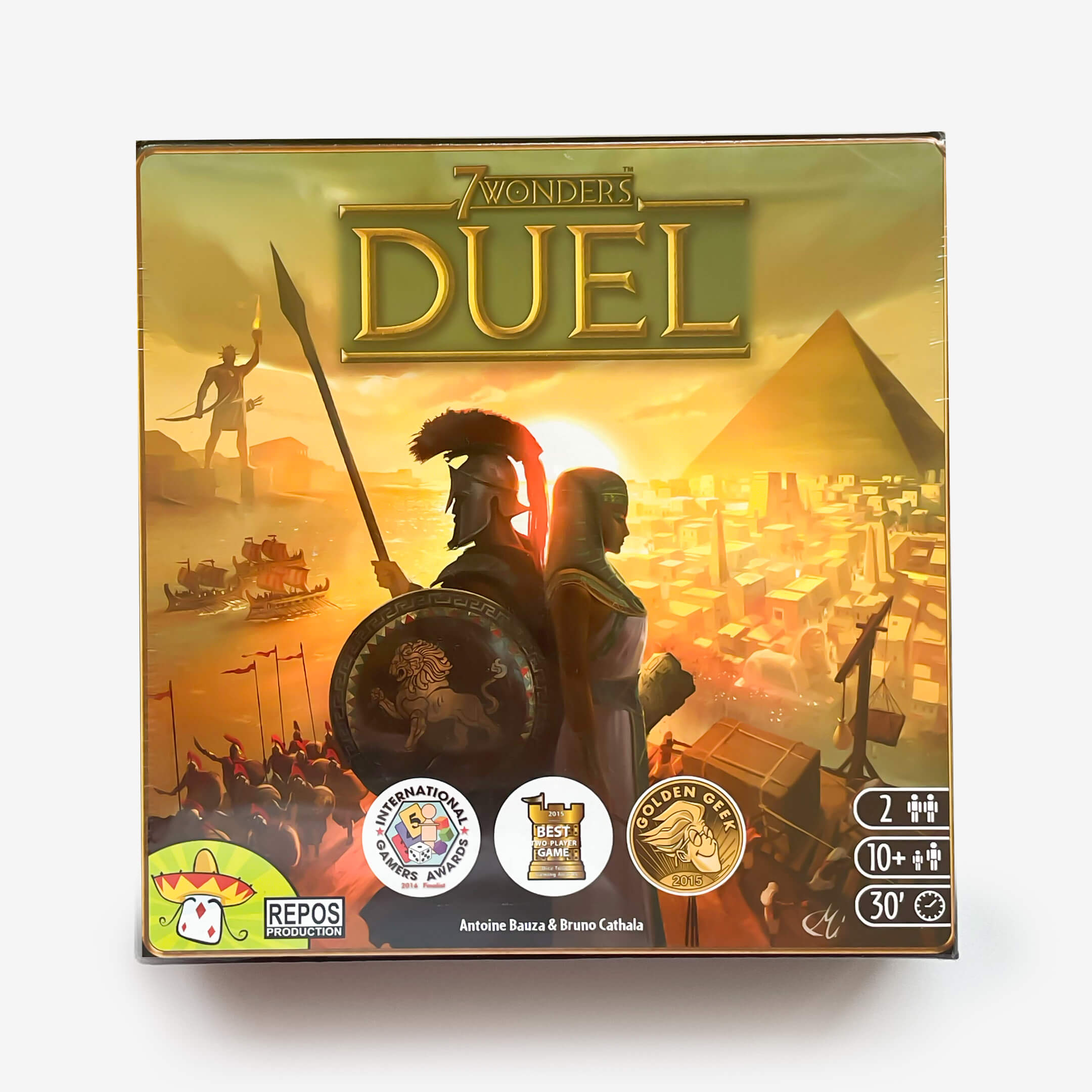
2 players only | ~$37 | Competitive | 30-45 min | Medium
7 Wonders Duel is a two-player-only card drafting game set in the ancient world. You build a civilization across three ages, drafting cards from a shared layout, collecting resources, and pursuing one of three victory conditions: military dominance, scientific supremacy, or points.
This might be the most tightly designed two-player game on this list. The card layout means every pick matters because revealing a card opens new ones for your opponent.
Three victory conditions create genuine tension — you’re tracking multiple threats at once and occasionally have to abandon your plan to respond to theirs. We’ve played this more than any other competitive two-player game, probably by a wide margin.
Get this if you want a dedicated two-player game with a tight competitive arc and multiple paths to winning.
The Pantheon expansion adds a gods draft layer and is worth it if you play frequently.
#6 — Sherlock Holmes Consulting Detective
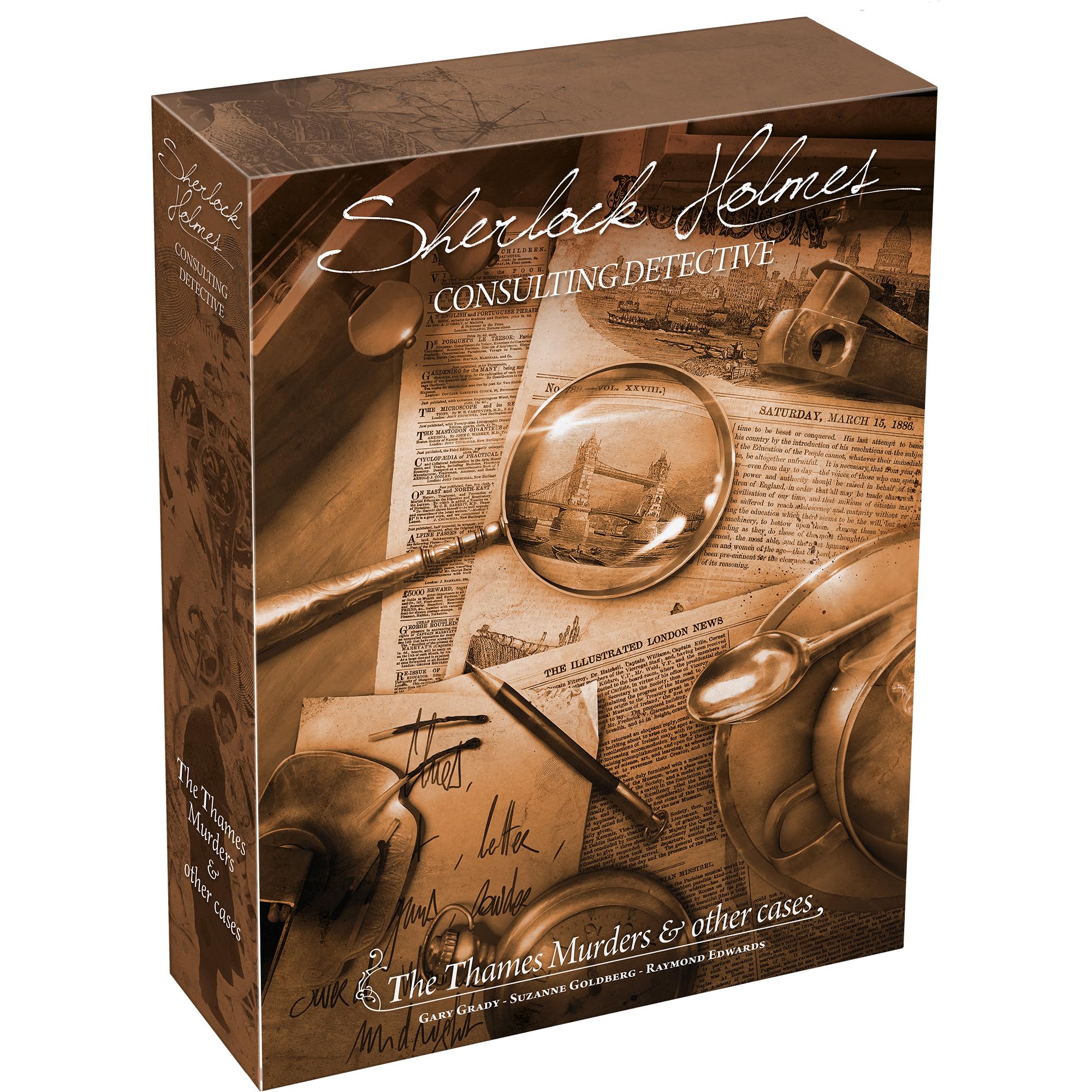
1-8 players | ~$50 | Cooperative | 60-120 min | Medium-Heavy
Sherlock Holmes Consulting Detective gives you a casebook, a newspaper archive, and a map of Victorian London. You read a case summary, then decide which addresses to visit by cross-referencing clues across documents. At the end, you answer questions about the case and compare your solution to Holmes’s.
It’s more reading than gaming, which is either a feature or a problem depending on what you’re expecting. The cases are well-constructed — the clues are there if you follow the right threads, and the newspaper is full of red herrings.
We split reading duties and debate which leads to follow, and that’s where the actual fun lives. You’ll rarely match Holmes’s efficiency, and honestly, that’s fine.
Get this if you want something that functions more like collaborative mystery-solving than a traditional board game.
#5 — Lost Ruins of Arnak
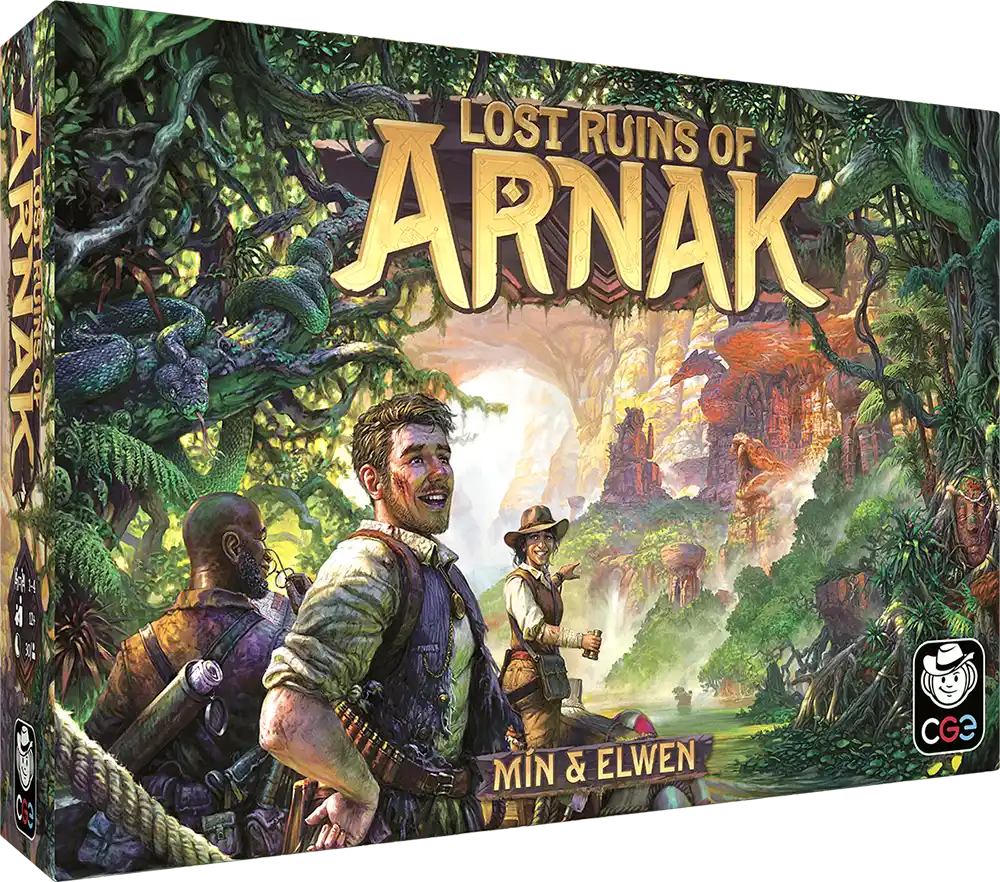
1-4 players | ~$55 | Competitive | 60-120 min | Medium-Heavy
Lost Ruins of Arnak combines worker placement with deck building in an archaeological adventure setting. Each round you’re sending explorers to discover sites, fight guardians, and advance up tracks on a shared board, while building a deck with items and artifacts that generate resources.
The research track is what makes this work especially well at two. There’s constant competition for track positions and site spots, so you’re always responding to what your opponent just did rather than playing in parallel.
The turns are meaty but move forward visibly — you always feel like you accomplished something. We’ve played with the assistant researchers included in the deluxe edition, but the base game is plenty for the first several plays.
Get this if you want a medium-heavy game with clear objectives and satisfying turns.
#4 — Arkham Horror: The Card Game
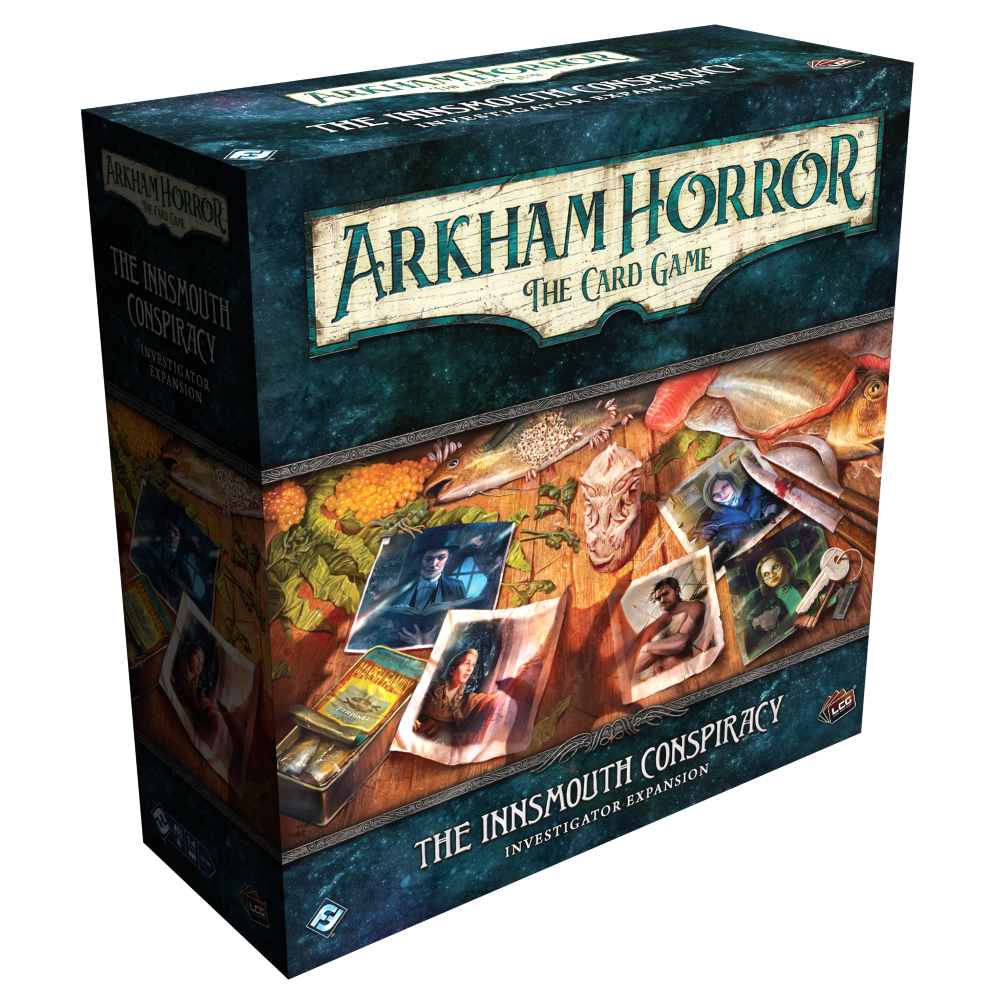
1-4 players | ~$42 (core set) | Cooperative | 60-120 min per scenario | Heavy
Arkham Horror: The Card Game is a Living Card Game — you buy the core set once, and expansions add new scenarios and player cards. You’re building custom investigator decks and running through linked scenarios in a campaign, with decisions that carry permanent consequences between sessions.
The narrative depth here is unlike anything else on this list. Losing a scenario doesn’t end the campaign — it changes it, sometimes in ways that make later sessions significantly harder.
The deck construction is deep enough to sustain interest across years of play, and at two players each person controls their own deck and investigator, which prevents the quarterbacking issue.
We’ve been running one campaign or another for two years without exhausting what it offers. It also ranks among our favorites in the best cooperative adventure board games category.
Get this if you want a campaign game you can return to across months that grows with expansions.
#3 — Gloomhaven: Jaws of the Lion
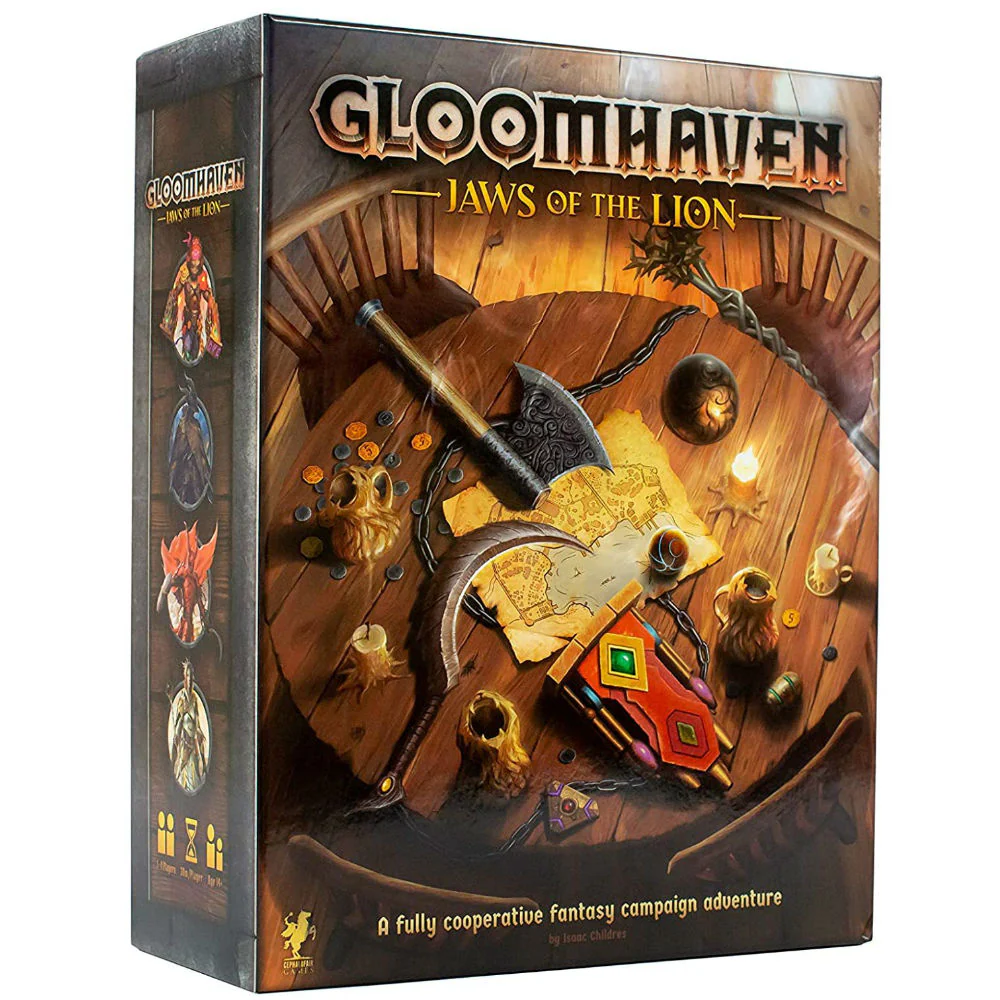
1-4 players | ~$50 | Cooperative | 60-90 min per scenario | Heavy
Gloomhaven: Jaws of the Lion is the accessible entry point to the Gloomhaven system. You play through a 25-scenario campaign as mercenaries in a dungeon-crawl setting, using a hand of ability cards to move, attack, and activate special powers. Characters level up and unlock new abilities as the campaign progresses.
A built-in tutorial across the first four scenarios makes the initial learning curve far less steep than the original Gloomhaven.
The card-based combat is more strategic than it first appears — you’re planning two actions per round and accounting for initiative order, and the game punishes careless play without feeling arbitrary. We’ve run two full campaigns with different character combinations and had meaningfully different experiences each time.
Get this if you want a meaty campaign game and can commit to regular play sessions over a few months.
#2 — Spirit Island
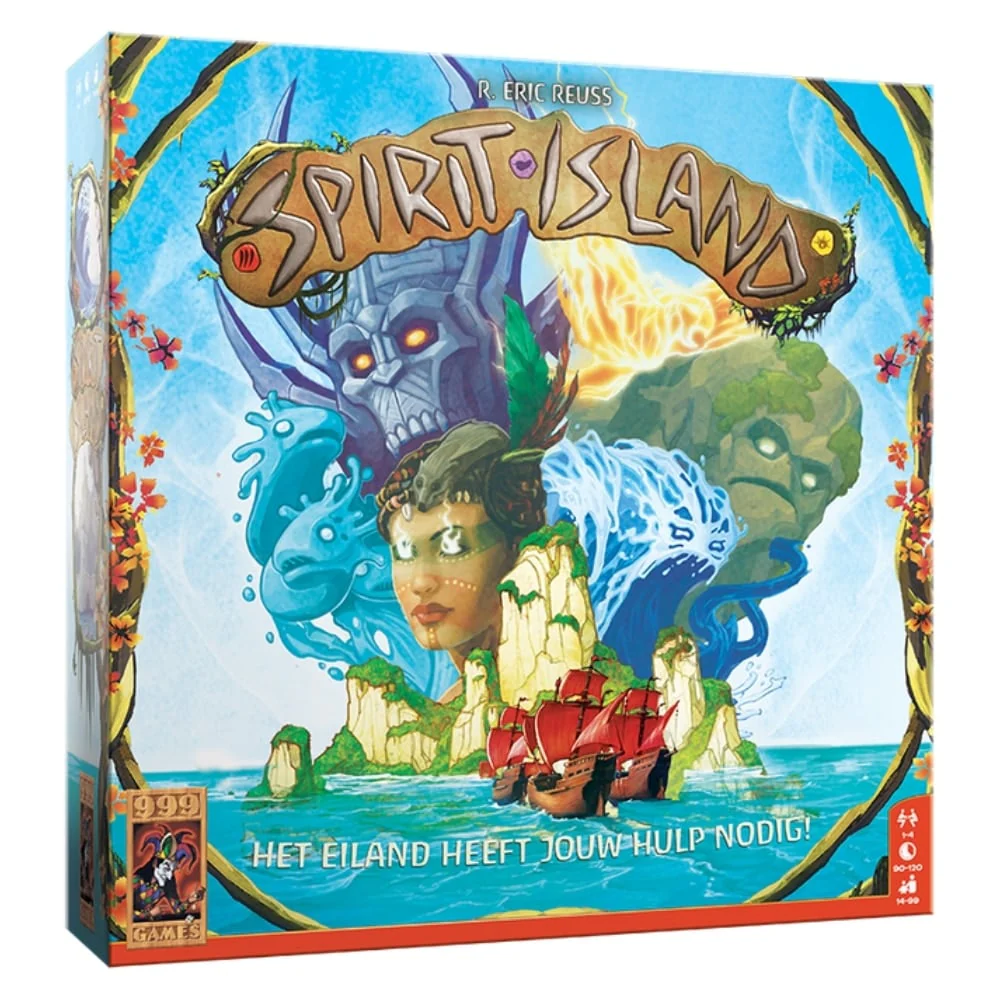
1-4 players | ~$75 | Cooperative | 90-120 min | Heavy
Spirit Island is a cooperative game where players are spirits defending an island from colonial invaders. Each spirit has a unique power set and growth mechanic.
You’re managing your presence across the island board, acquiring new powers, and pushing back the invaders before they blight the land beyond recovery.
The asymmetry is what the game actually is. Every spirit plays differently — some spread slowly and hit hard, others generate fear from a distance, others run entirely on card combos.
We spent the first dozen games learning individual spirits before trying combinations, and discovering how two spirits synergize is consistently exciting. The difficulty modifier system goes from beginner to something genuinely punishing at the high end, and it’s not kidding.
Get this if you want a deep cooperative game with high replay value and don’t mind a 30-minute setup and teardown.
#1 — Pandemic Legacy: Season 1
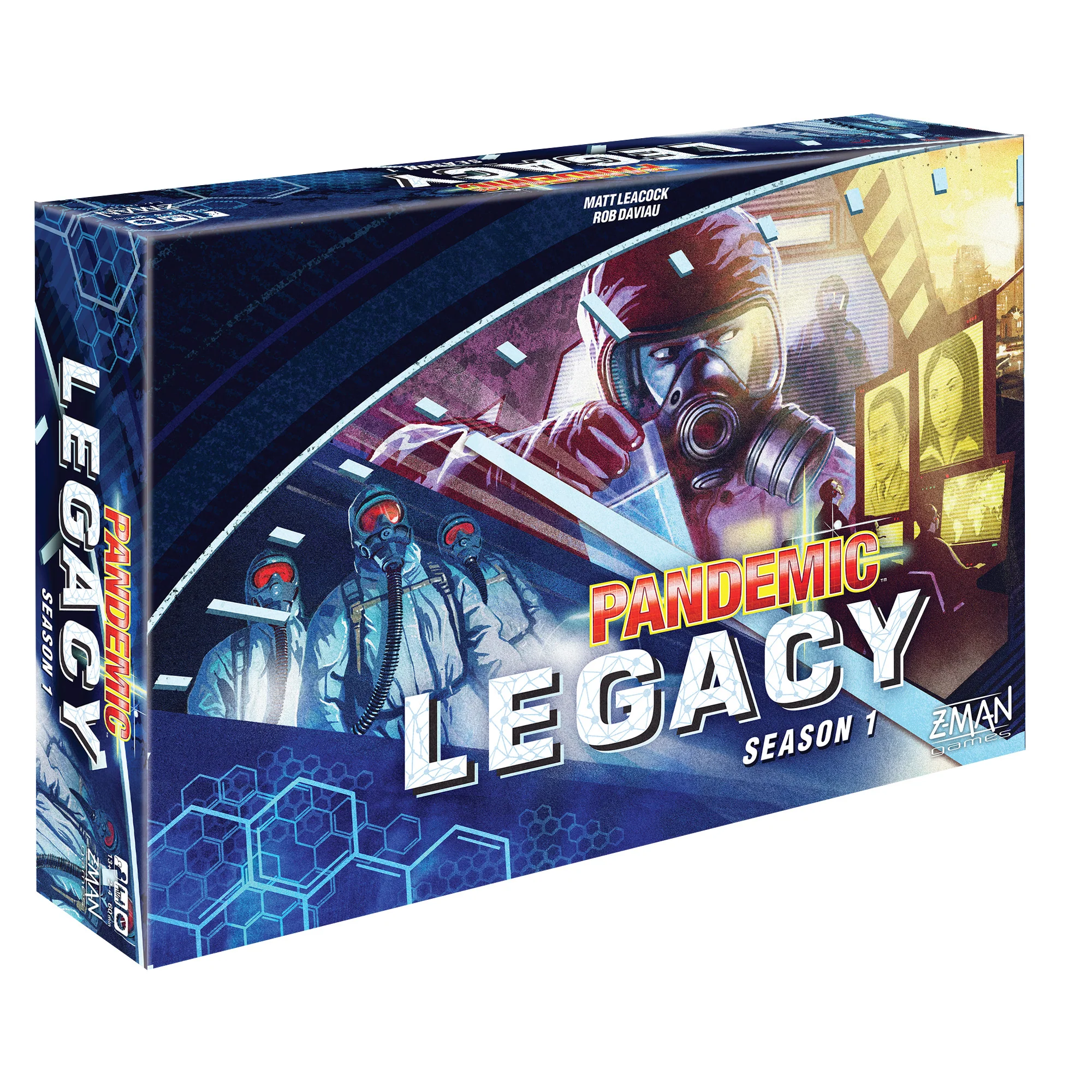
2-4 players | ~$55 | Cooperative | 45-75 min per session | Medium-Heavy
Pandemic Legacy: Season 1 takes the base Pandemic engine and runs it through a 12-24 session campaign where choices carry over permanently.
Cities get stickers. Characters can scar. Rules change in ways you don’t anticipate at the start. You open sealed envelopes, find new components, and occasionally discover the game has been playing you.
Playing this as a couple is one of the better board game experiences I’d point anyone toward. Sessions are short enough to fit a weeknight, but the overall arc builds across months.
We started keeping a session log without trying to — the game generates shared reference points naturally, and the reveals in the back half of the campaign are the kind of thing you’ll still bring up years later. It plays brilliantly at two, and the campaign-level stakes make every individual session feel like it matters.
Get this if you want something that functions as a shared ongoing story as much as a game.
Our Verdict
Pandemic Legacy: Season 1 sits at the top because no other game on this list gives you an ongoing narrative that builds across months with session lengths that actually fit real life — and the payoff in the back half of the campaign earns every hour you put in before it.
If you’re starting out and want a lighter entry point, Forbidden Island or Pandemic are both solid first purchases. For a broader look at the two-player cooperative space specifically, our cooperative board games for two players ranking goes into more depth on that side of things.
