
The Gallerist Board Game Review

The Gallerist, designed by Vital Lacerda with art by Ian O’Toole and published by Eagle-Gryphon Games in 2015, puts 1 to 4 players in charge of a high-end art gallery. The game runs 60 to 150 minutes, suits ages 13 and up, and sits at a 4.21 out of 5 complexity weight on BoardGameGeek. Players buy works of art, raise artist fame, manage gallery visitors, and stake their reputation across an international market. This review covers gameplay, components, and whether the heavy ruleset earns shelf space.
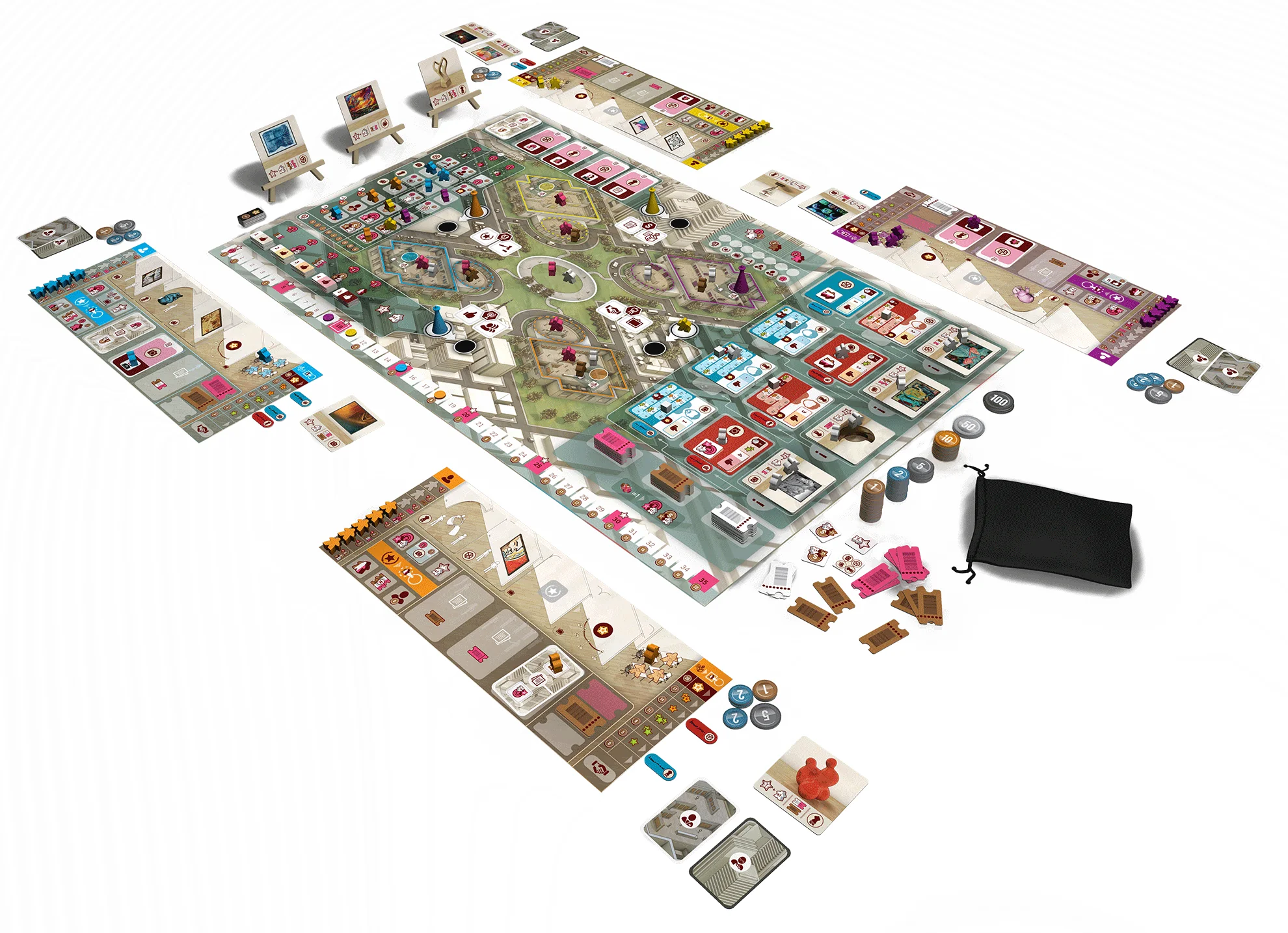
The Gallerist Game Overview
Each player runs a private gallery, competing to finish with the most money. You buy works from artists, push their fame up to raise prices, sell pieces to visitors, and build international reputation along the way.
Two scoring engines run in parallel. The main game generates cash through art transactions, while end-game bonuses come from contracts, reputation tiles, visitor counts, and international market positions.
| Designer | Vital Lacerda |
|---|---|
| Artist | Ian O’Toole |
| Publisher | Eagle-Gryphon Games |
| Year Released | 2015 |
| Players | 1 to 4 |
| Age Range | 13+ |
| Playing Time | 60 to 150 minutes |
| Game Type | Strategy, Economic |
| Complexity | 4.21 / 5 (heavy) |
What’s in The Gallerist Box
Eagle-Gryphon packed a lot of cardboard and wood into this one. Setup takes 15 to 20 minutes once you know what goes where.
- 1 main game board and 4 Art Gallery player boards
- 4 Gallerist pawns and 4 influence markers
- 32 Work of Art tiles and 16 Artist tiles
- 60 visitor tickets in three colors (white, pink, brown)
- 40 wooden visitor meeples (Collectors, VIPs, Investors)
- 40 plastic assistant figures, 10 per player color
- 20 Reputation tiles, 8 Fame markers, 8 Celebrity tiles
- 20 Promotion tokens, 4 Art Dealer cards, 4 Curator cards, 20 Contract cards
- 3 easels, a cloth visitor bag, and 72 coins
Component quality sits at the top end. The boards are thick, the artwork tiles carry real abstract paintings rather than stock art, and the visitor meeples come in distinct shapes for each type. Iconography is dense, so the included player aids see heavy use during the first few sessions.
Pros and Cons
Pros
- Four action spots covering eight actions, tight design without bloat
- Every decision ripples through fame, visitor flow, and contracts
- Buying art low and selling high after promoting an artist feels satisfying
- Solo mode with the automa plays well and trains you for multiplayer
- Art tiles and visitor meeples raise the table presence above most Euros
Cons
- First play is rough, expect to misuse actions until game three or four
- Setup and teardown each take 15 minutes minimum
- Two-player suffers, artist promotion stalls and auctions can punish the trailing player
- Iconography is dense and the rulebook references back to itself often
How to Play The Gallerist
Setup
Place the main board centrally with the artist colony, plaza, and international market populated by their starting pieces. Each player takes a gallery board, three assistants, 10 coins, and one visitor of each type for the bag. Shuffle contract cards and deal a starting hand.
Turn Structure
On your turn, move your Gallerist pawn to one of four action spaces and perform that action. You cannot stay on your current space. Each space holds two actions, so the board hosts eight distinct things to do.
The four action spaces are: buy art or discover an artist, promote artist or hire assistants, run international auction or build international reputation, and sell art or take a contract.
The Kicked-Out Action
If you move to a space holding another player’s pawn, you push that pawn off. The kicked-out player then performs a bonus action before your turn continues. This pulls every player into the rhythm of the game, even during opponents’ turns. Smart play often involves baiting opponents into giving you the kicked-out trigger.
Winning
The end-game triggers when two of three conditions hit: the ticket supply runs out, all visitors enter the board, or two artists reach celebrity status. Players then run a final round, sell remaining art at end-game rates, and total their cash. Most money wins.
Where to Buy The Gallerist
| Platform | Notes |
|---|---|
| Eagle-Gryphon Games | Direct from the publisher, occasional reprints |
| Amazon | Third-party sellers, prices vary by edition |
| Miniature Market | Stocks the standard edition when available |
| Cool Stuff Inc | Carries Lacerda titles consistently |
| eBay | Out-of-print Kickstarter editions with stretch goal pack |
| BoardGameGeek GeekMarket | Resale listings from private sellers |
The Gallerist Game Mechanics
At its core, this is worker placement with commodity speculation. The kicked-out action twists the placement formula by rewarding aggressive movement rather than punishing it.
Commodity speculation drives the money game. Buying a piece from a young artist locks in a low price, then promoting that artist later raises sale value. Timing matters, because every other player can also benefit from a fame jump if they own pieces by the same artist.
Visitor management adds a second layer. You spend tickets to lure Collectors, VIPs, and Investors into your gallery. Each type rewards you on a different track, fame, influence, or money. Lining up visitor types with the art on your walls multiplies your gains. For more games with this kind of interconnected economy, see our list of heavy strategy board games.
Who Should Play The Gallerist
This game suits experienced gamers who enjoy puzzle-like turns and long planning horizons. Fans of Lacerda’s other titles, Lisboa, Kanban EV, and Vinhos, will recognize the style immediately. Players who liked Brass: Birmingham for its market tension will find a similar feel here, traded for art instead of industry.
Skip it if your group prefers shorter games, dislikes rules-heavy teaches, or sticks to two-player counts. The game shines at three and four players, where artist promotion creates real tension. For lighter alternatives at the same table, look at worker placement games with shorter teach times. Solo players should know the automa system holds up across replays, making this a strong pick for the best solo board game shelf.
FAQ
Is The Gallerist good for beginners?
No. This game targets experienced strategy gamers. The rulebook runs 16 pages, icons cover every component, and most players need three or four sessions before strategy clicks. Start with lighter Lacerda games like CO2: Second Chance or work up through other heavy Euros first.
How long does The Gallerist take to play?
Plan on 90 minutes per experienced player, so a three-player game lands around two and a half hours. First plays stretch to three or four hours due to teach time and analysis paralysis. Solo games against the automa finish in 60 to 90 minutes.
What is the best player count for The Gallerist?
Three players hits the design sweet spot. Four works but adds downtime as decisions stack up. Two-player suffers because artist promotion benefits both players equally and the international auction becomes a resource sink. Solo mode plays well thanks to a well-tuned automa.
Is The Gallerist worth buying?
For heavy-game fans, yes. The integrated mechanics, art-driven theme, and component quality justify the price tag, which usually runs 80 to 100 dollars. Casual gamers should rent or borrow first, since the complexity barrier and long setup do not suit every group.
What games are similar to The Gallerist?
Lisboa and Kanban EV share the designer and the layered economy. Vinhos: Deluxe Edition uses similar promotion mechanics with wine instead of art. Outside Lacerda’s catalog, Carnegie and On Mars offer comparable weight, while Brass: Birmingham matches the market-driven cash flow.
