
Star Wars Rebellion Review

Star Wars: Rebellion drops the entire Galactic Civil War onto your table. Corey Konieczka designed it, Fantasy Flight Games published it in 2016, and the box holds 153 plastic miniatures plus two connected boards. One player hides a secret Rebel base. The other spends the game hunting for it. Sessions run 180 to 240 minutes, the age rating is 14 and up, and the game supports two to four players. This review covers the components, the rules, the mechanics, and the type of group that suits it.
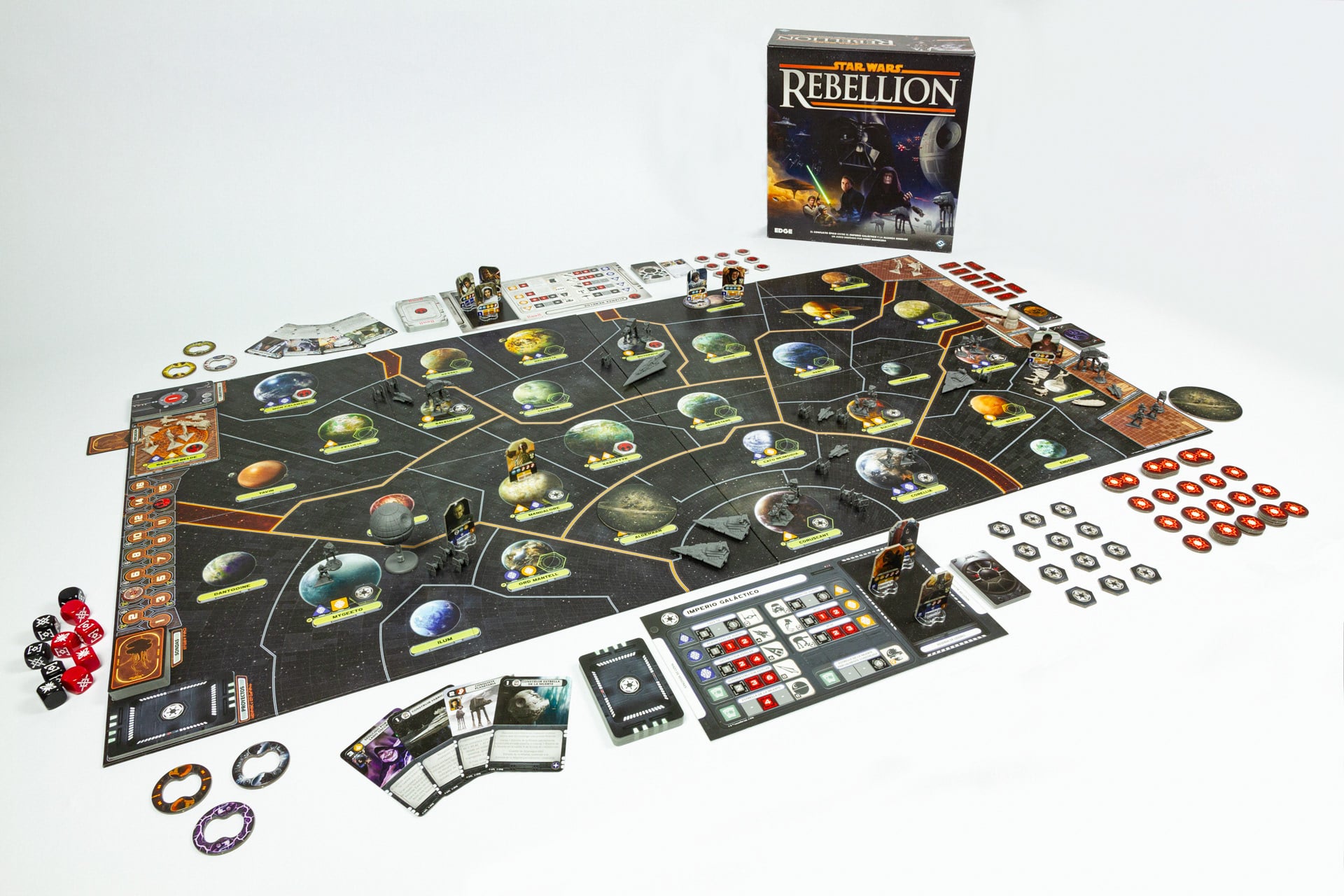
Star Wars: Rebellion Overview
The Imperial player controls the galaxy and wins by locating the Rebel base and wiping it out. The Rebel player protects that base, spreads sympathy across the galaxy, and stalls for time.
Both sides send leader characters on missions, move fleets between 32 systems, and fight ground and space battles. Rebellion sits in the thematic wargame category, and the two roles play so differently that they almost feel like separate games.
| Designer | Corey Konieczka |
|---|---|
| Publisher | Fantasy Flight Games |
| Year Released | 2016 |
| Players | 2 to 4 |
| Age Range | 14+ |
| Playing Time | 180 to 240 minutes |
| Game Type | Thematic wargame, asymmetric two-player |
| Complexity Rating | 3.75 out of 5 (BoardGameGeek weight) |
What’s in the Box: Star Wars: Rebellion Components
The miniatures do the heavy lifting here. Star Destroyers loom over TIE fighters, AT-ATs stand next to stormtroopers, and the Death Star model dwarfs everything on the board.
- 153 unpainted plastic miniatures, including unit models and named leader figures
- Two game boards that connect to form the Core Worlds and the Outer Rim
- Mission card decks for each side, plus Rebel objective cards and Imperial probe cards
- Tactic cards used during space and ground combat
- Custom combat dice printed with hit and tactic icons
- Loyalty, sympathy, damage, and mission tokens in thick cardboard
- Leader cards showing each character’s skill values
The cardboard is sturdy and the printing stays legible across the table. Leader minis attach to colored bases so you can tell Vader from a stormtrooper at a glance.
The stock insert is the weak point. Miniatures shift around during transport, and most owners end up with foam trays or plastic bins.
Star Wars: Rebellion Pros and Cons
Pros
- The asymmetry runs deep. The Empire hunts with fleets and probe droids, while the Rebels dodge and sabotage.
- Missions produce real story moments, such as freezing Han Solo in carbonite or sending Luke to Dagobah for training.
- The hidden base creates constant tension. The Imperial player never knows if this system is the one.
- Combat resolves in minutes despite the size of the fleets involved.
- Component quality holds up after dozens of plays.
Cons
- Three to four hours is a big ask, and a first game runs longer while both players learn their side.
- The rulebook buries several edge cases, so expect page flipping in early sessions.
- Four-player mode splits the leaders between teammates and slows the pace without adding much.
- A Rebel player who hides the base badly can lose by round three with little recourse.
How to Play Star Wars: Rebellion
Setup
Setup takes about 15 minutes. You place starting units on the boards, deal leader cards, and build the probe deck.
The Rebel player then draws probe cards and secretly picks one system as the hidden base. That card stays face down beside the board for the rest of the game.
Round Structure
Each round runs through three phases. In the assignment phase, players alternate placing leaders face down on mission cards from their hands.
The command phase follows. On a turn, you either resolve a mission or place an unassigned leader in a system to activate it, which lets you move units there and start a battle.
Opposed missions come down to dice. The attacking leader rolls dice for the listed skill, the defending leader rolls to block, and successes decide the result.
The refresh phase returns leaders, deploys built units, and advances the round marker.
How to Win Star Wars: Rebellion
The Empire wins by moving units into the base system and destroying the Rebel forces there, or by blowing up the planet with the Death Star.
The Rebels win by surviving. Completing objectives and winning battles raises reputation, which pushes the time marker forward and ends the game sooner.
Where to Buy Star Wars: Rebellion
| Retailer | What to expect |
|---|---|
| Amazon | Widest availability and fast shipping, though prices swing with stock levels |
| Miniature Market | Frequent discounts on Fantasy Flight titles |
| Noble Knight Games | New and used copies, plus the Rise of the Empire expansion |
| Zatu Games | UK stock with regular sales |
| Local game store | Asmodee distribution covers most independent shops |
Star Wars: Rebellion Game Mechanics
Leader assignment drives everything. Every leader you commit to a mission is one you cannot use to activate a system, so each round forces a trade between plotting and marching.
Hidden information sits underneath that. The Imperial player eliminates possible base locations one probe at a time, and the Rebel player bluffs by defending systems that hold nothing.
Combat uses dice plus tactic cards. You roll based on the units present, then spend tactic icons to play cards that redirect damage or add hits. Leaders in the battle raise your card limit.
Area movement ties the systems together. Fleets move one system per activation, so the Empire telegraphs its intentions several rounds before it arrives. Fans of heavier war games will recognize the pressure this builds.
Who Should Play Star Wars: Rebellion
Two players who like long, thematic conflict games get the most from it. War of the Ring is the closest comparison, and the base hunt works much like the chase in Fury of Dracula.
Star Wars fans with patience for a full evening will find plenty here. The card text and character art pull from the original trilogy throughout, which keeps it near the top of most Star Wars board games lists.
Skip it if your group prefers games under 90 minutes or dislikes direct conflict. Groups that want a shorter session with a partner can browse cooperative two-player games instead, or pick up Star Wars: Outer Rim.
FAQ
Is Star Wars: Rebellion good for beginners?
No. The rulebook assumes comfort with area control and combat systems, and the first session runs close to four hours. Players who have finished a few midweight strategy games will pick it up faster than newcomers. Teaching the Empire side first tends to work better.
How long does Star Wars: Rebellion take to play?
Plan on 180 to 240 minutes once both players know the rules. A first game often runs past four hours because mission cards and combat need reference checks. Setup adds another 15 minutes, and teardown takes a while with 153 miniatures.
What is the best player count for Star Wars: Rebellion?
Two players. The design centers on one Imperial mind against one Rebel mind, and the bluffing works best when a single player holds the secret. Four-player teams split the leaders and slow the turns without changing the core decisions much.
Is Star Wars: Rebellion worth buying?
It earns its shelf space if you have a regular opponent and a free evening. The miniatures, the hidden base tension, and the mission cards deliver a full Star Wars campaign. Buyers without a steady two-player partner should pass.
What games are similar to Star Wars: Rebellion?
War of the Ring shares the asymmetric two-player structure and the long arc. Fury of Dracula matches the hidden movement and search pressure. Twilight Struggle covers similar ground for players who want conflict without miniatures or a four-hour commitment.
