Game Of Thrones Board Game Review

A Game of Thrones is a 2003 strategy wargame from Fantasy Flight Games, designed by Christian T. Petersen and Kevin Wilson. Three to five players take a great House of Westeros and spend about three hours lying to each other over a map. It suits ages 12 and up and sits at a 3.45 out of 5 complexity weight on BoardGameGeek. This review covers what comes in the box, how the rules work, where the design holds up, and who should skip it.
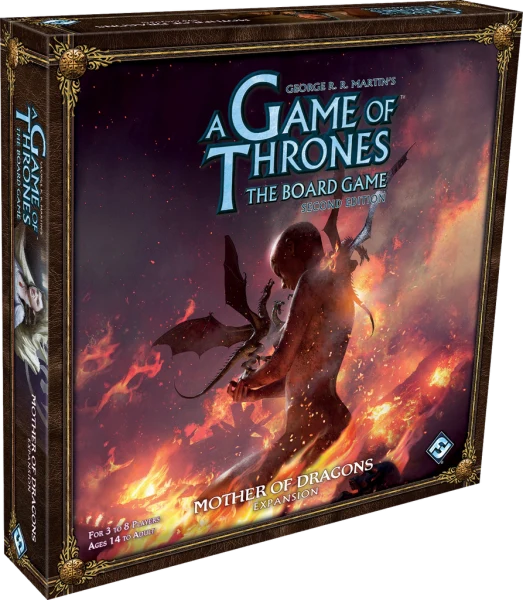
A Game of Thrones Overview
Each player runs one House: Stark, Lannister, Baratheon, Greyjoy, or Tyrell. Take seven strongholds and cities, or hold the most after ten rounds, and you win. Everything in between is negotiation and betrayal.
| Designer | Christian T. Petersen, Kevin Wilson |
|---|---|
| Publisher | Fantasy Flight Games |
| Year Released | 2003 |
| Players | 3 to 5 |
| Age Range | 12+ |
| Playing Time | 180 minutes |
| Game Type | Strategy, wargame, negotiation |
| Complexity Rating | 3.45 / 5 (BoardGameGeek weight) |
| BGG Rating | 7.2 from around 11,000 ratings |
What’s in the Box: A Game of Thrones Components
- One game board of Westeros at continental scale
- 75 order counters, 15 per House
- 100 power tokens, 20 per House
- 15 influence tokens and 5 supply tokens
- 35 House cards, 7 per House, plus 5 start cards
- 30 Westeros cards
- Wooden units in five colours: 10 footmen, 4 knights, 6 ships per House
- Wildling and turn order tokens, plus neutral tokens for King’s Landing, the Eyrie, and Sunspear
- Cardboard Valyrian steel blade, messenger raven, and Iron Throne tokens
- Rulebook
The wooden units are shaped blocks rather than miniatures, and they read well across the table. Order counters are thick punchboard. The board is the weak point: region text is small and the House card art looks dated.
A Game of Thrones Pros and Cons
What the game does well:
- Order counters are limited. You get three attack orders at +1, 0, and -1, so a triple assault means one weak attack.
- Raid orders resolve first and can destroy a rival order before it fires.
- House cards stay spent until the hand refreshes, so tracking what a rival has left pays off.
- Support orders let a player outside a fight decide who wins it.
- The influence tracks reward placement, not just the top slot.
Where it falls short:
- It does not scale. At three or four players you spend early rounds expanding into empty space.
- Westeros draws swing hard. Muster events can appear once in seven rounds or three times running.
- Bidding rounds arrive at random intervals. Positions went for ten power one round and one or two the next.
- Three hours plus setup, with five people who must all show up, is a scheduling problem.
How to Play A Game of Thrones
Setup
Starting units and castles are printed on the board. Shuffle the three Westeros decks, set the influence tracks, hand out order counters and House cards. Setup runs 10 to 15 minutes.
Westeros Phase
Reveal one card from each Westeros deck. These muster troops, change supply limits, send the wildlings south, or force fresh bidding on the influence tracks.
Planning Phase
Everyone places order counters face down at the same time: march, defend, support, raid, or consolidate power. Nobody sees a rival plan until the reveal.
Action Phase
Flip all orders. Raids resolve first, then marches in turn order, then consolidate power. Combat compares unit strength, support, and one secret House card per side.
Winning
Play ends after ten rounds, or when a player controls seven strongholds and cities. Most territory wins, with the Iron Throne track breaking ties.
Where to Buy A Game of Thrones
The first edition is out of print. The 2011 second edition still sits on retail shelves.
| Platform | What you’ll find |
|---|---|
| Amazon | Second edition new, first edition via third-party sellers |
| eBay | Largest first edition supply, usually 200-plus listings |
| BoardGameGeek GeekMarket | Used copies from collectors, graded by condition |
| Noble Knight Games | Out of print stock, plus the Clash of Kings and Storm of Swords expansions |
| Miniature Market / Local game stores | Second edition and reprints, occasional used finds |
Original MSRP was $74.99. Check completed sales before paying a premium for a sealed copy.
A Game of Thrones Mechanics
Three systems carry the design. Simultaneous order placement turns each round into a guessing match about face-down counters.
Support comes second. A unit with a support order lends strength to any adjacent battle, including one it is not part of, so a third party can pick the winner.
Influence bidding is the third. Power tokens buy the Iron Throne, the messenger raven, and the Valyrian steel blade. The Iron Throne holder breaks non-combat ties and sets turn order. The raven track caps your special orders. Bidding costs power you would otherwise bank, and banking power means consolidate orders instead of marches.
Who Should Play A Game of Thrones
This suits groups that enjoy Diplomacy and can handle an alliance collapsing in one turn. If your group avoids direct conflict, it will not land.
Compare it to War of the Ring for map scale and Twilight Imperium for table politics, though this runs shorter than either. Combat uses no dice, so losses come from decisions.
Play it with five. Skip it at three, skip it if you want a two-hour evening, and skip it if random event timing bothers you. Groups that prefer working together will find better options among cooperative board games.
Score: 7.5 out of 10. Strong systems, awkward player count requirements.
FAQ
Is A Game of Thrones good for beginners?
Not as a first strategy game. The order system, influence tracks, and combat cards take a full round to click. Players who have finished Risk or Ticket to Ride can manage with a patient teacher, but expect a first game past three hours.
How long does A Game of Thrones take to play?
Around 180 minutes for an experienced group, plus 10 to 15 minutes of setup. First games run longer because the planning phase slows while players learn each order. The ten round limit caps the session.
What’s the best player count for A Game of Thrones?
Five. The map is built for five Houses, and every region borders a rival. At three or four, large sections of Westeros sit empty and early rounds become uncontested expansion. The second edition handles low counts better.
Do I need to read the books first?
No. Knowing the novels adds flavour when Tyrion or Robb Stark turns up on a House card, but no rule depends on it. Language dependence is low, and the card text fits on a crib sheet.
What games are similar to A Game of Thrones?
Diplomacy is the closest match for negotiation and simultaneous orders without dice. War of the Ring covers similar map-scale conflict with more asymmetry. Twilight Imperium: Third Edition has comparable table politics at a longer running time.
