
Why Heat Makes A Board Game Race Feel Tense

Heat Pedal to the Metal does not ask players to memorise a dense rulebook or spend an evening moving tiny cars around a track.
Its cleverness comes from a simple idea. Every player has a hand of cards that controls speed, and every risky decision creates heat that must be managed later.
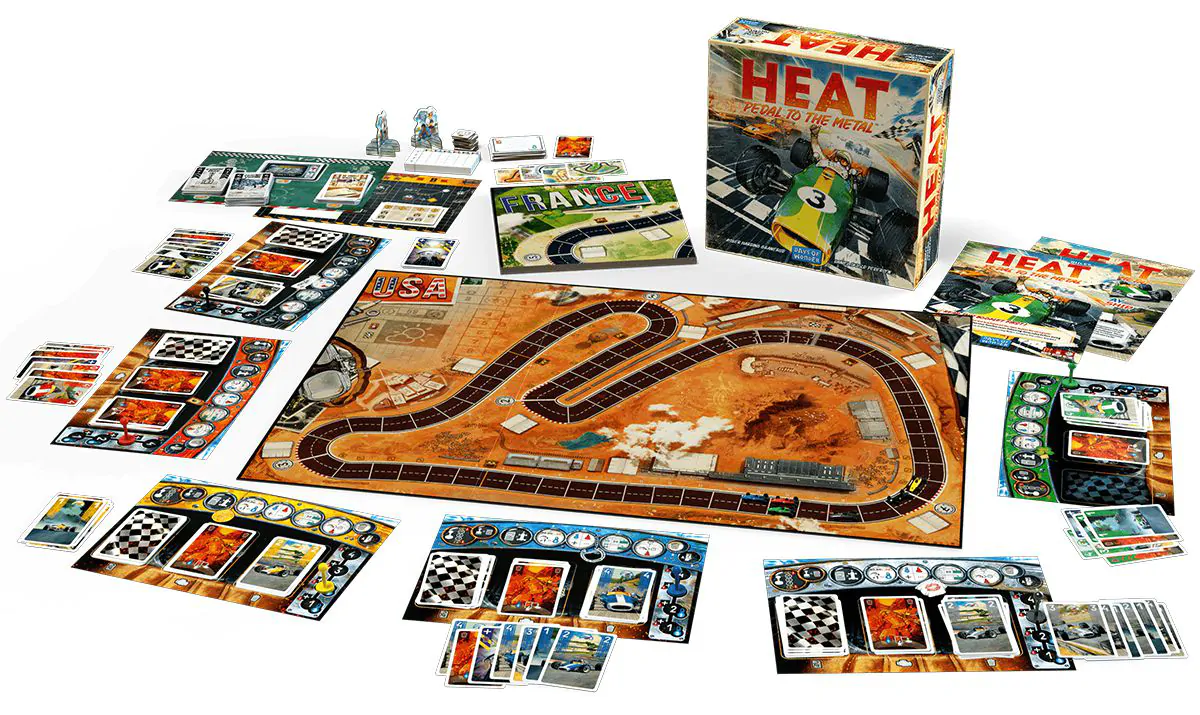
The result is a racing game where leading for most of the lap does not mean much if the car enters the final corner too quickly. You can push hard on a straight, spend heat to find extra pace and leave rivals behind. Then the next turn arrives and there is no safe way through it.
Unlike an online casino, where the outcome comes quickly and privately, Heat makes every risky decision visible to the whole table. Players can see when a rival has accelerated too early, held back too long or is about to enter a corner with no good option left.
Published by Days of Wonder, Heat supports one to six players and includes four tracks, along with championship and solo modes. The official game page also lists weather conditions, road states, upgrades and automated drivers as parts of the wider experience.
The best decisions happen before the corner
A player chooses one card from their hand each turn to set their speed. Higher values move the car further, but corners have speed limits. Go beyond the limit and heat cards must be spent from the engine.
That is the heart of the game. Heat is not simply a penalty. It is also a resource. A player can burn it to move further, then work to cool the engine later by changing down.
The problem comes when the hand fills with heat cards. They do not help the car move, and they make it harder to find the numbers needed for the next section of track.
A good player is always thinking one or two turns ahead. It may be tempting to gain a place on the straight, but that move can leave the car unable to take the next corner at a sensible speed. The game creates tension because the consequences of an aggressive move often arrive later.
Everyone watches the same track
Many racing games become complicated because each player has a separate board full of technical rules. Heat keeps the action in the centre of the table. Every car is on the same circuit, so every move affects someone else.
Slipstreaming can allow a car to gain ground behind another driver. Positioning matters before a corner because the player who reaches the correct line may avoid getting trapped behind slower traffic. A rival can also force a difficult choice by taking the space you were planning to use.
That shared track gives Heat a more social feel than many strategy games. Players may quietly plan their own moves, but they are always watching the other cars.
The pace of the game stays quick because the consequences are easy to understand. Someone is either moving into a strong position or making their next turn more difficult.
The game works beyond one race
A single race can be played without adding many extra rules, which makes Heat approachable for a new group. Once players understand the basic use of cards and heat, the championship mode adds another layer.
Cars can be improved between races with upgrade cards. One driver may become better at cornering, while another might gain an advantage on long straights. Weather and track conditions can also change the decisions players need to make.
That gives the game a useful sense of progression without making it inaccessible. A group can play one race in an evening, or return to the same championship over several sessions. The core system remains familiar, but the challenge changes with the track and the car setup.
Solo play is more than an extra feature
Heat also includes automated drivers, known as Legends. They can fill empty seats in a multiplayer game or provide opponents for a solo race.
Automated opponents follow clear rules rather than trying to imitate human choices. They move quickly, take space on the circuit and create traffic that the player has to manage. The solo mode therefore still feels like a race rather than a puzzle with a racing theme.
It is a strong option for someone who enjoys board games but cannot always gather a full group. The same decisions remain in place. When should you push the engine. When should you slow down. How much heat can you carry before the next corner becomes a problem.
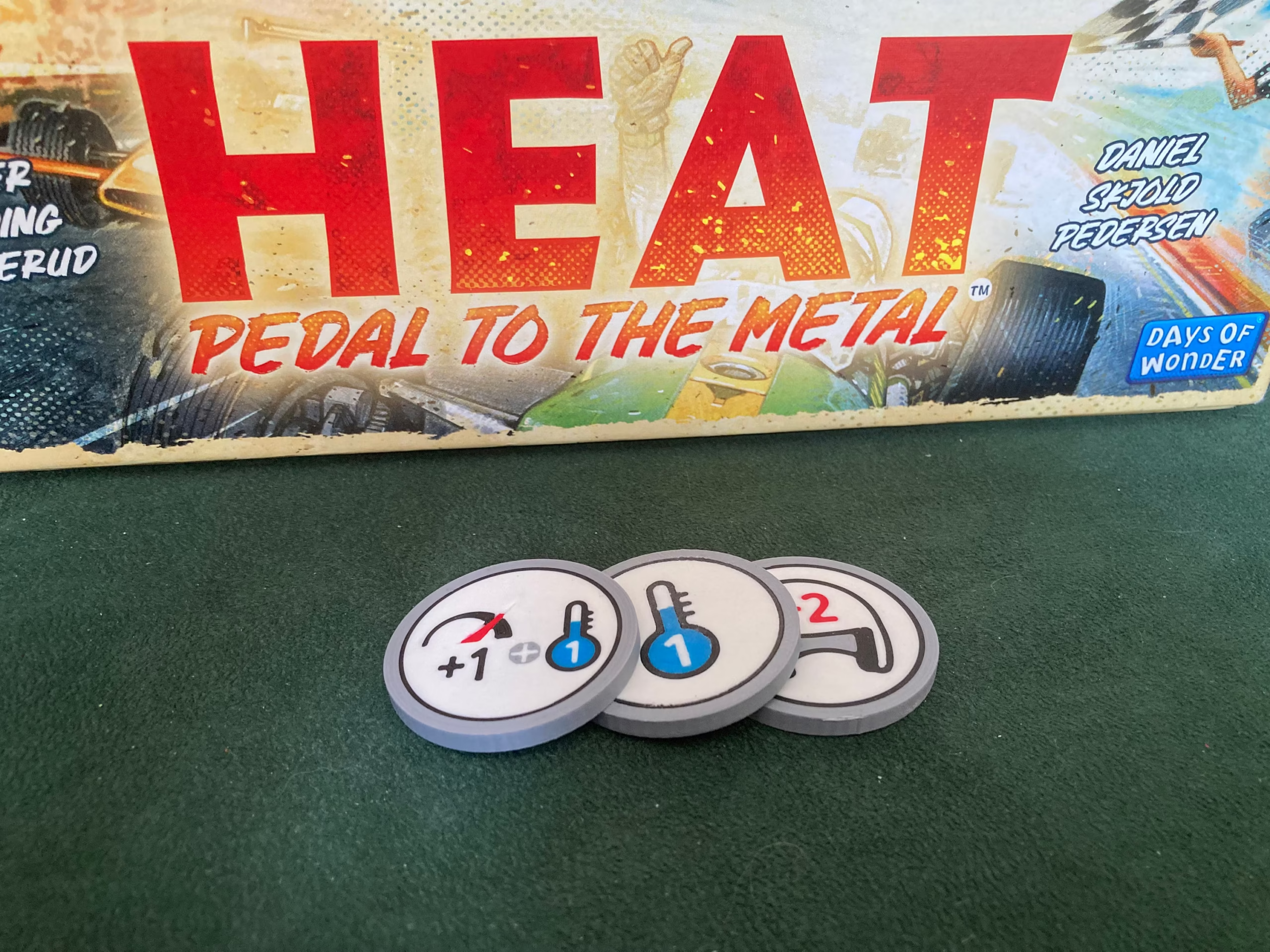
Why Heat has stayed popular?
Heat succeeds because it makes strategy easy to feel. Players do not need to calculate every possibility or understand real motor racing. They only need to recognise a familiar problem. There is an opportunity to go faster now, but it may cause trouble later.
That simple tension gives every race a story. One player may pull ahead early and struggle to hold the lead. Another may save heat for the final lap and make a late move. A third may take a corner too fast and lose ground in a single turn.
For a board game about racing, that is exactly what it needs. Every card feels like a choice, every corner asks a question, and the winner is rarely certain until the final stretch.
