Why Bitcoin Casino Online Communities Are Borrowing From Co-op Gaming Culture

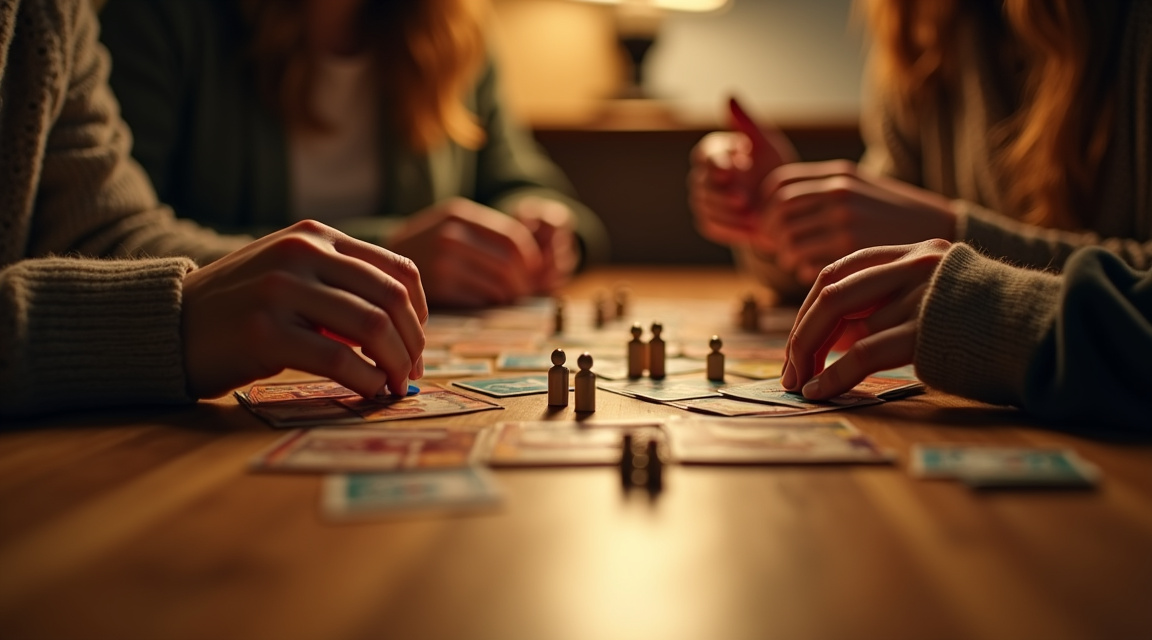
The first time a tabletop group sits down to a copy of Pandemic, something interesting happens at the table. The chatter shifts from individual scoring into a shared planning voice: who covers Atlanta this round, who saves a research station for the next outbreak, when to push a flight across the board to stop a chain reaction.
That conversational shift is the real product of cooperative board game design, more than the cards or the wooden cubes, and it is the part that has spread furthest beyond the hobby.
Online communities of every stripe, from raid guilds to streaming tournaments, have spent the last few years quietly importing the same conversation patterns that Matt Leacock’s Pandemic in 2008 helped normalize across the modern hobby.
What is more surprising is how visibly those patterns have moved into corners of the internet that have no formal connection to tabletop play.
Communities built around digital card platforms, sports leaderboards, and even the chat rooms attached to a typical bitcoin casino online lobby now structure their conversations in ways that look strikingly similar to a Spirit Island debrief or a Gloomhaven Discord.
Players coordinate group runs, divide tasks across roles, and treat the leaderboard as a shared project rather than a zero-sum ladder.
The borrowing tends to be informal, rarely credited, and often invisible to the people doing it. The shape of the influence, however, is consistent enough across communities that it is worth tracing where the cooperative habits started, why they travelled so well, and what they teach about how players want to play together in 2026.
Pandemic and the Quiet Revolution of Talking-Out-Loud Play
Pandemic did not invent cooperative play, but its 2008 release through Z-Man Games made the format legible to a generation of hobbyists who had grown up on competitive Eurogames. Matt Leacock’s design stripped the genre to a small set of mechanical promises.
The board fights back on a clock, every player has a defined role with one signature ability, and the only way to win is to spend most of the session talking through plans the group cannot execute alone. That third part is the real load-bearing wall of the genre.
A Pandemic table sounds notably different from a Catan or Eclipse table, because the Pandemic players are obliged to narrate their reasoning to teammates, and the table has to either accept the plan, refine it, or challenge it before the next outbreak triggers.
The talking-out-loud habit is what later co-op designs inherited, and it is the habit that has migrated most cleanly into online communities far from the hobby’s centre.
Spirit Island, Asymmetry, and the Idea of a Specialist Role
Eric Reuss’s Spirit Island, published by Greater Than Games in 2017, pushed the cooperative format further into the territory that online communities now imitate.
Each player at a Spirit Island table controls a different spirit, with a different deck of innate powers, a different growth track, and a different physical relationship to the island’s terrain. River Surges in Sunlight plays nothing like A Spread of Rampant Green, and Lightning’s Swift Strike opens the game at a tempo that Vital Strength of the Earth simply cannot match.
The asymmetry forces a specialist mindset on the table. A player has to explain to teammates what their spirit is good at and what it cannot reach, and teammates have to plan their actions around those declared strengths.
The same role-as-public-statement pattern shows up later in raid guild rosters, in league of streamers organising team formats, and in the way tournament-style chat lobbies introduce regular contributors to newcomers.
Aeon’s End and the Power of a Randomised Turn Order
Aeon’s End, designed by Kevin Riley and published by Action Phase Games and later Indie Boards and Cards, took the co-op idea in a different direction.
The headline mechanic is the breach system, in which players slowly open energy breaches in front of them to channel ever stronger spells, but the more interesting community export is the turn order itself. Each round, a small turn order deck is shuffled, and the players take turns based on whatever the deck reveals.
The nemesis interleaves with the players, and a single player can sometimes act twice in a row or be sandwiched between two enemy phases. The effect at the table is that planning has to be probabilistic.
The group cannot say with certainty whose turn comes next, and so the conversation shifts from rigid sequencing into contingency talk.
Online communities that rotate organisers, hand off raid leadership between sessions, or treat the next host as a draw from a pool have absorbed that same comfort with mid-session handoffs.
Companion Apps and the Move From Table Talk to Persistent Coordination
The cooperative table started to leak into permanent digital space the moment companion apps became common in the hobby.
Mansions of Madness Second Edition, the Descent: Legends of the Dark client, the Gloomhaven Helper community fork, and the official Gloomhaven Digital build all moved bookkeeping that used to sit on the table into a synced phone or tablet.
The shift sounds small, but it changes how the group remembers a campaign. A run that took twelve table sessions to finish is now archived as a browseable log of decisions, branching plot beats, and party composition.
Players reread their own campaigns, share screenshots of unusual strategy choices, and post the most demanding scenarios as puzzles for newer groups.
Coopboardgames has its own breakdown on what cooperative board games teach about engagement, walking through how their reward arcs and shared-planning beats reshape the way a session is paced and remembered.
The relevant takeaway for online communities is that the persistent log itself is now part of the cooperative experience, and any platform with a chat panel and a shared progression screen ends up reproducing the same archive shape almost by accident.
Raid Parties, Syndicates, and the Tabletop Roots of Group Hunts
Group hunts, raids, and syndicate-style runs are the most visible export of co-op design into other online communities. The vocabulary itself comes from massively multiplayer games, but the structural DNA traces straight back to scenarios like a Pandemic Legacy late-game outbreak or a Spirit Island fear card chain.
A small group commits to a shared objective with a clear failure condition, divides labour by declared role, and treats individual loss as a survivable cost rather than a personal disqualifier.
Online communities that organise weekly leaderboard pushes, shared loot pools, or syndicate-style jackpot runs operate on exactly the same internal logic.
The participants would rarely describe their weekly Discord meetup as a Spirit Island session, and yet the structure of the conversation is closer to a tabletop debrief than to a free-for-all chatroom.
Why Tabletop Critics Still Set the Cooperative Vocabulary?
The vocabulary that online communities lift from cooperative play often arrives through a small set of tabletop critics who built the modern review format.
Quinns Stoddard, Matt Lees, and the rotating cast around the Shut Up and Sit Down review desk have spent more than a decade explaining why a given co-op design works at the table, and their phrasing has filtered out into wider community discourse with surprising fidelity.
Their Shut Up and Sit Down Spirit Island review is a useful example, because the framing of the spirit roster as a set of discrete problems to coordinate around predates almost every guild-level discussion of role specialisation that followed.
Online communities have absorbed the language without always tracing it home, but the way a typical leaderboard thread or shared progression chat now talks about specialists, tempo, and group composition comes directly from the tabletop critical tradition.
Discord, Table Chat, and the Replacement of the Living Room Table
The Discord server has done more than any other piece of consumer software to make the cooperative table portable. Launched in 2015 and adopted across the tabletop hobby through the late 2010s, Discord let groups carry the rhythm of a co-op session into asynchronous text and into scheduled voice rooms.
Pandemic Legacy: Season Zero campaigns finish months after they started because the group keeps messaging through a shared channel between sessions. Gloomhaven crews exchange map screenshots and strategy notes between physical meetups. Spirit Island groups argue about Adversary draws in dedicated threads.
Online communities that built their own table-chat features absorbed the same conversational shape, often by hiring designers who came from the tabletop hobby.
The shared progression screen, the named role tags, and the slow-motion debrief threads all read as Discord by another name, even when they are wired into a slot lobby or a fantasy-sports console.
Leaderboards as Shared Projects, Not Personal Ladders
One of the more counterintuitive borrowings is the way modern leaderboards have softened. A traditional competitive ladder treats every player as a discrete unit moving up or down a ranked list. Cooperative leaderboards, by contrast, treat the list as a group artifact that the community is building collectively.
The Spirit Island Adversary ladder, the Pandemic Legacy completion list, and the Gloomhaven scenario completion charts are all archives more than competitions.
Players post their runs primarily to add to the record, and the etiquette around posting tends to credit teammates and to explain unusual choices for the benefit of later groups.
Online communities that track raid completion, weekly tournament progress, or shared seasonal goals have adopted the same etiquette, and the interfaces increasingly reflect it. Leaderboards now show party composition, not just final score, and completion stories sit beside the raw numbers as part of the entry.
What 2026 Co-op Design Suggests About the Next Wave of Online Communities?
Looking forward, three patterns from cooperative tabletop design seem likely to continue migrating into online communities through the rest of 2026 and into 2027.
The first is asymmetric role design, where different members of the same group bring genuinely different toolkits and the group plans around the asymmetry rather than against it. Spirit Island remains the clearest reference point, and its influence is still spreading through guild composition discussions and shared run threads.
The second is persistent campaign memory, in which the group archives every session as a browseable log and treats the archive as part of the experience itself. Pandemic Legacy and Gloomhaven set the tabletop template, and the companion apps have made that template trivially copyable in any online context.
The third is critical vocabulary borrowed from the Shut Up and Sit Down generation of reviewers, in which communities reach for words like tempo, specialist role, and group composition because the tabletop critical tradition handed those words to them.
None of those patterns is exclusive to the hobby any longer, but they are still recognizably tabletop in origin, and the online communities that import them most thoughtfully tend to be the ones that keep their members for the longest.
