
The Game Designer’s View on Reward Loops: What Board Games Taught Us About Casino Payout Speed

Anyone who has played Pandemic knows the feeling. You’ve spent forty minutes shuffling cards, trading turns, watching the outbreak counter creep toward catastrophe — and then, on the final draw, the cure comes together. The reward isn’t just winning. It’s the delay before the win, and the rush of finally getting paid for the effort.
That feeling isn’t an accident. Board game designers spend years tuning the gap between effort and reward, because that gap is where engagement lives.
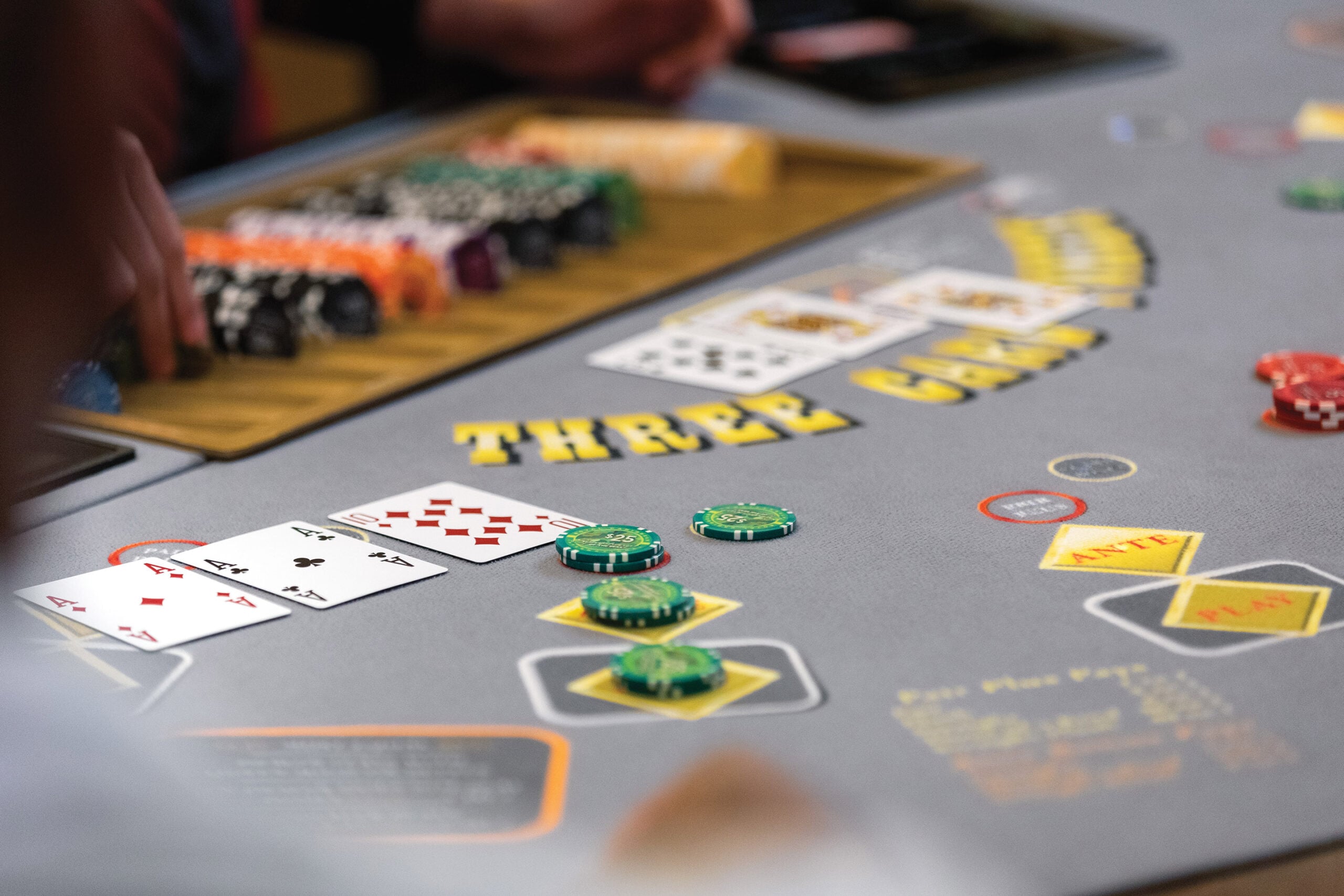
And once you start looking for it, you see the same machinery everywhere — in video games, in mobile apps, and increasingly, in how Australian online gaming platforms structure the moment of cashing out.
Which brings us to an interesting shift. For a long time, online casinos in Australia treated payouts as an afterthought: a back-office function, a few days of “processing time,” maybe a polite email. But over the past two or three years, that’s changed.
Sites benchmarked by review platforms like Pokertube now compete on how fast they can pay you — same-day withdrawals on eWallets, sub-hour on crypto, and instant-withdrawal casinos becoming the new headline feature. The reward loop has tightened, and it has tightened on purpose.
If you’ve ever wondered why that’s happening — and what it has to do with the way Spirit Island or Gloomhaven keeps you at the table — the answer comes from the same place: a 1957 psychology textbook by B.F. Skinner.
Variable Rewards and Why They Hook Us
In behavioral psychology, there’s a concept called the variable ratio reinforcement schedule. The short version: when a reward arrives after an unpredictable number of actions, the behavior producing those actions becomes extremely resistant to extinction. People keep going. They keep going harder than they would for a predictable reward.
Skinner’s original research used pigeons and food pellets. Modern game designers use loot boxes, critical hits, rare card pulls, and end-of-round scoring reveals. The mechanism is identical: vary the timing, vary the size, and the player’s brain treats the next attempt as if it might be the big one.
Board games lean on this heavily, even when it doesn’t look obvious:
- Dice-driven games (Catan, Risk Legacy) use raw probability. You don’t know which roll pays off.
- Deck-builders (Dominion, Aeon’s End) use shuffle timing. You built the engine — you just don’t know when it fires.
- Co-op games (Pandemic, Spirit Island) use card-draw escalation. The crisis curve is variable, so the relief of solving it is too.
- Legacy games (Pandemic Legacy, Gloomhaven) stretch the reward loop across months, but seed small wins along the way.
The design principle is the same across all of them: don’t pay out on a fixed schedule, because fixed schedules feel like a job.
Where Casinos Sit on the Spectrum
Casino games are the purest commercial application of this principle. A pokie is, in design terms, a variable ratio schedule with a leverage handle and a sound effect. It’s not subtle.
But here’s where it gets interesting, and where the AU market has changed the conversation: the game itself is only half the reward loop. The other half — the part that used to be ignored — is what happens after you win.
For most of online gambling’s history, that second half was broken. You’d hit a payout, request a withdrawal, and then nothing. Three days. Five days. Sometimes a week of “pending review” while the operator decided whether to actually send your money. The reward loop the game had carefully tightened was immediately undone by the back office.
Players noticed. AU players especially, because the local payments infrastructure (PayID, real-time bank transfers, near-universal crypto literacy) made the contrast obvious. Why does a transfer between Aussie banks settle in seconds, but a casino takes four business days?
The Native Payout Standards Have Moved
If you look at what AU-facing review sites now consider acceptable, the goalposts have shifted hard:
| Method | Old standard (2020) | Current AU benchmark |
|---|---|---|
| Bank transfer | 3–7 business days | 1–3 business days |
| eWallet (Skrill, MiFinity) | 24–48 hours | Same day |
| Crypto (BTC, ETH, USDT) | 24 hours | Under 1 hour |
| PayID | Not widely supported | Minutes |
Operators that don’t hit these numbers are increasingly being ranked below ones that do — not because the games are worse, but because the post-game reward loop is broken. A casino with great pokies and a five-day payout is, in 2026 terms, a poorly designed game.
This is the same logic a board game reviewer applies to a game with a brilliant midgame but a tedious endgame phase. The whole loop has to work. You can’t put the best part of the experience behind a wall of waiting.
What the Tabletop World Already Knew?
Board game designers figured out something a long time ago that online gambling is only now internalizing: the moment of payout matters more than the size of the payout.
A small, immediate reward beats a large, delayed one almost every time. That’s why Splendor has you collecting tiny gem stacks every turn, why Wingspan scatters bonus tokens through every round, and why even brutal games like Twilight Imperium have a victory point trickle. The game keeps paying you in small increments because the brain needs the loop closed.
Australian players have started treating online gaming the same way. A site offering AU$15,000 in welcome bonuses but holding your withdrawal for a week is offering a worse experience than one with a smaller bonus and a sub-hour crypto payout. The numbers don’t matter if the loop is broken.
You see this in how the better-reviewed AU operators now market themselves. They lead with payout speed. They publish average withdrawal times.
They highlight which methods clear in minutes versus hours. The marketing copy has shifted from “biggest jackpots” to “fastest cashouts” — because that’s where the player’s attention actually went.

The Crypto Side of the Story
The other thing that happened — and it happened mostly between 2022 and 2025 — is that crypto became boring.
Crypto payouts used to be a niche thing for technically inclined players. Now they’re the default fast-track at almost every AU-facing site, and the reason is purely mechanical: blockchain settlement doesn’t care about business hours. A USDT withdrawal at 3 AM on a Sunday clears in the same time as one at 11 AM on a Tuesday.
For the reward loop, this is a gigantic deal. The variable ratio schedule that drives engagement only works if the reinforcement arrives close to the response. A week-long delay between win and payout doesn’t reinforce anything — it just creates anxiety. Crypto closed that gap. PayID closed it further for players who didn’t want to touch crypto.
It’s the same pressure that reshaped the games themselves. The rise of crash gaming is a useful parallel — round times collapsed from minutes to seconds, near-misses became the core emotional product, and the whole experience got compressed into something that fits on a phone during a coffee break.
Payout infrastructure had to keep up with that compression, because a 15-second round followed by a 5-day cashout is a design contradiction nobody can fix with better graphics.
The result is a market where the infrastructure now matches the psychology of the games. Which is, finally, what tabletop designers have always demanded from their own systems.
What This Means for the Player?
If you take one thing from the design-theory angle, it’s this: the speed of the payout is part of the game.
When you’re evaluating any platform — a board game, a video game, an online casino — pay attention to where the rewards land and how fast they get to you. A great game with a broken back end is a broken game. A modest game with a tight, responsive reward loop will out-engage it every time.
For Aussies specifically, the practical filter is simple:
- Crypto or PayID withdrawals available? If yes, the loop can close in under an hour.
- Published average payout times? Operators that publish them tend to hit them.
- KYC done upfront? Get verification out of the way before you win, not after.
- No surprise pending periods? “Up to 5 business days” usually means 5.
These are the same instincts a good board game reviewer applies to a rulebook. Does the design respect your time? Does the payoff land when it’s supposed to? Is the loop clean?
The Bigger Picture
The convergence is the interesting part. Tabletop designers, video game designers, app developers, and now casino operators are all working from the same playbook — because the underlying psychology of reward timing doesn’t care what the medium is.
A well-tuned co-op board game and a well-tuned online casino are, at the level of design intent, doing remarkably similar work.
Where they differ is in the stakes. A board game’s worst-case scenario is a boring evening. The stakes elsewhere can be higher, which is why the AU regulatory environment — and the player culture — has pushed operators to behave more like the rest of the gaming industry: tighter loops, faster feedback, and a payout that actually feels like a payout.
It took longer than it should have. But the lesson the tabletop world has been quietly teaching for fifty years has finally landed: make the reward feel like a reward. Don’t make people wait for it.
That’s not a marketing slogan. It’s just good design.
