
Nymrissa Wavecaller on Mythic: What the Lair Demands

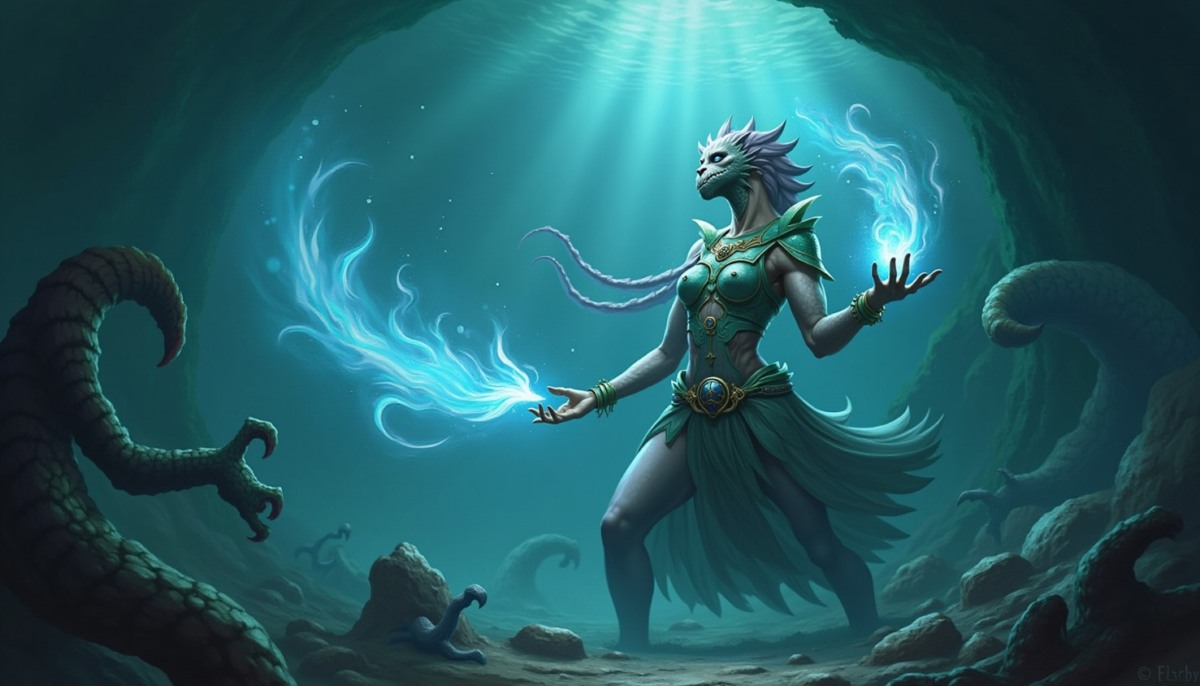
The Tidebound Grotto is the smallest piece of organised content in Midnight Season 2 — one boss, one phase, one encounter. On Mythic difficulty it is also one of the more awkward things to schedule, because it asks for a raid-sized group for a fight that lasts a few minutes.
This is a look at what Mythic actually requires, why it is worth organising anyway, and where groups run into trouble. It is the whole reason tidebound grotto mythic boosting is discussed for what is nominally a world boss replacement.
Why bother with Mythic?
The straightforward answer: a Mythic kill counts as one boss toward the raid section of the Great Vault. Lower difficulties do not carry that.
For a player already raiding Venomous Abyss, that single boss can be the difference between a Vault slot unlocking and not.
It is the cheapest raid credit available in the week — one encounter, no lockout to a longer instance, no eight-boss commitment. This is the entire reason a tidebound grotto mythic boosting conversation exists for what is nominally a world boss replacement.
The group requirement
Lairs flex, but not infinitely.
| Difficulty | Group size |
|---|---|
| World | 15–30 |
| Normal | 15–30 |
| Heroic | 15–30 |
| Mythic | 15–25 |
Fifteen is the floor on Mythic and twenty-five the ceiling. That is a raid-sized commitment for a single encounter, and it is the main practical obstacle: assembling twenty people for a three-minute fight is harder than assembling them for a three-hour raid night, because the payoff per person feels smaller even though it is not.
Most guilds solve this by attaching the Lair to the start or end of an existing raid night rather than scheduling it separately.
The encounter itself
Nymrissa Wavecaller is a naga sorceress who bends the tides to conceal her domain. The fight uses one repeating phase rather than staged transitions. Three elements run throughout:
- Murlocs — adds arriving on a cycle that must be handled without letting them accumulate
- Frost Orbs — positional hazards that constrain where the raid can stand
- Frost damage on everyone — constant raid-wide pressure
There is no burn phase and no transition to memorise. The difficulty is sustained rather than spiky, which means the failure mode is different from most raid bosses: groups do not wipe to a single missed mechanic, they wipe to a gradual accumulation of small errors that healing cannot outpace.
Where groups struggle?
- Add accumulation. The murloc cycle is forgiving individually and unforgiving cumulatively. A group that lets two waves overlap rarely recovers.
- Positioning under Frost Orbs. Because the fight is one long phase, the usable space shrinks over time as orbs constrain movement. Groups that spread early have room later; groups that stack early do not.
- Healing throughput. Constant raid-wide frost damage means healer output is the binding constraint far more than on a staged encounter, where healers can plan around downtime. There is no downtime here.
- Simply getting there. The Grotto sits on the Coiled Isle, by the Wreck of Gral’s Belly, underwater at the centre of the lagoon south of Tokka’s Landing. It is not signposted like a raid entrance, and coordinating twenty people to an underwater location they have never visited costs more time than the fight itself.
How it fits the week?
Season 2 opened on 18 August on North American realms and 19 August in Europe, under patch 12.1, The Curse of Ula’tek. Three systems feed the Great Vault:
- Venomous Abyss — eight bosses, ending at Ula’tek
- Mythic+ — eight dungeons, layered weekly affixes, gear capped at +10
- Lairs — currently the Tidebound Grotto
The Vault rewards breadth. A player who clears the Lair on Mythic, runs a handful of keys and attends a raid night has more choices on reset day than a player who does any one of those repeatedly.
Since the Lair is by far the shortest of the three, it has the best time-to-reward ratio in the week — provided the group exists to do it.
What is coming?
Patch 12.1.5, The Promise of Tomorrow, was revealed on 3 September and is testable on the public test realm now. It adds a story campaign, a one-boss raid called The Unbinding of Kith’ix, an Aqir Invasion outdoor event, a new upgrade currency named Ascendant Venomstones, and a solo-friendly content type called Labyrinths.
Blizzard has not announced a release date; the early-October figure circulating among players is extrapolated from the studio’s recent eight-week cadence.
Whether a second Lair arrives with it is not confirmed. The format was introduced in 12.1 as an evolution of world bosses, and a single Lair per patch would be consistent with how the system has been presented so far.
The practical approach
Attach it to a raid night. Do it on Mythic if the group can hold fifteen or more, because that is the difficulty that counts. Send the group coordinates before the night rather than during it. And treat it as what it is — the shortest raid credit available in the week, and the easiest one to forget.
Organising it without wasting an evening
The Lair’s awkwardness is logistical, not mechanical, and the groups that handle it well solve it the same way.
- Attach it to an existing night. The fifteen minutes before a raid start, or the last fifteen after a clear. Nobody has to be summoned for a separate occasion.
- Send the location in advance. Coiled Isle, by the Wreck of Gral’s Belly, underwater at the centre of the lagoon south of Tokka’s Landing. Posting that before the night saves more time than any tactical adjustment.
- Assign the murloc handling before the pull. The adds arrive on a cycle and the failure mode is accumulation. Deciding who handles them during the fight is already too late.
- Accept fifteen if that is what you have. Mythic flexes from fifteen to twenty-five. A group of sixteen that knows the fight beats a group of twenty-four assembled at the last minute.
| Problem | Fix |
|---|---|
| Group scattered | Attach to a raid night |
| People lost en route | Coordinates posted in advance |
| Adds overwhelming | Assignments before the pull |
| Healers falling behind | Spread early, before orbs constrain the space |
Worth the trouble
A few minutes of fighting for a raid boss credit in the Great Vault is the best time-to-reward ratio available in the week.
The only reason it gets skipped is that organising twenty people for a short fight feels disproportionate — and that is a scheduling illusion, not a real cost, provided the group was already logging in that evening.
