Most Popular Card Games in India and Tricks: Rules, Strategy and Safe Play Guide

Card games have been part of Indian social life for generations. Families play them during festivals, friends play them at gatherings, and many users now explore digital versions on mobile and desktop. Some games are simple and based mostly on chance. Others require memory, planning, hand reading, probability and long-term strategy.

Many people search for most popular card games in India and tricks because they want two things: a clear list of well-known games and practical tips for playing better.
The important point is that “tricks” should not mean guaranteed wins. Fair card games cannot be predicted perfectly. Good tricks are learning habits, rule knowledge, bankroll control, memory, patience and better decision-making.
This guide explains the most popular card games in India, how they work, which skills matter and which myths should be avoided.
It also includes safety notes for online play, especially because real-money online gaming laws and platform rules can change. Treat this article as an educational guide, not as a promise of profit.
Why Card Games Are Popular in India?
Card games are popular in India because they fit many situations. They can be played at home, during festivals, on mobile apps, in social groups or in casual online rooms. Many games need only a standard 52-card deck, so they are easy to set up.
Indian card games are also popular because they combine luck and decision-making. A player cannot control the cards they receive, but they can often control how they use them. This creates a mix of suspense and skill.
Common reasons for popularity include:
- Simple setup
- Social gameplay
- Fast rounds
- Familiar rules
- Regional variations
- Festival culture
- Mobile access
- Competitive formats
- Easy learning curve
- Different skill levels
Some games, such as Andar Bahar game, are very easy to understand. Others, such as Bridge or Rummy, require more planning and practice.
Quick List: Most Popular Card Games in India
Here is a quick overview of popular card games in India and what makes each one different.
| Game | Main Style | Best For |
| Teen Patti | Three-card betting/comparison game | Social play and fast rounds |
| Indian Rummy | Sequence and set-building game | Strategy, memory and planning |
| Andar Bahar | Simple two-side card game | Beginners and quick play |
| Poker | Hand-ranking and betting game | Strategy and competitive play |
| Bridge | Partnership trick-taking game | Advanced players |
| Call Break | Trick-taking game | Casual strategy players |
| Bluff | Deception and shedding game | Party-style groups |
| Court Piece | Team-based trick-taking game | Traditional social play |
| Solitaire | Single-player card puzzle | Practice and casual play |
The “best” game depends on your goal. If you want something simple, Andar Bahar or Bluff may be easier. If you want deeper strategy, Rummy, Poker or Bridge can be more interesting.
Teen Patti
Teen Patti means “three cards.” It is one of the most recognised card games in India. It is often compared with three-card poker-style games, but traditional Teen Patti has its own social rhythm.
In a basic version, each player receives three cards. Players compare hand strength and may bet, call, raise or fold depending on the rules used by the group.
Common Teen Patti hand rankings include:
| Rank | Meaning |
| Trail or Trio | Three cards of the same rank |
| Pure Sequence | Three consecutive cards of the same suit |
| Sequence | Three consecutive cards, not all same suit |
| Colour | Three cards of the same suit |
| Pair | Two cards of the same rank |
| High Card | No stronger combination |
Practical Teen Patti Tricks
The best Teen Patti tricks are based on patience and observation.
Useful tips include:
- Learn hand rankings before playing.
- Do not play every hand aggressively.
- Watch how often other players fold or raise.
- Do not bluff every round.
- Keep your stake size controlled.
- Avoid emotional calls after losing.
- Know when a weak hand should be folded.
Teen Patti has luck, but decision-making still matters. A player who understands hand strength and betting behaviour usually makes fewer mistakes than someone who only follows emotion.
Indian Rummy
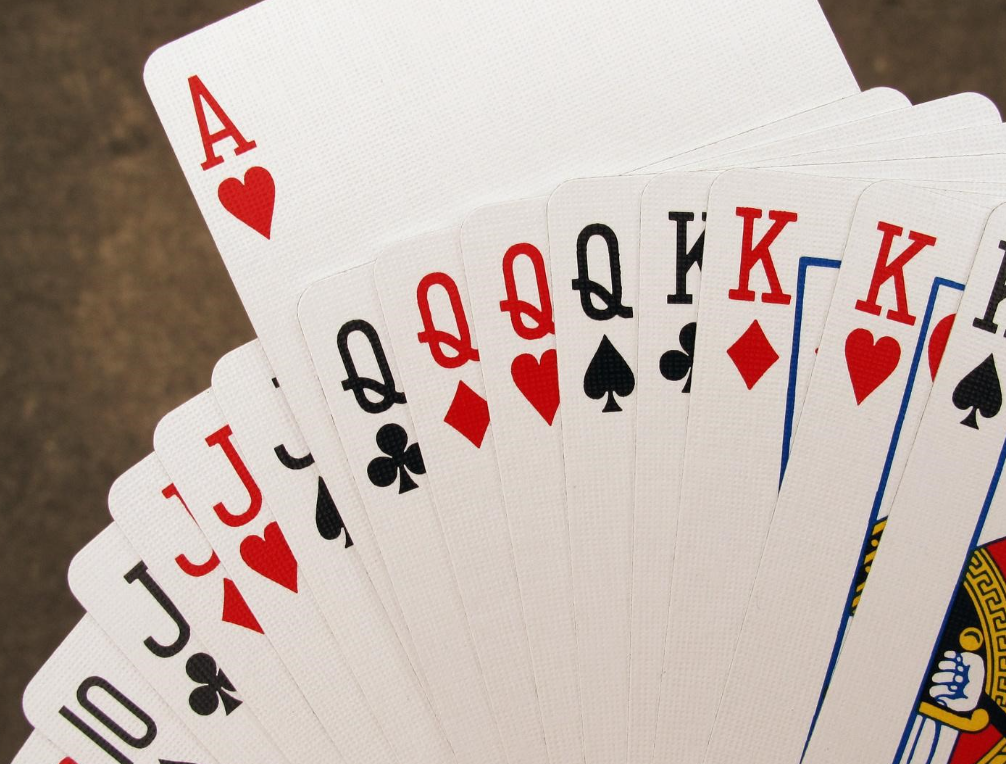
Indian Rummy, often played as 13-card rummy, is one of the most popular strategic card games in India. The goal is to arrange cards into valid sequences and sets. A valid declaration usually requires at least one pure sequence, depending on the specific rules.
A normal Rummy turn usually involves:
- Drawing a card from the closed deck or discard pile.
- Arranging cards into possible sequences and sets.
- Discarding one card.
- Continuing until a valid declaration is possible.
Important Rummy concepts include:
| Term | Meaning |
| Pure sequence | Consecutive cards of the same suit without a joker |
| Impure sequence | Sequence made with a joker or wild card |
| Set | Cards of the same rank in different suits |
| Joker | Card used to complete combinations |
| Declaration | Final arrangement of valid cards |
Practical Rummy Tricks
Rummy has more skill than many simple card games. Good tricks include:
- Form a pure sequence early.
- Discard high-value unmatched cards.
- Watch cards picked by opponents.
- Do not hold too many disconnected cards.
- Use jokers for difficult combinations.
- Avoid discarding cards that clearly help opponents.
- Reorganise your hand after every draw.
Rummy rewards memory and planning. Beginners should practise in free mode before trying competitive formats.
Andar Bahar
Andar Bahar is a simple Indian card game often linked with quick entertainment. A dealer places one face-up card, often called the Joker or middle card.
Cards are then dealt alternately to two sides: Andar and Bahar. The result depends on which side receives a card matching the rank of the first card.
The basic idea is:
- One card is revealed.
- Players choose Andar or Bahar.
- Cards are dealt to each side.
- The side that first gets the matching rank wins.
Andar Bahar is easy because there are usually only two main choices.
Practical Andar Bahar Tricks
Andar Bahar is mostly chance-based. There is no reliable way to predict which side will receive the matching card.
Useful tips are mainly about risk control:
- Learn the rules before playing.
- Avoid complicated side bets as a beginner.
- Use small stakes.
- Do not chase one side because it “feels due.”
- Ignore pattern predictors.
- Stop at a fixed limit.
- Treat it as entertainment, not strategy income.
The most realistic Andar Bahar trick is knowing that it is a chance game and avoiding fake prediction systems.
Poker
Poker has become more visible in India through online platforms, tournaments and international media. The most common modern form is Texas Hold’em, where players make the best five-card hand using private cards and community cards.
Poker differs from many casino card games because players compete against each other rather than only against the house. This gives more room for skill, but it also requires discipline and study.
Poker skills include:
- Hand selection
- Position awareness
- Pot odds
- Bluff timing
- Bet sizing
- Opponent reading
- Bankroll control
- Emotional discipline
Practical Poker Tricks
Good poker tricks are strategic, not magical:
- Play stronger hands from early position.
- Do not call too much with weak hands.
- Pay attention to position.
- Learn basic pot odds.
- Bluff less as a beginner.
- Review hands after playing.
- Avoid playing when tired or angry.
Poker can be deep and competitive, but beginners should not assume that watching a few videos is enough. Practice and study matter.
Bridge
Bridge is one of the most skill-based card games in the world. It is played by four players in two partnerships. The game has bidding, contracts and trick-taking.
Bridge is less casual than Teen Patti or Andar Bahar because it has a steeper learning curve. However, it is respected because it requires communication, memory and long-term strategic thinking.
Bridge involves:
- Partnership play
- Bidding systems
- Contracts
- Trick-taking
- Suit control
- Card counting
- Defensive planning
Practical Bridge Tricks
Bridge tricks are mostly learning habits:
- Learn basic bidding first.
- Communicate clearly through legal bids.
- Count suits as the hand develops.
- Remember cards already played.
- Think about your partner’s likely hand.
- Do not rush the first trick.
- Review difficult hands after the game.
Bridge is ideal for players who enjoy logic, memory and teamwork.
Call Break
Call Break is a trick-taking card game popular in South Asia, including India. It is usually played with four players. Each player calls or predicts how many tricks they expect to win, then tries to meet that call.
Spades are often used as trump, depending on the version.
Practical Call Break Tricks
Useful Call Break tips include:
- Do not overcall as a beginner.
- Count high cards carefully.
- Save trump cards for important tricks.
- Watch which suits players are missing.
- Avoid wasting strong cards too early.
- Learn when to take control of a round.
- Adjust your call based on hand strength.
Call Break is easy to start but becomes more strategic when players learn counting and timing.
Bluff
Bluff, also known as Cheat in some places, is a social card-shedding game. The goal is to get rid of all your cards while making claims about what you are playing. Other players can challenge if they think the claim is false.
Bluff is popular because it is simple, funny and social. It does not require complex mathematics, but it does require confidence and observation.
Practical Bluff Tricks
Useful Bluff tips include:
- Do not bluff every turn.
- Mix truthful and false plays.
- Watch player habits.
- Challenge only when you have a reason.
- Track which ranks have appeared.
- Avoid obvious hesitation.
- Keep your claims consistent.
Bluff is more about psychology than probability.
Court Piece
Court Piece is a traditional trick-taking card game played in teams. It is also known by different names in different regions. The game often involves trump selection and partnership play.
The appeal of Court Piece comes from teamwork, memory and timing. Players must understand when to use high cards, when to save trumps and how to support a partner.
Practical Court Piece Tricks
Good tips include:
- Remember trump cards.
- Watch your partner’s signals through play.
- Do not waste winning cards early.
- Track which suits are exhausted.
- Use low cards to test opponents.
- Save strong cards for important tricks.
- Think as a team, not as one player.
Court Piece is a strong choice for family or group play.
Solitaire and Casual Card Games
Solitaire is different because it is usually played alone. It is popular on phones and computers because it is relaxing, simple and good for short sessions.
Popular casual card games may include:
- Klondike Solitaire
- Spider Solitaire
- FreeCell
- Pyramid
- Memory card games
Practical Solitaire Tricks
Useful solitaire tips include:
- Reveal hidden cards quickly.
- Do not move cards without a reason.
- Keep empty columns for kings where required.
- Think before using stock cards.
- Plan several moves ahead.
- Undo and review mistakes in practice mode.
Solitaire is a good option for players who want card gameplay without betting.
Card Game Tricks: What Works and What Does Not
Not all card game tricks are equal. Some are practical. Others are myths.
| Trick Type | Works? | Why |
| Learning hand rankings | Yes | Prevents basic mistakes |
| Practising in free mode | Yes | Builds confidence |
| Watching opponent behaviour | Yes | Useful in social and skill games |
| Managing stakes | Yes | Reduces financial pressure |
| Pattern prediction | No reliable use | Past results do not control future cards |
| Predictor apps | No | Cannot know hidden fair outcomes |
| Chasing losses | No | Increases risk |
| Betting systems | No guarantee | Do not change card odds |
The best tricks improve decision-making. Fake tricks promise prediction.
Strategy vs Prediction in Indian Card Games
Strategy and prediction are different.
Strategy means using known information well. Prediction means trying to know hidden future results.
Rummy, Poker, Bridge and Call Break allow more strategy because players make decisions over several turns. Andar Bahar is much more chance-based because the player usually chooses between two sides and waits for the result. Teen Patti sits between social decision-making and luck, depending on the format.
| Game | Strategy Level | Prediction Reliability |
| Bridge | Very high | Not about prediction |
| Rummy | High | Memory helps, but hidden cards remain unknown |
| Poker | High | Range thinking helps, exact cards unknown |
| Call Break | Medium to high | Card counting helps |
| Teen Patti | Medium | Opponent reading helps, cards unknown |
| Andar Bahar | Low | Prediction is unreliable |
| Bluff | Social/psychological | Player behaviour matters more |
The safest mindset is this: use strategy where the game allows it, but do not believe that hidden cards can be perfectly predicted.
Online Card Games in India: Legal and Safety Notes
Online card games in India require special caution. As of the current national online gaming framework, online money games are prohibited if users pay, deposit or stake money with the expectation of winning money or other enrichment. This applies regardless of whether the game involves skill, chance or a mix of both.
This makes it especially important to separate:
- Offline social card games
- Free online card games
- Educational or practice games
- Esports or permitted social games
- Prohibited online money games
Before using any online platform, check the current law, local rules, platform licence, age restrictions and whether the game involves real-money stakes. Avoid apps that promise easy income, guaranteed winnings or legal access everywhere.
If you want to learn, use free practice modes or social versions that do not involve money stakes.
Common Mistakes to Avoid
Playing Before Learning Rules
Every game has different rules. Do not assume Teen Patti, Poker and Rummy work the same way.
Treating All Card Games as Skill Games
Some games involve deep skill. Others are mostly chance.
Believing in Predictors
No app can reliably reveal hidden fair card outcomes.
Chasing Losses
Trying to recover quickly often causes bigger losses.
Ignoring Legal Rules
Online real-money play can carry serious legal and financial risk.
Overusing Side Bets
Side bets may look exciting but often increase volatility.
Playing Emotionally
Anger, boredom and overconfidence lead to poor decisions.
Skipping Free Practice
Practice modes help you learn without pressure.
Responsible Play Tips
Card games should remain entertainment. If money is involved in any legal format, risk control becomes essential.
Use these safer habits:
- Play only where the format is legal.
- Use free or social versions to learn.
- Never treat card games as income.
- Learn the rules before playing.
- Set time limits.
- Set spending limits where money is involved.
- Avoid chasing losses.
- Do not borrow money to play.
- Avoid predictor apps and hacks.
- Take breaks.
- Stop if the game causes stress.
- Use support tools if gambling becomes difficult to control.
The best card game trick is knowing when not to play.
FAQs About Most Popular Card Games in India and Tricks
What are the most popular card games in India?
Popular card games in India include Teen Patti, Indian Rummy, Andar Bahar, Poker, Bridge, Call Break, Bluff, Court Piece and Solitaire.
Which Indian card game is easiest for beginners?
Andar Bahar and Bluff are among the easiest to learn. Solitaire is also simple for single-player practice.
Which card game in India needs the most skill?
Bridge, Rummy and Poker require more strategy, memory and decision-making than simple chance-based games.
What are good Teen Patti tricks?
Learn hand rankings, avoid weak calls, observe opponents and do not bluff every round.
What are good Rummy tricks?
Make a pure sequence early, discard high-value unmatched cards and watch what opponents pick or discard.
Can Andar Bahar be predicted?
No reliable method can predict Andar Bahar in a fair game. It is mostly chance-based.
Are card game predictor apps real?
Most predictor apps are unreliable or unsafe. They cannot know hidden fair card results.
Is online real-money card gaming legal in India?
India’s current online gaming framework prohibits online money games involving stakes and expected monetary return, regardless of skill or chance. Always check current law before using any platform.
What is the safest way to learn Indian card games?
Use free practice modes, social games without stakes, rule guides and casual play with clear limits.
Conclusion: Best Indian Card Games and Realistic Tricks
The most popular card games in India include Teen Patti, Indian Rummy, Andar Bahar, Poker, Bridge, Call Break, Bluff, Court Piece and Solitaire.
Each game offers a different experience. Teen Patti is fast and social. Rummy rewards planning. Andar Bahar is simple and chance-based. Poker and Bridge demand deeper strategy. Bluff is about psychology, while Solitaire is ideal for relaxed single-player practice.
The best tricks are not guaranteed-win systems. They are practical habits: learn the rules, practise for free, understand hand rankings, control your emotions, avoid side bets as a beginner and stop at clear limits. In games like Rummy, Poker and Bridge, strategy can improve decisions. In chance-heavy games like Andar Bahar, prediction claims should be avoided.
Online card gaming in India also requires caution because real-money online games are restricted under the current national framework. For safe learning, focus on free, social or educational versions.
Card games can be enjoyable when played responsibly. The smartest trick is simple: understand the game before you play, avoid fake predictors and treat cards as entertainment, not income.
