
Co-op Games for Couples: Games That Bring You Closer Together

There is a persistent myth about gaming as a couples’ activity that goes something like this: one person is the gamer, the other tolerates it, and the relationship navigates around the hobby rather than through it. The myth has enough basis in reality to have persisted — competitive games can be frustrating, solo games exclude partners by design, and the learning curve of many titles is steep enough to make a newcomer feel like a burden rather than a participant.
Co-operative games dismantle this dynamic almost entirely. When two players are working toward the same goal, against the game rather than each other, the competitive friction disappears and something more interesting takes its place — genuine collaboration, shared problem-solving, and the particular satisfaction of achieving something together that neither player could have managed alone. For couples who want to share gaming as an activity rather than negotiate around it, co-op games are the answer that the industry took too long to deliver at scale and has been delivering enthusiastically ever since.
Why Co-op Works Differently for Couples
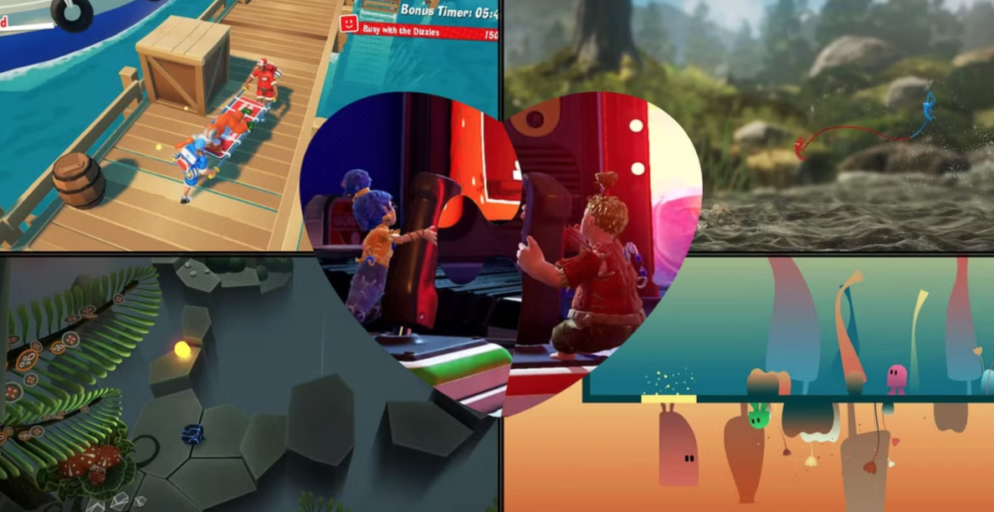
The psychology of co-operative play is meaningfully different from competitive or solo gaming, and those differences matter particularly in a relationship context.
Competitive gaming introduces a dynamic that couples often find corrosive over time. When one partner consistently wins, the other feels diminished. When skill levels differ significantly — as they almost always do when one person games regularly and the other does not — the gap produces frustration on both sides. In entertainment spaces built around individual outcomes, including platforms like Staycasino, this same tension tends to surface in different forms. The more experienced player holds back and feels constrained; the less experienced player feels patronised or overwhelmed.
Co-op removes the win/lose dynamic between players entirely. The challenge comes from the game, and both players face it together. Communication becomes necessary rather than optional — you genuinely need to tell your partner what you are seeing, what you are planning, what you need from them. The skills that make a relationship work and the skills that make co-op gaming work turn out to be remarkably similar: listening, coordinating, adapting to your partner’s approach, and maintaining good humour when things go wrong.
Things going wrong, incidentally, is one of co-op gaming’s underrated pleasures. Failing together — spectacularly, absurdly, in ways that are clearly both your faults — is frequently funnier than succeeding, and laughter is not a bad outcome for an evening’s entertainment.
The Best Co-op Games for Couples in 2026
It Takes Two remains the gold standard of couples’ co-op gaming and shows no signs of being displaced. Developed by Hazelight Studios and released in 2021, it has accumulated a devoted following that continues to recommend it to every couple willing to try gaming together. The premise — two parents on the verge of divorce, magically miniaturised by their daughter’s wish and forced to work together to return to normal size — is simultaneously silly and surprisingly emotionally resonant. The game introduces a new mechanical concept in virtually every chapter, meaning neither player has time to become bored or complacent. It is also, genuinely, funny. Completing it together takes eight to twelve hours — long enough to feel like a shared achievement, short enough to finish before life intervenes.
Stardew Valley occupies the opposite end of the intensity spectrum and is equally valuable for it. The farming and community simulation game, playable co-operatively for up to four players, creates a gentle shared world that couples can return to in short sessions without pressure or deadline. Building a farm together, developing the valley’s community, choosing which crops to plant and which buildings to construct — the decisions are low-stakes and the pace is self-determined. Stardew Valley is the gaming equivalent of a long walk: quiet, restorative, and surprisingly good for conversation.
Overcooked 2 is emphatically not quiet or restorative, and that is precisely its appeal for couples who want to test their relationship in a controlled environment. The chaotic kitchen simulation game requires two players to coordinate food preparation under increasingly absurd conditions — kitchens that split in half, conveyor belts, moving platforms, and order queues that accelerate past the point of comfort. It is genuinely stressful, frequently hilarious, and an excellent diagnostic tool for how two people communicate under pressure. Couples who complete it without incident have a relationship built on solid foundations.
A Way Out offers a cinematic co-op experience built around two prison inmates attempting to escape and navigate the consequences. Developed by the same studio as It Takes Two, it switches between genres — action, stealth, puzzle-solving — with enough narrative momentum to feel like watching a film you are also playing. The storytelling is conventional but effective, and the co-op integration is seamless enough that both players feel equally central to what is happening.
Lovers in a Dangerous Spacetime delivers exactly what its title suggests: two players piloting a spherical spaceship through colourful, chaotic space, managing different stations of the ship simultaneously to survive waves of enemies. The visual design is joyful, the difficulty is well-calibrated, and the constant need to communicate — “I need you on the shields,” “take the gun on the left” — creates genuine teamwork in a package that never takes itself too seriously.
Choosing the Right Game for Your Situation
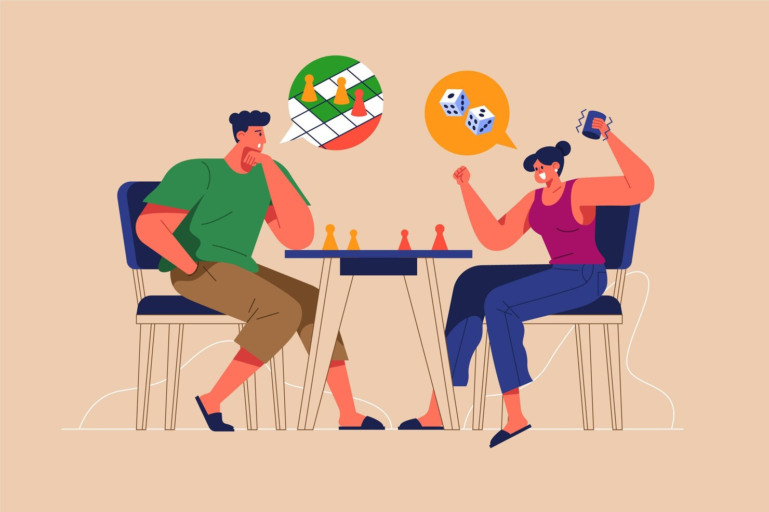
The single most important variable in choosing a co-op game for a couple is the experience gap between the two players. A game that one partner finds trivially easy while the other is struggling is not a co-op experience — it is a tutorial with an audience.
For couples where one partner has significant gaming experience and the other has little or none, accessibility of controls and gradual difficulty curves are the priority. It Takes Two and Stardew Valley both excel here: the former because it constantly introduces new mechanics that level the learning field, the latter because it has no meaningful fail state and no time pressure.
For couples who both game regularly and want a genuine challenge, Overcooked 2 and the later chapters of It Takes Two provide the kind of difficulty that demands real competence from both players simultaneously.
Platform matters practically. Most of the titles above are available across PlayStation, Xbox, Nintendo Switch, and PC, and several support cross-platform play. Many also support couch co-op — playing on the same screen, in the same room — which for couples is usually preferable to online co-op regardless of the technical options available. Being in the same room changes the experience fundamentally. The communication is easier, the laughter is shared, and the whole thing feels more like doing something together and less like doing something adjacent to each other.
What Co-op Gaming Actually Gives You
The case for co-op gaming as a couples’ activity ultimately rests on something simpler than game recommendations or platform compatibility. It rests on the value of doing something genuinely collaborative in your leisure time — something that requires both people to be present, engaged, and working toward the same thing.
Shared leisure has always been one of the more reliable investments a couple can make. The specific activity matters less than the quality of attention both people bring to it. Co-op gaming, at its best, demands exactly that quality of attention — and delivers, in return, the particular satisfaction of shared achievement that makes the whole endeavour worth the evening.
Start with It Takes Two. Finish it together. See where it leads.
Which co-op game has worked best for you and your partner? Leave a recommendation in the comments, and share this guide with any couple looking for a new way to spend an evening.
