
7 Board Games Without Physical Currency To Try

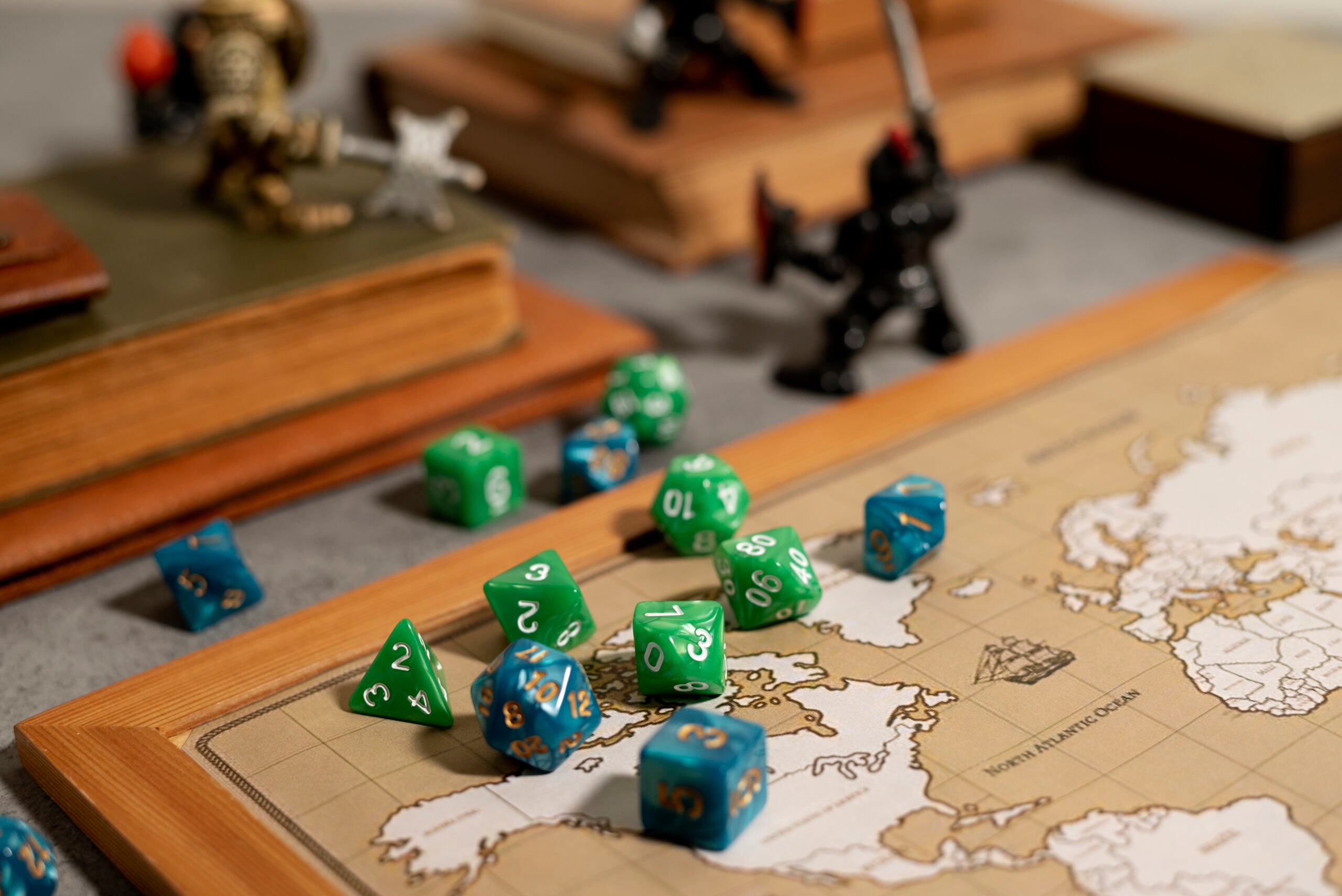
Many classic board games are well known for their use of money or other currency systems, from Monopoly to more complex economic simulations such as Power Grid, Brass: Birmingham, and Food Chain Magnate.
While these mechanics have their appeal, many players prefer games that move away from monetary management, as it can add cognitive load and shift focus from decision-making to bookkeeping.
Today, more and more board games are designed with this in mind, gaining popularity among both new players entering the hobby and experienced players seeking more streamlined, decision-focused gameplay.
Broader Trend In Entertainment
In today’s very competitive attention economy, this trend is omnipresent in a way, with similar tendencies emerging in other entertainment sectors, from gaming to online gambling, where designers aim to optimize and eliminate anything that could impede engagement.
When playing on a pay by mobile casino site, for example, players are a step closer to the actual game, rather than stuck in a time-consuming money management step.
Cardboard Games Without Physical Currency To Try
Splendor
A fast-paced engine-building game where players collect gems to acquire development cards and gradually reduce future costs. Instead of currency, players use a limited pool of gem tokens with fixed values.
There’s no negotiation, no making change, just direct exchange. The system preserves economic tension while eliminating unnecessary calculation.
Wingspan
A tableau-building game about attracting birds to different habitats, each adding abilities and scoring opportunities over time.
It removes money entirely. Its economy is built on food, eggs, and cards, resources that are immediately meaningful within the game’s logic. Players aren’t managing wealth; they’re managing options. Every cost is legible, and every tradeoff is immediate.
Cascadia
Cascadia is a tile-laying and pattern-building game where players create ecosystems by placing terrain tiles and matching wildlife. It uses tokens (animals, terrain), but no currency. Costs are direct and tied to placement decisions, keeping everything in the decision space.
Terraforming Mars
A strategic engine-building game where players develop projects to make Mars habitable, balancing production and long-term planning.
While “megacredits” exist, the real economy lies in production engines and resource conversion. The player’s attention shifts from spending to building systems that generate value over time.
Azul
An abstract drafting game where players select colored tiles to complete patterns and score points based on placement. It replaces purchasing with drafting; players “pay” only in opportunity cost. There is no currency, no conversion, just decisions constrained by timing and availability.
Sushi Go!
Sushi Go! is a light, fast card-drafting game where players build scoring combinations by passing hands around the table. It has no money and no resource conversion, just card selection and timing. Players “pay” only through opportunity cost and sequencing.
Scythe
A hybrid strategy game combining area control, engine-building, and asymmetric factions in an alternate-history setting.
Money is decoupled from moment-to-moment play almost entirely, functioning more as a scoring mechanism than a transactional tool. The real economy is spatial and strategic, not financial.
The Tradeoffs
This shift is not without its tradeoffs. Removing currency systems can also remove a layer of flexibility; money allows for open-ended valuation, negotiation, and emergent play in a way fixed resources often do not. In stripping out transactional friction, designers are also narrowing the space in which players can improvise.
Final Words
Hope we gave you an interesting piece to read, and some nice game suggestions to try, whether online or live with your family and friends. From a plethora of different types of board games, there are some for everybody.
