10 Best Games for Family Game Night in 2026: From Classic Co-ops to Hybrid Digital Tabletops

Picture this: it’s a Friday evening, the whole family is home, and everyone’s staring at a different screen. Sound familiar? The tension between “we should spend time together” and “screens are just part of life now” is real — and it’s not going anywhere.
Here’s the thing, though. The question isn’t whether kids use screens. According to Common Sense Media, U.S. children ages 0–8 now average around 2.5 hours of daily screen use, and gaming time has surged 65% since 2020. The real question is: what are they doing on those screens, and are they doing it together?
That shift in thinking is reshaping the board game market in a big way. The global board game market was valued at $14.37 billion in 2024 and is projected to hit $32 billion by 2032 at a 10.58% CAGR, according to Co-op Board Games.

Cooperative game sales alone jumped 20 million units in 2024. Families aren’t just buying games — they’re buying experiences that bring people back to the same table.
That’s exactly the lens we used to build this list. For a deeper dive into traditional board game options only, see the 30 Best Family Board Games 2026 ranking. But if you want the full picture — traditional games, card games, and brand-new hybrid digital-physical formats — keep reading.
How We Ranked These 10 Games
Every pick was evaluated against four criteria. No gut feelings, no nostalgia bias.
- Setup speed: Can you be playing in under 10 minutes? Because if the setup takes longer than a kid’s attention span, you’ve already lost.
- Cross-generational staying power: Will a 7-year-old and a 70-year-old both stay engaged through the whole game?
- Cooperation vs. competition balance: Does the game bring people together, or does it create the kind of competitive tension that ends nights early?
- Total cost of ownership: Hardware, expansions, subscriptions, replacement pieces — all counted, not just the sticker price.
The list covers three categories: traditional board games, card and abstract games, and physical-digital hybrid consoles.
Worth knowing: the Co-op Board Games statistics database found that 38% of Gen Z find board games enjoyable, with a noted preference for cooperative or less competitive formats (coopboardgames.com, 2025), and family games hold 26% of the overall market. That’s not a niche — that’s a mainstream demand.
The 10 Best Family Game Night Picks for 2026
#1 — Board Console (Hybrid Digital-Physical)
What if screen time and family game night weren’t two separate things? That’s the question Board was built to answer — and it’s unlike anything else on this list.
Board is a 24-inch tabletop touchscreen console billed as “the first ever face-to-face gaming console.” It was created by Brynn Putnam — founder of Mirror, the smart-mirror fitness platform acquired by Lululemon for $500 million — and Seth Sivak, founder of Proletariat, Inc. (later acquired by Blizzard).
According to Engadget, Board launched with 12 original titles across the platform — 7 of which are included with the $399 purchase, with additional titles available at $34.95 each. It’s a purpose-built system where the screen, sensors, and physical pieces all work together.
The magic is in how the pieces work. Each physical game piece is embedded with conductive glyphs on its base — not RFID tags — that the touchscreen reads to identify the piece and track its position and rotation in real time, as Wargamer confirmed.
Board calls this PieceSense technology. The result is zero lag, seamless interaction, and genuine tactile feedback. You’re sliding real pieces across a real surface, and the game responds instantly.
Setup is genuinely fast: place it on a table, plug it in, connect to Wi-Fi, and you’re playing. Seven titles are included out of the box, with no subscription required. Additional games start at $34.95 each — and that price includes the physical components, which get mailed directly to you.
The cross-generational appeal is where Board really shines. Meeple Mountain’s s review reported that a 9-year-old asked to play every single day for three weeks, while Goombastomp noted players ranging from grandparents to grade-schoolers stayed engaged for hours. That’s a genuinely rare thing to pull off.
Standout titles from the launch library include Chop Chop (frantic co-op cooking that turns the table into organized chaos), Space Rocks (a fast-paced asteroid shooter), and Cosmic Crush.
Families can also buy additional games like Strata & Daily Build — an area-control strategy game described by Wargamer as the bastard lovechild of Tetris and a crossword.
Then there’s Spycraft, a narrative spy campaign that ships with a Spy Kit. Meeple Mountain called it the title that “does the best job of showing off the platform’s potential.”
On cost: Board comes in at $399 with 7 games included and no subscription fees. Compare that to a fully equipped four-player Nintendo Switch setup — Switch 2 console (about $449.99 in 2026), extra Joy-Cons (about $99.99 for a single set), grip ($24.99) — which runs about $675. For families who want shared, face-to-face play out of the box, the value math is compelling.
Wargamer put it plainly: “Board could be the next Nintendo Wii, and I’m not exaggerating.”
Framework scores: Setup ★★★★★ | Cross-gen ★★★★★ | Co-op balance ★★★★★ | Cost value ★★★★☆
#2 — Ticket to Ride (Classic Strategy)
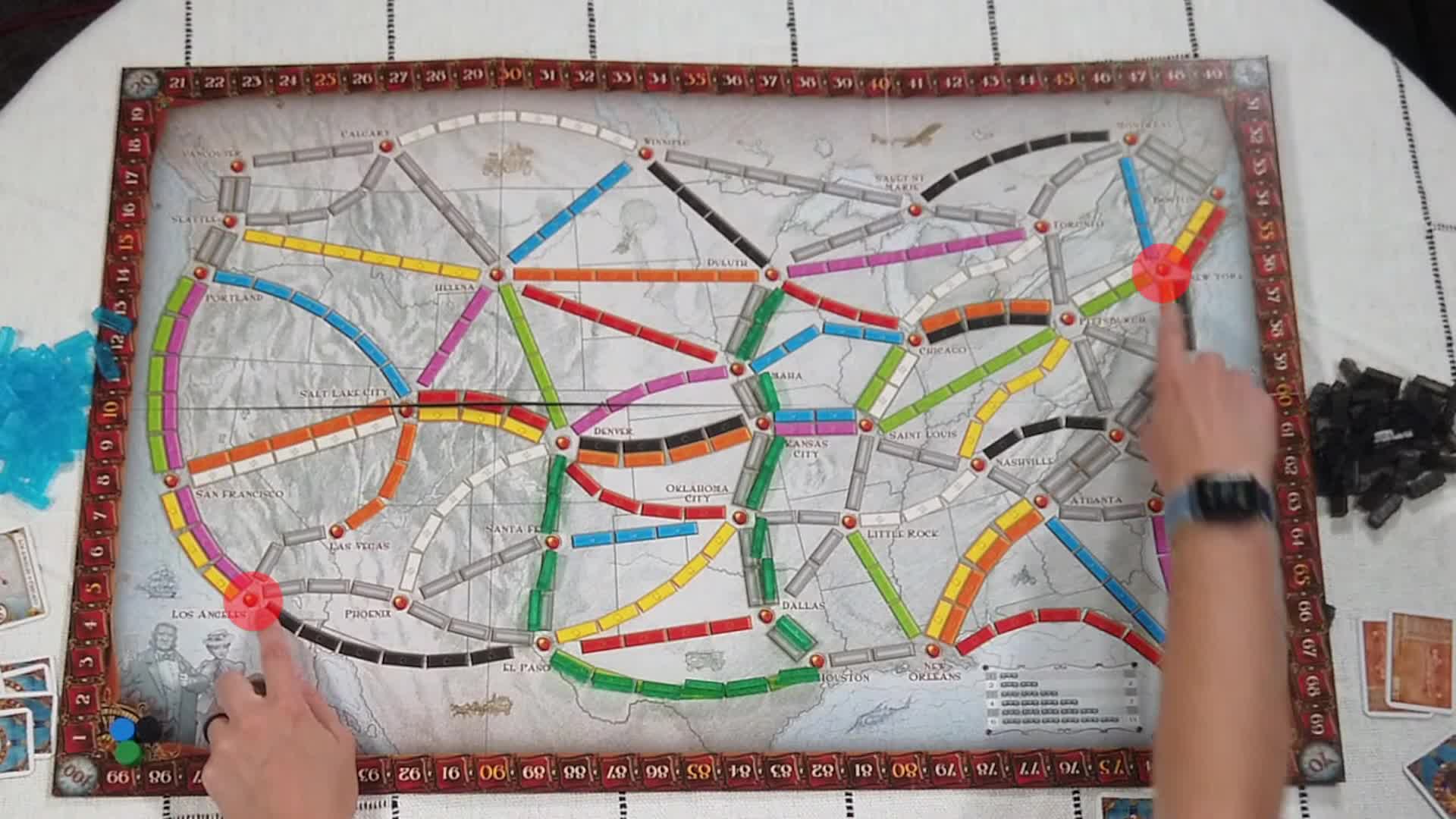
Few games have earned “gateway game” status as completely as Ticket to Ride. As of 2024, Wikipedia reports 18 million copies sold worldwide, translated into 33 languages. The rules fit on a single card: draw train cards, claim a route, or pick destination tickets. That’s it.
Ages 8+ means most school-age kids can play alongside adults without house rules or dumbed-down mechanics. The mild competition — occasionally blocking a rival’s route — keeps things exciting without triggering the kind of meltdowns that end evenings. The base game runs around $44 (frequently on sale; MSRP $54.99, as of May 2026), no app required, no subscription, no ongoing cost.
Framework scores: Setup ★★★★★ | Cross-gen ★★★★★ | Co-op balance ★★★☆☆ | Cost value ★★★★★
#3 — Wingspan (Engine-Building / Nature Strategy)
Wingspan has become one of the most quietly dominant games in modern board gaming. According to BoardGameWire, Wingspan and Wingspan Asia together reached 2,639,429 lifetime units as of end-2025, while Stonemaier Games posted record annual revenue of $25.1 million in 2025.
And the series keeps growing — the Wingspan Americas expansion launched in February 2026 with 111 new bird cards plus 40 hummingbird cards, as Co-op Board Games noted.
The digital edition holds a 94% positive rating on Steam (as of early 2026) across thousands of reviews — handy when family is remote. Best suited for ages 10+ and households that enjoy calm, strategic turns over confrontational play. Setup takes a bit longer than most on this list, which nudges the score down, but the payoff is worth it.
Framework scores: Setup ★★★☆☆ | Cross-gen ★★★★☆ | Co-op balance ★★★☆☆ | Cost value ★★★★☆
#4 — Bomb Busters (Cooperative / Campaign)
Bomb Busters won the 2025 Spiel des Jahres — the most prestigious award in board gaming — and it earned it. The game delivers 66 escalating missions across five sealed surprise boxes, with new rules and mechanics unlocked as you progress.
It’s not a traditional legacy campaign — components are never destroyed and missions can be replayed — but the gradual reveal of new mechanics gives it a satisfying sense of progression.
The purely cooperative bomb-disposal premise means no player elimination and no backstabbing mechanics. For households where competition causes conflict, this is the answer.
The cooperative category is clearly gaining momentum: co-op sales jumped 20 million units in 2024, per Co-op Board Games. If Bomb Busters gets you hooked on co-op play, the Top 40 Cooperative Board Games 2026 ranking is your natural next stop.
Framework scores: Setup ★★★★☆ | Cross-gen ★★★★☆ | Co-op balance ★★★★★ | Cost value ★★★★☆
#5 — Azul (Abstract Strategy)
Azul is one of those rare games that looks stunning on a table and plays even better than it looks. The base game has sold more than 2 million copies, won 19 awards from 30 nominations including the 2018 Spiel des Jahres, and has long been ranked among the top abstract games on BoardGameGeek, according to Co-op Board Games.
Tactile tile-drafting, a 30–45 minute play time, and an ages 8+ entry point make it a versatile pick for mixed-age tables. The 2025 release of Azul Duel adds a solid two-player option for quieter nights when the full group isn’t around.
Framework scores: Setup ★★★★★ | Cross-gen ★★★★☆ | Co-op balance ★★★☆☆ | Cost value ★★★★★
#6 — Pandemic (Classic Co-op)
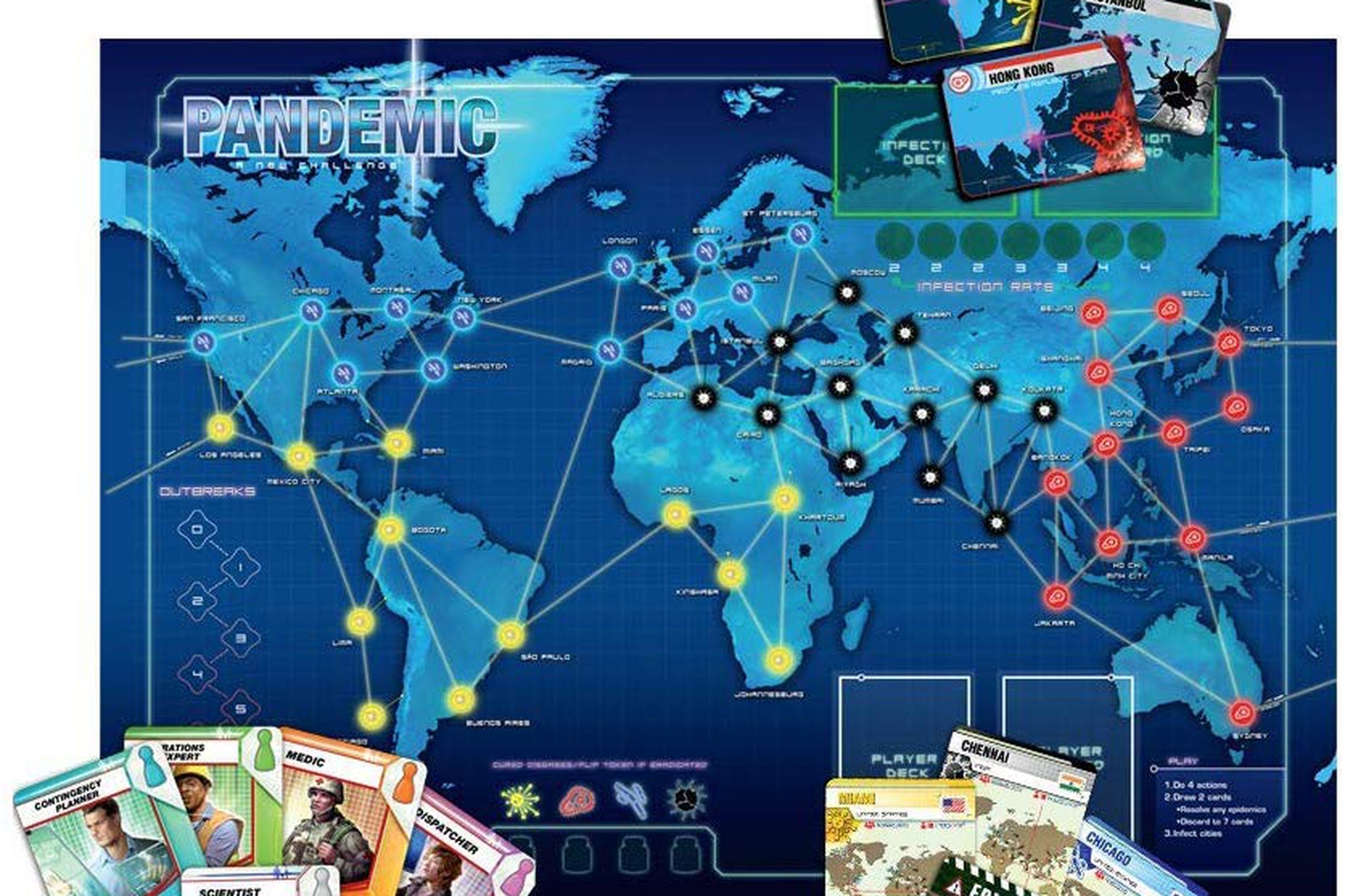
Pandemic is the benchmark by which all co-op games are still measured. Every player works against the board — no one wins at someone else’s expense, no one gets knocked out early. The collective decision-making it teaches is genuinely valuable, not just for kids but for the adults at the table too. Ages 8+, approximately 45 minutes, with Legacy editions (rated 13+/14+) that extend replayability significantly through a persistent campaign.
According to Co-op Board Games, strategy games lead genre preferences at 34% market share, while cooperative games represent 12% of sales — a smaller but fiercely loyal segment. Pandemic helped build that loyalty.
Framework scores: Setup ★★★☆☆ | Cross-gen ★★★★☆ | Co-op balance ★★★★★ | Cost value ★★★★★
#7 — Codenames (Party / Word)
Codenames is the party game that managed to stay genuinely good at large player counts. Team-based clue-giving for 4 to 8+ players, plays in ~15–30 minutes, and the vocabulary range means it’s cross-generational once players hit around age 10+. Codenames Duet offers a purely cooperative two-player variant for smaller nights.
Party games hold 18% market share, per Co-op Board Games, and Codenames has earned its place at the top of that category. Low cost, no setup beyond shuffling the cards, and it scales up naturally as more family or friends join.
Framework scores: Setup ★★★★★ | Cross-gen ★★★★☆ | Co-op balance ★★★★☆ | Cost value ★★★★★
#8 — Sushi Go Party! (Card Drafting)
Sushi Go Party! is the game you pull out when the group can’t agree on anything else. Lightning-fast card drafting for 2–8 players, ages 8+, done in about 30 minutes. The modular game boards let you scale difficulty and variety based on who’s at the table — a neat trick for mixed-age households.
At around $25 with zero ongoing costs and scoring tracked via wooden pawns on the included game board, it might be the best pure value on this list. Friendly competition with no player elimination and no kingmaking means it stays fun even when someone’s running away with the lead.
Framework scores: Setup ★★★★★ | Cross-gen ★★★★★ | Co-op balance ★★★☆☆ | Cost value ★★★★★
#9 — Hive Pocket (Abstract Duel)
No board. No cards. No setup. Hive Pocket is a set of resin tiles you can play anywhere in about 20 minutes. The chess-like depth is real — experienced players will find genuinely complex strategic layers — but the rules are accessible enough to pick up quickly.
It’s best as a two-player option while other family members play something else, rather than a whole-group activity. At around $25–$35 (as of May 2026) lifetime with no expansions required, the total cost of ownership is essentially zero. A perfect addition to any game stack.
Framework scores: Setup ★★★★★ | Cross-gen ★★★☆☆ | Co-op balance ★★☆☆☆ | Cost value ★★★★★
#10 — Dixit (Creative / Party)
Dixit has unusually broad cross-generational appeal. The artwork-driven storytelling mechanic requires almost no reading, which means players as young as 8 can compete meaningfully alongside adults. For 3–8 players, ages 8+, with gentle indirect scoring that never creates real tension.
The dreamlike illustration cards carry the whole experience — and expansions add hundreds more, extending the base game’s life significantly. At around $35 for the base game with no ongoing costs, it’s a natural fit for households with younger kids who get left out of heavier strategy titles.
Framework scores: Setup ★★★★★ | Cross-gen ★★★★★ | Co-op balance ★★★★☆ | Cost value ★★★★★
Caveats, Counterpoints & Things to Consider
No list is complete without the honest disclaimers, so here they are.
Board is the standout new entry here, but it’s not without real limitations. It requires constant AC power and a Wi-Fi connection for downloading games and updates (not required during active play), needs dedicated table space, and currently supports local multiplayer only — no online play yet.
According to Goombastomp, these are genuine constraints, not minor footnotes. Its game library is also still growing, with some titles skewing younger while depth for teens and adults continues to develop.
The broader hybrid category faces an uphill perception battle too. Co-op Board Games data shows that 61% of board gamers still prefer physical-only play, while hybrid formats represent 29% of the market. Board’s format simply won’t resonate with every household — and that’s fine.
On the traditional side, several top picks here (Wingspan, Pandemic) work best with players aged 10 and up. Households with younger kids should weight Dixit, Sushi Go Party!, or Board’s co-op titles higher.
And if budget is the primary constraint, games like Sushi Go Party! and Hive Pocket deliver exceptional value at under $30 each — no hardware required, no ongoing costs, no surprises.
Building the Right Game Night Stack for Your Family
The honest truth? No single game suits every household. The smarter move is building a “stack” — a small collection matched to your family’s actual age range, competitive tolerance, and budget.
Here’s how to think about it:
- Ages 5–9, low budget: Dixit + Sushi Go Party! (~$57–$60 total) — gentle, visual, fast, and genuinely fun for everyone at the table.
- Ages 8–14, strategy lovers: Ticket to Ride + Azul (~$80 total) — accessible enough for kids, satisfying enough to keep adults engaged.
- Mixed ages, co-op focus: Bomb Busters + Pandemic (~$75–$95 depending on retailer, as of May 2026) — pure teamwork, no competitive friction. Browse the Top 40 Cooperative Board Games 2026 for even more options in this category.
- Families wanting to reframe screen time socially: Board at $399 — the all-in-one option that replaces both a game library and a traditional console, with social, face-to-face play built into every session.
Game night in 2026 is richer and more varied than it’s ever been. You can spend $25 on a card game or $399 on a hybrid console — and either way, you’re making the same essential investment: time spent together, around the same table, actually talking to each other. The best game is always the one that gets everyone in the room. Start there, and you can’t go wrong.
