
Rules For Rummy Board Game Review

Rummy is a traditional draw-and-discard card game with no single designer or publisher, first recorded in the United States around 1900. It plays 2 to 6 people, suits ages 8 and up, and runs 30 to 60 minutes. It beats Gin Rummy at higher player counts because the rules stretch to six players. This guide covers the rules for Rummy: the deal, melding, laying off, going out, and scoring.
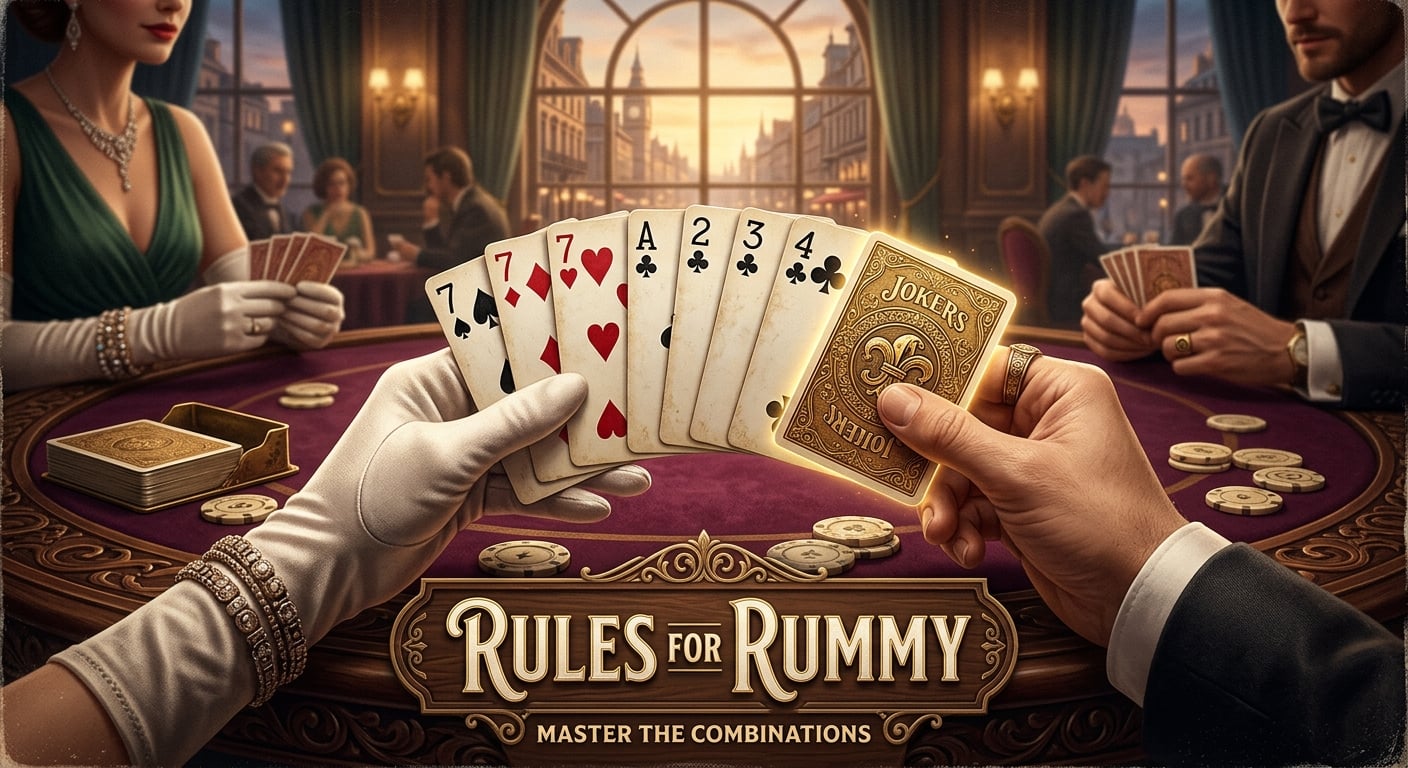
Rummy Overview
Players arrange their hand into matched sets: three or four cards of one rank, or three or more cards in suit sequence. The first player to shed every card ends the hand, and the rest pay the pip value of what they hold.
| Designer | Traditional, no known designer |
|---|---|
| Publisher | Public domain |
| Year Released | Around 1900 |
| Players | 2 to 6 |
| Age Range | 8 and up |
| Playing Time | 30 to 60 minutes |
| Game Type | Draw and discard |
| Complexity Rating | Low, about 1.2 out of 5 |
What You Need to Play Rummy
Rummy needs almost nothing, which is why it travels better than most card games for adults.
- One 52-card deck for two to four players, two decks for five or six.
- Jokers only for wild-card variants. Standard Rummy leaves them out.
- Paper and pencil for running scores.
Rummy Pros and Cons
- Teaches in three minutes: draw, meld, discard.
- Handles two through six players without rule patches.
- Costs the price of a deck of cards.
- Short turns, so nobody sits idle.
The drawbacks:
- Card luck decides plenty of hands.
- Little interaction beyond watching the discard pile.
- No comeback mechanism inside a single deal.
How to Play Rummy
Setting Up Rummy
The dealer deals one card at a time, face down, starting on the left. Setup takes about a minute.
Two players get 10 cards each, three or four get seven each, five or six get six each.
The rest of the deck becomes the stock. Turn its top card face up beside it to start the discard pile.
Rummy Turn Structure
Play starts left of the dealer and moves clockwise. Draw one card, from the stock or the discard pile.
Lay any completed melds face up, then discard one card to end your turn. If you drew from the discard pile, you cannot discard that same card on the same turn.
Melds in Rummy: Sets and Runs
A set is three or four cards of one rank, such as three Kings. A run is three or more cards in suit order, such as the 8, 9 and 10 of hearts.
Rank runs King high down to Ace low. Many house rules let the Ace sit at either end, so agree first.
Laying Off in Rummy
You can add cards to any meld on the table, including melds other players put down. If three 7s are showing, play the fourth 7. If 8-9-10 of spades is showing, add the Jack or the 7.
Going Out and Winning
You win once you shed every card. If your last cards all form melds, lay them down without a discard and the hand ends there.
If the stock runs out with nobody out, the next player takes the discard top or flips that pile over, unshuffled, as a new stock.
Rummy Scoring Rules
Losers pay the winner the pip value of the cards left in hand, melded or not. Face cards count 10, Aces count 1, the rest count their number.
Shed your whole hand in one turn, having laid down nothing earlier, and you go “rummy.” Opponents pay double.
Where to Buy Rummy Cards
| Platform | What you get |
|---|---|
| Amazon | Bicycle, Hoyle and Copag decks, plus multi-packs |
| Target | Standard and jumbo-index decks |
| Walmart | Budget decks and two-deck sets |
| Bicyclecards.com | Direct from the maker |
Rummy Game Mechanics
Set collection drives everything, and the draw choice creates the tension. Taking from the stock hides your plans. Taking the upcard tells the table what you are building, and a discard that completes an opponent’s run hands them the win.
Laying off is the only direct interaction. A meld on the table belongs to everyone, so a card you were saving loses value once someone else plays it. The same tension runs through popular Indian card games.
Rummy Rule Variations
German Rummy uses two decks plus six Jokers, deals 13 cards each, and demands an opening meld worth 30 points before any other move. Aces score 11 there and Jokers score 20 when caught in hand.
A Joker replaces a missing card, and whoever holds the real card can swap it in. Other house rules raise the opening meld to 40 points or drop it.
Who Should Play Rummy
Rummy fits mixed groups, family tables and anyone who wants a game they can teach mid-shuffle. Two players get a sharp duel where you track every card the other picks up. Four players get a slower game with more melds to lay off against.
Skip it if your group wants deep strategy. Try a cooperative board game instead, or a solo card game when you play alone.
FAQ
Is Rummy good for beginners?
Yes. Rummy has three actions per turn: draw, meld, discard. Most new players pick it up inside one hand. The scoring is simple arithmetic. The one rule people forget is that you cannot discard the card you just took from the discard pile.
How long does a game of Rummy take?
A single hand runs 10 to 15 minutes. Most groups play to a target score such as 100 or 500 points, which stretches the session to 30 to 60 minutes. More players adds waiting time between turns, though the length of each hand stays about the same.
What is the best player count for Rummy?
Three or four players hits the sweet spot. You get several melds to lay off against and enough discards to read. Two players makes a faster duel with more control over the discard pile. Five or six needs a second deck and longer waits.
Can you play Rummy with Jokers?
Standard Rummy leaves Jokers out. German Rummy and many house versions add them as wild cards that replace a missing card in a meld. A Joker caught in your hand at the end costs 20 points, so play it before another player goes out.
What card games are similar to Rummy?
Gin Rummy is the tightest two-player relative, with knocking instead of open melding. Canasta adds partnerships and wild cards. Oklahoma Gin varies the knock threshold each hand. Phase 10 and Rummikub build on the same set-and-run core with different objectives.
