
The Old King’s Crown Board Game Review

The Old King’s Crown is a competitive card game designed and illustrated by Pablo Clark, published by Eerie Idol Games in 2025. Four heirs fight over a dead monarch’s throne by committing cards face down and revealing them at once. It plays 1 to 4 players, ages 12 and up, in 60 to 120 minutes. This review covers the components, the season-based round structure, and whether the game earns its heavy rulebook.
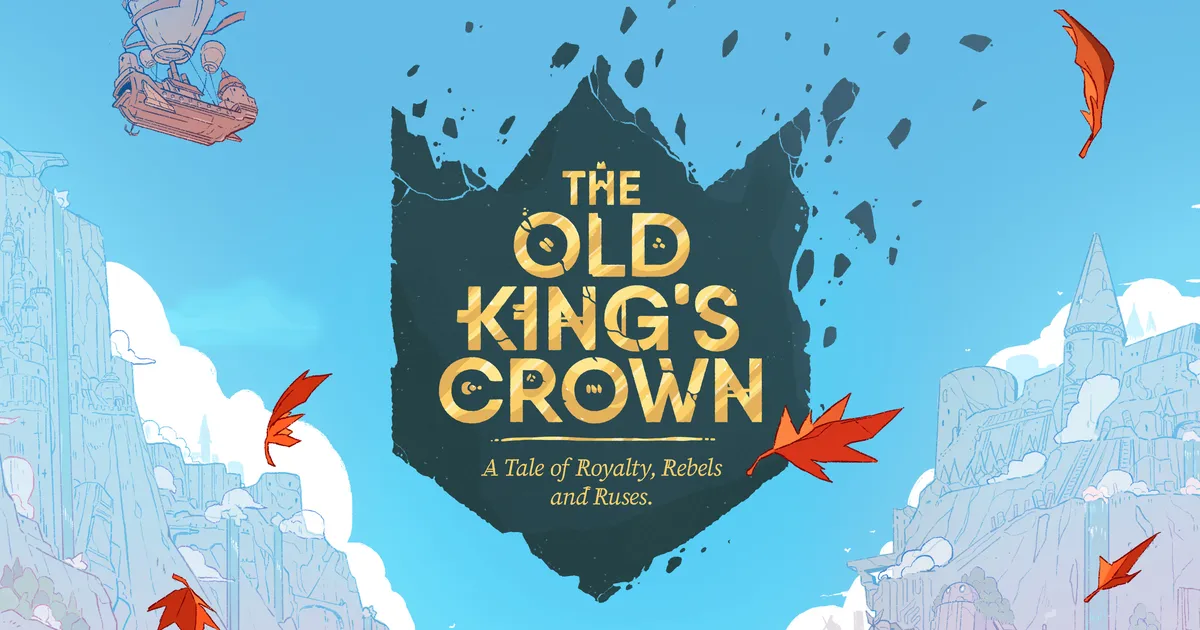
The Old King’s Crown Overview
The old king is gone and nobody agrees on how he died. Each player leads a faction with a claim to the empty throne, competing across a map that runs from the castle heights down to the necropolis.
You win by collecting the most Influence over four to six rounds. Each round is a year split into four seasons, and each season asks something different of your hand.
| Designer | Pablo Clark |
|---|---|
| Publisher | Eerie Idol Games |
| Year Released | 2025 |
| Players | 1–4 |
| Age Range | 12+ |
| Playing Time | 60–120 minutes |
| Game Type | Strategy card game, area control, fantasy |
| Complexity Rating | 3.69 / 5 (BoardGameGeek weight) |
What’s in the Box: The Old King’s Crown Components
The box measures 33 x 25 x 10 cm and comes close to full, since every faction gets its own deck plus a private reserve of upgrades.
| Boards | Kingdom Board, Council Board, 4 player boards, Simulacrum solo board |
|---|---|
| Large cards | 76 faction cards (19 per faction), 20 Simulacrum cards |
| Medium cards | 51 kingdom cards, 24 Fog and Menace, 12 Ambition, 12 Plan |
| Small cards | 30 Forge cards for solo difficulty |
| Wooden pieces | 4 Heralds, 20 Followers, hand size dials, 3 clash markers, season and round markers |
| Cardboard | 4 Places of Power tiles, 16 tactic tiles, 40 faction markers, 48 influence tokens, 20 knowledge tokens |
| Paper | Rulebook, solo rulebook, 3 reference sheets |
The cardboard is thick and cleanly pressed. Boards and tiles are dual-layer, so tokens sit in recessed wells instead of sliding when someone knocks the table.
The wooden Heralds and Followers use custom silhouettes with printed detail rather than generic meeples.
The Old King’s Crown Pros and Cons
Pros
- Simultaneous face-down play keeps everyone active instead of waiting through four separate turns.
- Card theft adds pressure to the spring bid. A card locked under a 6 is never safe from someone holding an 8.
- The hand dial punishes cycling. Empty your deck and your limit drops from six permanently.
- Four factions each bring five unique abilities and five purchasable cards.
- Dual-layer boards and custom wooden pieces, unusual for a first-time publisher.
- The Simulacrum solo mode has its own board, priority decks, and adjustable difficulty.
Cons
- The rulebook is poorly structured. Expect lookups mid-game for your first two sessions.
- Summer resolution spirals. Chained effects wreck plans you set up in spring.
- Abilities that fire once per game are hard to learn from.
- New kingdom cards appear every round and each needs reading.
- An experienced player will beat a first-timer badly, since faction knowledge outweighs tactics early.
How to Play The Old King’s Crown
Setup
Pick a length: four rounds for a short game, five for standard, six for extended. Place the Kingdom Board with the Council Board above it, then lay four kingdom cards face up on the Great Road.
Each player takes a faction board, a Herald, five Followers, four tactic tiles, and a Place of Power tile. Set the hand dial to 6, take your value 10 Heir card, then draw up to six. Setup runs about 10 minutes.
Round Structure
Every round covers one year and moves through spring, summer, autumn and winter in that order.
Spring: Bidding and Deployment
Everyone reveals one card at once. In descending strength order you take a kingdom card from the Great Road, steal one a rival holds if your value is higher, or take your card back. Your bid card then stays on the kingdom card as an occupier, which is what makes theft possible later.
Players place Heralds at map locations, commit a card face down to each of the three regions, and take spring actions such as deploying Followers.
Summer: Resolving Clashes
The last player in turn order secretly sets the resolution sequence for the three regions, then flips the markers. Cards turn face up region by region. Add card strength, one per Follower, and any modifiers. The highest total wins and picks one of the two locations for its reward.
Autumn and Winter
In autumn you Govern, placing a vote card on a council for a permanent benefit, or Travel, discarding a card for knowledge to spend on advanced cards. Winter is cleanup: Heralds come home, Followers go to the Lost Pile, and the round marker moves.
After the final round, count Influence. Ties go to whoever holds the Favor of the Kingdom.
Where to Buy The Old King’s Crown
| Retailer | Notes |
|---|---|
| Amazon | English edition, standard retail listing |
| Eerie Idol Games | Publisher direct store |
| Board Game Bliss | Canadian retailer, ships North America |
| The Game Steward | Crowdfunding bundles and expansion editions |
| Gamefound | Second printing and Songs of Home expansion pledges |
| Local game stores | Distributed by Galakta, Delirium Games and regional partners |
The Old King’s Crown Game Mechanics
Blind bidding through simultaneous selection drives everything. You commit a card without knowing what anyone else picked, and the reveal decides who takes what. Libertalia and Mission: Red Planet work the same way, with fewer systems stacked on top.
Light deck building comes from the Place of Power. Knowledge tokens buy advanced cards into your hand or lay headquarters cards down for ongoing effects, which slowly separates your deck from everyone else’s. Readers who like that kind of card growth can compare it against our favorite cooperative deck building games. The hand dial works as an attrition clock, so cards spent on Travel or Govern carry a second, delayed cost.
Turn order runs off Influence, so leading means bidding first and losing the right to set the clash sequence. That rule does more balancing work than anything else in the box.
Who Should Play The Old King’s Crown
This suits groups who like reading opponents more than optimizing engines. If your table enjoys the moment a face-down card flips and ruins somebody’s round, it lands well.
Two players is the cleanest count. You can scan one opponent’s kingdom cards and council placements at a glance. At four, outcomes swing on effects you did not see coming.
Skip it if your group hates losing a good plan to something outside their control. Fans of Root will handle the curve better than fans of Splendor.
Solo players get real value here. The Simulacrum uses Ambition and Plan decks with visible priority backs, so you can read its intentions much the way you read a person. It holds up next to the solo board games we rank highest.
FAQ
Is The Old King’s Crown good for beginners?
No. The 3.69 complexity weight is accurate, and the rulebook does not teach well. Players need comfort with card-driven games and simultaneous reveals first. Someone at the table should learn the rules properly before teaching, since the seasons interlock in ways a quick skim misses.
How long does The Old King’s Crown take to play?
Between 60 and 120 minutes, depending on player count and round length. A four-round two-player game finishes near an hour. Six rounds at four players runs past two hours on a first play, mostly from reading new kingdom cards each round.
What’s the best player count for The Old King’s Crown?
Two players. The information load stays manageable and you can track what your opponent holds. Three and four players add chaos that some groups enjoy and others find arbitrary. Solo works well if you want a tactical puzzle without the reading-opponents element.
Is The Old King’s Crown worth buying?
It depends on your tolerance for disrupted plans. The production is excellent and the art is distinctive. Buy it if you want blind bidding with asymmetric factions and plenty of moving parts. Skip it if you prefer tight, calculable strategy games with fewer effects in play.
What games are similar to The Old King’s Crown?
Libertalia and Mission: Red Planet share the simultaneous card selection core with far less overhead. Root offers comparable faction asymmetry with a different combat system. Dune: Imperium delivers deck building plus area conflict with cleaner rules and shorter games.
