Why The Crew Mission Deep Sea Works Because Players Cannot Say What They Mean

Most card games make room for a bit of table talk. Players can bluff, complain about their hand, ask questions or give away more information than they intended. The Crew Mission Deep Sea takes that away and turns the silence into the whole game.
Players work together to complete a sequence of missions, but they are only allowed limited ways to share information about the cards in their hands.
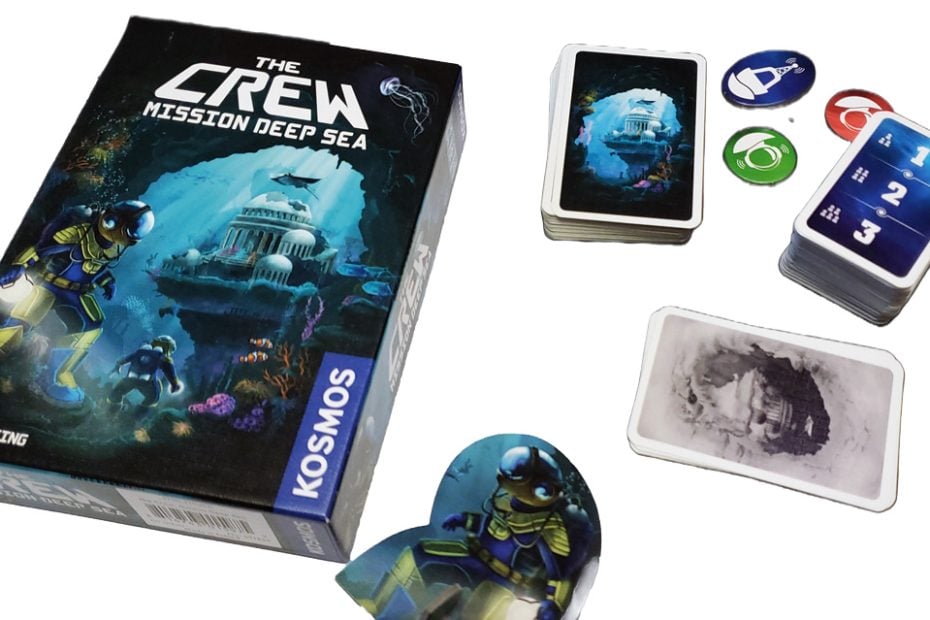
They cannot simply say that they hold the blue nine or that they need someone else to win the next trick. Instead, they place one card in front of them and use a small marker to show whether it is their highest, lowest or only card of that colour.
Unlike the instant feedback of a new online casino, The Crew Mission Deep Sea makes uncertainty the point. Every card played carries a message, and every teammate has to decide whether they understood it correctly.
That simple restriction turns an ordinary trick taking game into something much more tense.
The game begins with familiar rules
Anyone who has played whist, bridge or a basic card game will recognize the foundation. Each player receives cards in several colors, one player leads a trick, and everyone who can follow that color must do so. The highest card wins, unless a trump card has been played.
The difference comes from the missions. Players are assigned tasks such as winning a particular card, making sure another player wins it, or completing objectives in a particular order.
A mission may seem easy when everyone looks at their own hand. It becomes complicated when the group cannot speak freely.
Imagine that one player needs to win the yellow six, but another player has a yellow seven. That should be useful information, yet nobody can simply announce it. The team has to work it out through the cards that have already been played, the signals they have seen and the decisions each person makes.
A bad choice does not just lose one trick. It can ruin the mission.
The silence makes every move matter
The game creates tension because players are constantly trying to interpret small details. Someone leads a low card in a colour they could probably win.
Are they trying to lose the trick? Are they testing whether another player has a stronger card? Have they run out of a different colour and want to use a trump card later?
There is rarely one obvious answer.
That is why the game works so well with a regular group. Players begin to notice each other’s habits. One person may be cautious and only signal a card when they are completely certain. Another may take more risks and hope their teammates understand the intention.
Over time, a group develops a shared language without being allowed to say much at all. A card played early in a round can become a message. A player refusing to lead a certain colour may tell the team more than a conversation would.
The satisfaction comes when everyone reads the situation correctly. A difficult mission can be completed through a sequence of choices that looked strange at first, then make perfect sense once the final trick is played.
Mission Deep Sea adds pressure without making the game complicated
The original The Crew used a space theme. Mission Deep Sea moves the setting underwater, but the main appeal remains the same. The game gives players a steady stream of new challenges without asking them to learn a completely new system every time.
Early missions help the group understand the communication rules. Later ones add more conditions, more tasks and more ways for a single mistake to cause problems.
The difficulty rises naturally. At first, players may fail because they forget to think ahead. Later, they fail because everyone understands the plan but one card falls in the wrong place. Those failures do not usually feel unfair. They create the urge to set the cards up again and try one more time.
That is an important difference between a good cooperative game and one that simply punishes players. The Crew Mission Deep Sea makes a loss feel like a puzzle that has not been solved yet.
It gives every player a reason to stay involved
Many cooperative games have a common problem. One confident player starts directing everyone else, and the rest of the table follows instructions. That can make the game feel less like a shared experience.
The Crew Mission Deep Sea avoids much of that because the rules limit what anyone can say. A player who understands the game well cannot simply explain the right move. They still have to trust their teammates to read the information available.
That gives quieter players more space. They do not need to talk over the table to contribute. A well chosen card can be just as important as a long explanation.
It also means everyone stays engaged between turns. Watching another player’s move is not passive. The group needs to consider what it might mean for the rest of the round.
A mission can be decided by one small decision made several turns earlier. That makes even short games feel satisfying.
Why it suits people who think they do not like board games?
Some people hear the phrase board game and imagine a long evening, a crowded table and a rule book that takes an hour to explain. The Crew Mission Deep Sea offers something different.
The cards are easy to understand. The individual rounds are short. Players can stop after a few missions or continue for much longer if the group is enjoying the challenge.
It also works for people with different levels of experience. Someone who has never played a modern board game can learn the basics quickly. Someone who plays regularly will appreciate the small tactical problems that become more demanding as the missions develop.
The game does not rely on a large board, miniature figures or a complicated theme. Its best idea is much simpler. Give players a shared goal, then stop them from explaining how to reach it.
That is what makes The Crew Mission Deep Sea memorable. It turns silence into strategy.
