The Evolution of Cooperative Legacy Board Games and Retention Strategies on Modern iGaming Portals

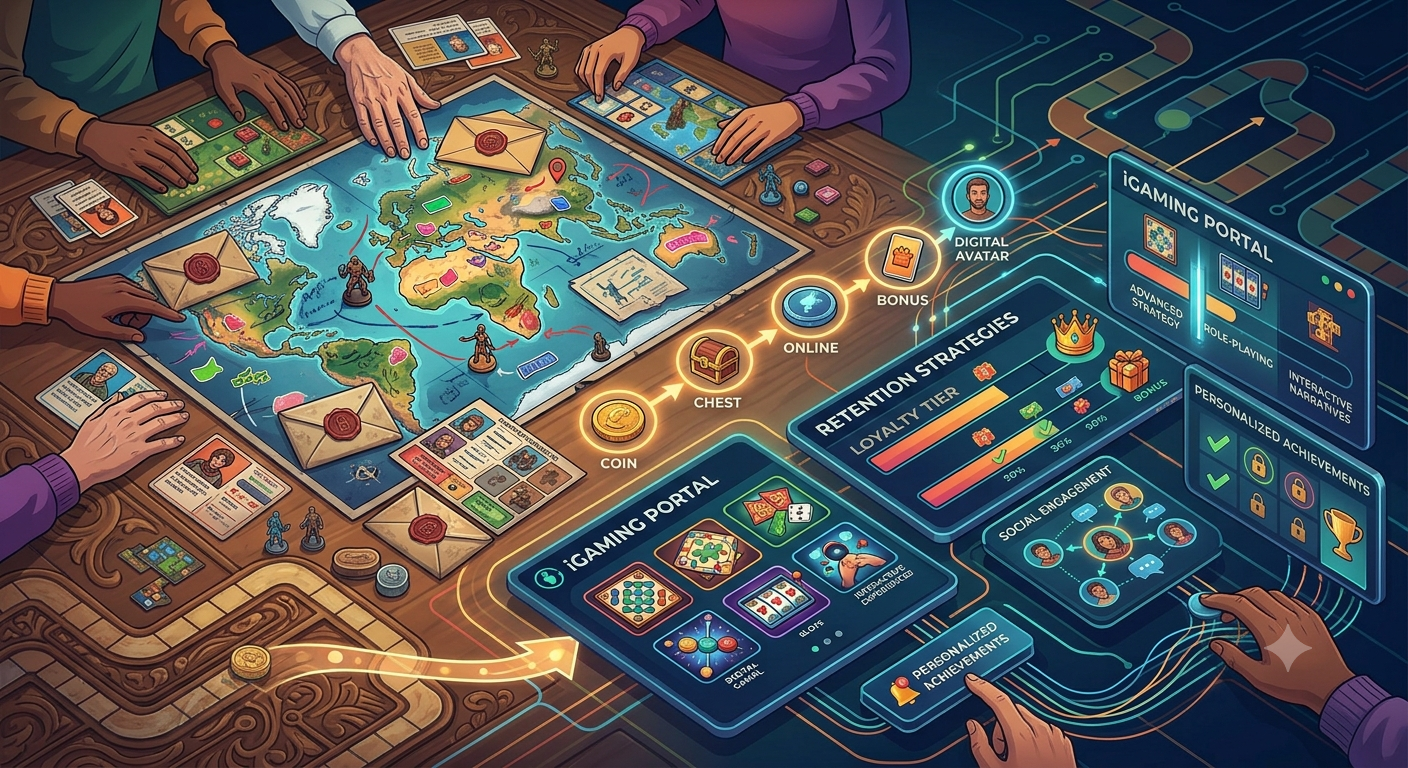
Co-operative legacy games disrupted tabletop play’s old rhythm. A choice made on Tuesday may haunt the group weeks later, written into a scarred board, a sealed envelope, or a rulebook amended by hand. The story belongs to everyone, and each session leaves the next one altered.
iGaming portals build return habits through different tools. Progress bars, timed events, personal targets, and accumulated results draw users back.
Both industries trade on anticipation and memory, though under different pressures: one grows from shared play and hobby culture, the other from commercial retention in a regulated market.
How Cooperative Legacy Games Changed Board Game Design?
Legacy design first took shape with Risk Legacy in 2011, but cooperative games gave the format full expression. Instead of treating each match as a sealed event, designers linked sessions into campaigns shaped by memory, consequence, and shared responsibility.
The physical game became part of that history. Sealed envelopes waited like promises at the table’s edge. Stickers altered the map, cards disappeared, and new rules arrived after key moments. A careless decision could return weeks later, while a narrow victory might open an unseen path. Players came back because the campaign remembered them.
Pandemic Legacy brought this structure into the mainstream. Its influence lay in changing the basic rhythm of board gaming.
Separate matches gave way to connected chapters, where every participant carried the weight of earlier choices. The board was no longer a neutral surface. It became a record of the group itself.
The Psychology of Shared Progress
Cooperative legacy games bind players through more than strategy. Every success or failure belongs to the group, turning each decision into a social contract. Shared progression gives later sessions emotional weight, since nobody returns as a neutral observer.
An unfinished story creates a quiet pull. Sealed envelopes, hidden rules, and altered components suggest that something remains beyond view.
Players return not only to win, but to learn what earlier choices have set in motion. A board sticker or a crossed-out card can feel like evidence in a case everyone remembers differently.
Good cooperative game design also depends on expectation. The group agrees to meet again because the campaign now belongs to them. That promise sustains long-term participation, while the box becomes an archive: worn, marked, and shaped by decisions no one can undo.
How Modern iGaming Portals Build Retention Loops?
Modern iGaming portals rarely depend on a single reward. They create a rhythm of return through daily bonuses, loyalty tiers, personalized offers, leaderboards, seasonal campaigns, missions, promotion alerts, and rewards for logging in again.
Each feature supports the same three-stage cycle: the user acts, sees measurable progress, then finds a reason to return later.
That pattern resembles a legacy board-game campaign, where one session leaves traces that shape the next. Yet iGaming operates under commercial pressure, so retention can affect spending as well as attention. Communication therefore requires restraint, clear terms, and responsible limits.
This pressure becomes especially clear when newer operators enter a crowded market. Guides to brand new online casinos made by Gamblizard often reveal how such brands use revised bonus structures, cleaner interfaces, and return programmes to build recognition. The logic remains familiar: prompt an action, record progress, then leave a thread unfinished until the next visit.
Personalization, Social Bonds, and Scheduled Return
Legacy games build personalization from the table outward. Group choices rename characters, mark components, and leave each campaign unlike any other.
That history strengthens social bonds. Players plan together, carry shared responsibility, and know that absence may stall the story. The next session becomes more than a date; it is a promise made across the table.
iGaming uses another set of tools: personal offers, user segmentation, time-limited campaigns, and loyalty programmes. Slot-specific promotions, such as Sweet Bonanza free spins, may prompt a short-term return when linked to a familiar title. Yet these offers cannot build lasting loyalty on their own.
Digital mechanics should remain clear, and bonus messages must never imply a guaranteed result. Retention lasts only when users understand the terms and return for reasons beyond a single promotion.
Persistent Progress as a Common Design Principle
Persistent progress gives both formats a memory. In legacy games, unlocked characters, altered rules, new scenarios, and group-wide consequences carry earlier choices forward. The campaign bears the results of play, which remain visible at every future return.
iGaming records progress differently, often through points, ranks, levels, cumulative missions, and activity histories. These persistent progression systems make each advance easy to track, while player retention mechanics connect it to later visits.
The central difference lies in purpose. A legacy game usually protects a shared story, shaped around the group’s decisions. In iGaming, progress is frequently tied to return frequency and commercial targets.
Visible progress works best when the goal is clear, earlier actions produce a real result, and the next step arrives with plain conditions. Without that clarity, accumulation becomes noise rather than meaning.
Ethical Differences and Responsible Retention
Returning to a tabletop campaign carries different ethical weight from keeping someone active in iGaming. A board game typically has a fixed price, and sessions end when the group packs the box away. Gambling services, by contrast, may remain open at any hour and can invite repeated financial outlay.
That difference makes responsible retention strategies essential. Bonus terms should be plain, deposit limits easy to set, and session-length reminders impossible to miss.
Users need self-limiting controls, age checks, and access to self-exclusion tools. Long-term trust grows through clarity, not concealed pressure or manufactured urgency. Retention is defensible when people can see the rules, understand the costs, and step away without friction.
What iGaming Can Learn from Legacy Board Games?
Cooperative legacy board games show that long-term activity need not rest on bonuses alone. Clear progression, meaningful goals, sequenced events, and visible consequences can give each return a stronger purpose. Social features may support commitment, provided they do not add financial pressure.
Durable retention systems offer more than a brief promotion. They let users see how earlier choices shaped later outcomes, while giving future actions a clear place in the structure. That lesson has value for iGaming, though the two sectors are not equal.
Their business models differ, as do their potential harms. Any borrowed design principle must sit beside transparency, limits, and responsible communication.
Retention Through Meaningful Continuity
Cooperative legacy board games and modern iGaming portals rely on continuity. Progress carries forward, future stages beckon, and earlier results shape each return.
The emotional centre differs. Around a table, continuity grows through shared history, marked components, and the group’s memory of shared choices.
In iGaming, progress often sits beside loyalty schemes, missions, and promotional offers. Those tools may prompt visits, but trust rests on firmer ground.
Clear rules, meaningful goals, and responsible design matter more over time than a crowded stream of short-lived bonuses.
