Great Western Trail Board Game Review

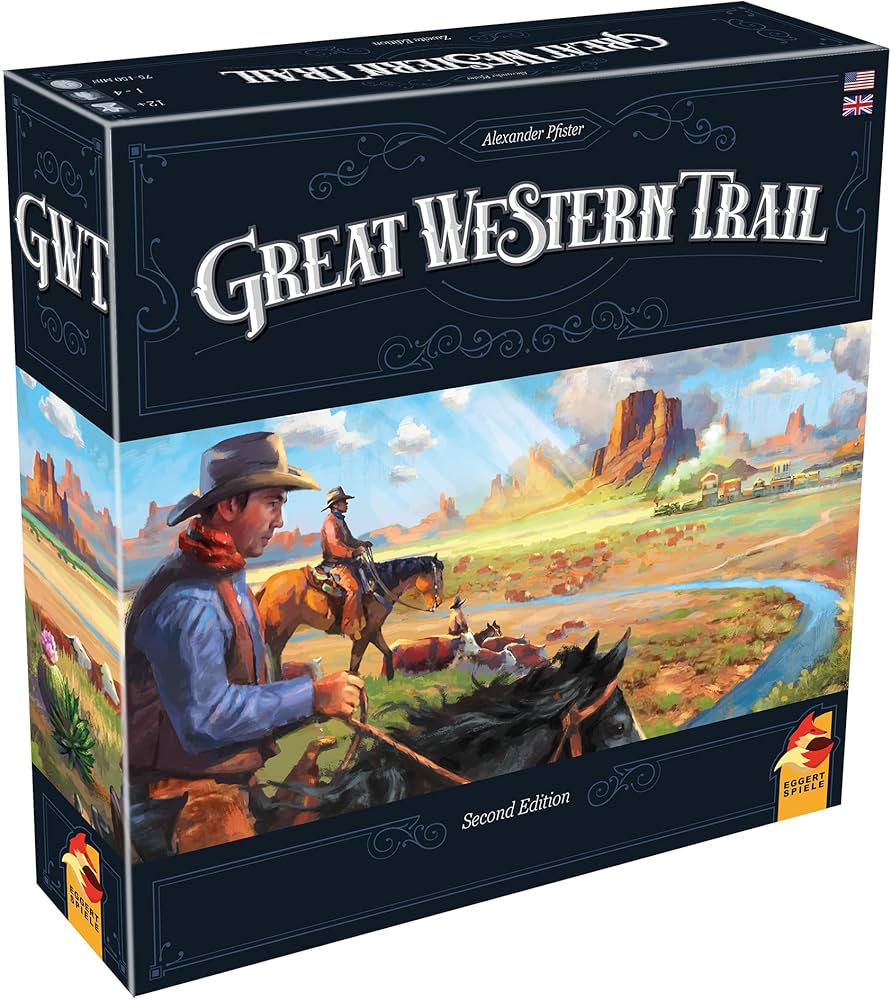
Great Western Trail by Alexander Pfister, published by eggertspiele in 2016, puts 2 to 4 players in charge of cattle herds heading north from Texas to Kansas City. The game runs 75 to 150 minutes and suits players aged 12 and up. With a complexity rating of 3.7 out of 5 on BoardGameGeek, it earns a spot on most lists of the best strategy board games of the past decade. This review covers gameplay, components, mechanics, and the kind of group that fits this title.
Great Western Trail Overview
Players act as cattle ranchers in 19th-century America. The goal: drive cattle from Texas to Kansas City, ship them by train for money and victory points, then walk the trail again. Better cattle and smarter routing earn more points. Each lap changes based on which buildings, workers, and hazards appear along the way.
| Designer | Alexander Pfister |
|---|---|
| Artist | Andreas Resch |
| Publisher | eggertspiele |
| Year Released | 2016 |
| Players | 2 to 4 |
| Age Range | 12+ |
| Playing Time | 75 to 150 minutes |
| Game Type | Strategy, Deck Building, Route Movement |
| Complexity Rating | 3.70 / 5 |
What’s in the Great Western Trail Box
The base box has solid components for the price. The cardboard is thick and the wooden pieces feel substantial in hand.
- 1 large game board with the trail to Kansas City
- 4 player boards with action and disc tracks
- Cattle cards across multiple breeds with point values
- Worker tiles for cowboys, craftsmen, and engineers
- Building tiles to place along the trail
- Hazard, bandit, and station tiles
- Wooden cattle markers, station discs, and train markers
- Money tokens in three denominations
- Private objective cards and player aids
The iconography on cards and tiles takes a few rounds to learn but pays off after the first game.
Pros and Cons of Great Western Trail
Pros
- Four viable paths to victory: cattle quality, buildings, train delivery, and worker hires
- Every turn presents real choices, no autopilot moves
- Theme ties to mechanics in a logical way
- High replay value across dozens of sessions
- Plays in similar time at 2, 3, or 4 players
Cons
- Dense iconography overwhelms first-time players
- Teaching the rules takes 30 to 45 minutes
- Some downtime creeps in at 4 players
- The cowboy theme feels thin in some sections
How to Play Great Western Trail
Setup
Place the main board between players. Each player picks a colour, takes a player board, a starting cattle deck of 14 cards, three workers, and a set of private buildings. Shuffle the neutral building tiles onto trail spaces. Add hazard and bandit tiles to their slots.
Turn Structure
On your turn, move your cowboy figure forward along the trail. Your pace decides how many spaces you can travel. After moving, take the action of the space you land on. Actions include drawing cattle, buying buildings, hiring workers, removing hazards, or advancing the train.
Reaching Kansas City
When you reach Kansas City, you sell your herd. The breeds in your hand decide which city you can ship to. Each city pays out money and victory points based on distance. Then you take a delivery action and start the next trip from Texas.
Win Conditions
The game ends when the job market deck runs out or station markers reach a set count. Add up money, station bonuses, building values, hazard tiles collected, and remaining cattle. The highest total wins.
Where to Buy Great Western Trail
| Retailer | Notes |
|---|---|
| Amazon India | Stocks the second edition; price varies with availability |
| BoardGamesIndia | Carries multiple editions and expansions |
| Boardway India | Listed around ₹6,499 to ₹7,500 for the second edition |
| eggertspiele Direct | Publisher store; ships to select regions |
Great Western Trail Game Mechanics
Great Western Trail mixes several mechanics that lock into each other.
Route Movement
Each trail space gives a different action. Your pace value sets the movement range per turn. Adding strong cattle can slow you down, which sounds odd but creates tight choices.
Deck Building
You start with low-value cattle and slowly remove them while adding higher-breed cards. A diverse hand at Kansas City pays out more, so deck building ties directly into the trail.
Engine Building
Workers unlock track spaces and improvements. Cowboys buy better cattle. Craftsmen build your private buildings. Engineers push the train forward.
Player Interaction
When you stop on another player’s building, they collect money. Train stations belong to whoever placed a disc there first. The result is indirect competition without harsh blocking, much like the network sharing in Brass Birmingham.
Who Should Play Great Western Trail
Great Western Trail fits gamers who enjoy 90-minute strategy sessions with multiple build paths. Fans of Alexander Pfister’s other titles like Mombasa or Maracaibo will recognise the design style.
The game works for 2 to 4 players but plays best at 3. Two-player games run fast but feel solitary. Four-player games offer the most interaction but add waiting time.
Skip the game if you prefer fast lighter strategy titles like Splendor or Wingspan. Also skip it if your group dislikes long teach sessions.
FAQ
Is Great Western Trail good for beginners?
No. The game has a steep learning curve with dense iconography and many interlocking systems. New players often miss key actions in their first game. Start with lighter strategy titles like Concordia or Everdell before tackling this one. The second edition has slightly clearer icons and a cleaner trail layout.
How long does Great Western Trail take to play?
A full game runs 75 to 150 minutes depending on player count and experience. Two-player games finish in about 90 minutes. Four-player games stretch past two hours, especially with new players. Allow extra time for the first two sessions while everyone learns the icons and turn structure.
What’s the best player count for Great Western Trail?
Three players hits the sweet spot. Two-player games play quickly but feel less interactive since the trail empties faster. Four-player games offer the most interaction but add waiting time between turns. The game scales well across all counts thanks to fixed board setup and tile counts.
Is Great Western Trail worth buying?
Yes for heavy strategy fans. The game has high replay value, multiple paths to victory, and stays interesting after dozens of plays. The second edition runs ₹6,499 to ₹7,500 in India. Skip it if you prefer party games or light Euro games that finish in under an hour.
What games are similar to Great Western Trail?
Mombasa and Maracaibo by Alexander Pfister share the action selection style. Brass Birmingham offers similar weight with different mechanics. Castles of Burgundy delivers comparable Euro depth through dice and tile placement. Russian Railroads gives engine building without the trail movement element.
