
From Board Games to Bike Rides: How Cooperative Play Builds Kids’ Confidence

Key Takeaways
- Cooperative play gives kids a safe way to practice shared decisions, patience, self-control, and problem solving skills without turning every mistake into personal failure.
- Cooperative board games work well during family game nights because the group wins or loses together, so children learn that effort, listening, and recovery matter more than beating someone else.
- The best cooperative board games create small jobs for each player: read a card, roll dice, move a piece, explain rules, or suggest a useful move at the right moment.
- Outdoor play can extend the same confidence-building pattern when families create small shared challenges, such as an obstacle course, a blanket fort, or a short ride with friends.
Picture family game nights with a seven-year-old, a younger sibling, and two grown-ups around the table. A child wants to rush. Another child is nervous about making the wrong move.
Instead of competing, everyone pauses, looks at the cooperative board, and asks, “What should we try next?” That moment is small, but it matters. The kids practice listening, taking turns, explaining words clearly, and choosing together.
This is the quiet power of cooperative play. It is not just a softer version of a game. It is play with a shared purpose, and it works best when play still feels relaxed.
Cooperative play involves children working together towards a common goal, whether they are trying to rescue pretend animals, solve a puzzle, make a storybook-style mission, or move through a backyard mission.
For families, cooperative board games and outdoor challenges can become repeatable practice for confidence: children try, make mistakes, recover, and try again.
What Cooperative Play Actually Teaches?
Mildred Parten identified six stages of play, and cooperative play is the final stage of play. It is an important stage because children work with shared roles, shared rules, and a common goal rather than simply playing near each other.
Toddlers and older toddlers often start with solitary, parallel, and associative forms of play; associative play lacks organization compared to cooperative play.
Children typically transition to cooperative play around ages four to five, which makes ages five through ten a useful window for regular practice.
In cooperative play, children learn to plan aloud, wait, disagree respectfully, and solve problems without needing to defeat an other team. There is no need to split into two teams.
The challenge comes from the task itself: the game board, the puzzle, the mission, the island, or the rescue scene, all built around shared goals. In cooperative games, players work against the game’s mechanics to achieve common goals, and cooperative play features shared victories or losses for all players involved.
That difference changes the emotional tone. Co-op environments generally feature less aggressive behavior than competitive ones because blame is reduced.
Cooperative gameplay reduces pressure and stress during gameplay, so a cautious child can speak up and a strong-willed child can practice listening. Successful cooperative play promotes skills like empathy and conflict resolution, and cooperative play helps develop self-regulation and patience in children.
These are essential social skills, not decorative extras. They are also important skills for the classroom because children learn to pause, explain, and listen before they act.
Why Cooperative Board Games Are So Useful at Home?
Cooperative board games are especially helpful because they make invisible skills visible. Cooperative board games also give families a repeatable game routine for practicing problem solving skills and shared goals. A child has to wait before acting.
A child has to listen when someone else sees a better option. A child has to talk through a choice and accept that the group may choose differently.
Children learn to communicate effectively during cooperative play, and cooperative games foster teamwork and communication among children in a way that feels natural rather than forced. Cooperative games also encourage teamwork and communication among children when every move affects the shared result.
A cooperative board also gives children manageable responsibility. A player may read a clue. A player may move the token. One player may notice a danger on the cooperative board before anyone else sees it.
In a competitive game, a mistake can feel embarrassing. In a cooperative game, the mistake becomes information: “That did not work. What can we try next?” Cooperative board games allow players to win or lose together, which helps kids learn resilience without turning the table into a conflict.
Cooperative gameplay allows players of varying skill levels to enjoy the game together. Slightly older kids can help younger children read cards or understand rules without becoming the only expert. Younger children can still contribute by choosing between two clear options.
Caregivers can model calm language instead of taking over. This is why cooperative board games often work better than a standard card game when a family has mixed ages, different attention spans, or a child who hates losing.
Good Cooperative Games for Kids: What Each One Practices
The best cooperative board games are not just “nice” games for kids. They give children specific practice in shared decisions, memory, patience, planning, and recovery after a poor choice.
Use the table below to choose cooperative games for kids based on the skill you want to practice.
| Game | Why it works | Confidence skill |
| Hoot Owl Hoot | Games like Hoot Owl Hoot promote turn-taking and joint decision-making, so younger children can help without reading complex cards. | Speaking up, take turns, shared success; take turns without rushing |
| Castle Panic | Castle Panic is a good example of a cooperative board where players defend the castle and decide how to use cards before monsters arrive. | Planning, asking for help, staying calm |
| Forbidden Island | Forbidden Island, by Matt Leacock, the same designer behind Pandemic, asks players to escape a sinking island together. Forbidden Island is suitable for almost any age group. | Risk awareness, group planning |
| Flash Point: Fire Rescue | Flash Point puts players in firefighter roles where they save people from a burning building. | Role empathy, urgent decisions |
| The Crew: The Quest for Planet Nine | The Crew: The Quest for Planet Nine features 50 missions of increasing difficulty and limited communication, so the story of each mission develops through careful choices. | Trust, reading cues, patience |
| Simple family puzzle | Activities like jigsaw puzzles promote cooperative play among kids because the puzzle itself is the shared problem. | Persistence, small wins |
Many games can support confidence, but cooperative games for kids should match the child’s current tolerance for challenge.
If a cooperative board game is too long, too abstract, or too punishing, the fun disappears and the lesson becomes stress. A great game for a six-year-old often has short turns, visible progress, and rules that parents can explain in a few minutes. A great game for an older child may add secret information, quiet clues, or harder planning.
When comparing games for kids, ask four questions: Can the child make a real decision? Can the child recover after a mistake? Can younger children participate without being carried?
Can grown-ups help without controlling the cooperative board? Those questions are more useful than simply asking whether the box says “educational,” because families learn more from a playable game than from a perfect label.
How Small Challenges Build Confidence?
Confidence is not built by telling kids they are confident. It grows when kids enjoy playing, attempt something specific, and complete it often enough to believe, “I can handle this.” Cooperative games help build confidence in group settings because they create small repeatable moments of success.
A child explains the rules to a cousin. Another child chooses one card after listening to two options. A nervous child agrees to make the next move.
A child who usually quits stays for one short round longer than last time. These moments look ordinary, but they are where children learn courage in practical form.
The story around the game also matters: a rescue story, a mystery story, or a journey story gives children a reason to care. The goal is not to make the child perform. The goal is to make the next step feel possible.
Parents can support this by naming the behavior, not exaggerating the result:
- “You waited until your brother finished his idea.”
- “You changed your plan when the group needed it.”
- “You kept trying after the game got harder.”
- “You used calm words when you disagreed.”
This type of encouragement helps kids connect confidence with effort, patience, and clear speech, and it helps parents encourage the behavior they want to see again. It also keeps the game fun instead of turning family game nights into a lesson.
How Parents Can Guide Cooperative Play Without Taking Over?
The biggest mistake adults make during cooperative play is solving everything too quickly. If grown-ups dominate the cooperative board, children lose the chance to practice. If grown-ups disappear completely, younger kids may get confused. The useful middle ground is light guidance that protects play without taking away the child’s voice.
Before the game, choose a clear common goal and explain only the rules needed for the first round; this can encourage quieter players to join.
During the game, ask instead of command: “What do you notice?” “Which option feels safer?” “Who has another idea?” After the game, briefly name one helpful behavior and encourage the child who showed it. Keep it short. A few minutes of reflection is enough.
Try rotating roles without making it formal. A child can be the card reader. Another can watch the timer. A younger child can count spaces.
A slightly older child can explain a rule, then let someone else choose. This keeps children work connected to the group goal instead of turning a confident child into the boss, while the team still gets a real voice.
Empathy is introduced through roles in cooperative play activities. A medic, navigator, firefighter, clue-giver, builder, or storyteller sees the task from a different perspective.
Cooperative play fosters trust and conflict resolution skills among children because they have to notice what others need, not only what they want.
From the Game Table to the Classroom, School, and Friends
The value of cooperative play is transfer. A child who can listen during board games can listen during a classroom project. A child who can share rules during a card game can explain rules to friends at school. A child who can calm down after the cooperative board turns against the group can handle different settings with more patience.
Parents can make the transfer visible with one sentence: “You solved that the same way you solved the puzzle yesterday.” The lesson sticks faster when adults name the bridge between play and life.
Cooperative play teaches children to work together towards common goals, and cooperative gameplay provides opportunities to practice social and communication skills in a low-risk setting.
Cooperative video games can also have a place because cooperative video games focus on team-based gameplay. Cooperative play reduces toxicity in gaming environments when the design rewards helping, waiting, and repairing mistakes.
Still, tabletop board games offer something screens often cannot: face-to-face conversation, visible body language, shared pieces, and a slower pace. That slower pace gives children time to notice, choose, and build teamwork without constant stimulation.
Outdoor Play: Taking Cooperative Confidence Outside
Outdoor play should not feel like a separate lesson. The same play pattern can move from the table to the yard. It can be the next version of the same game pattern: shared goal, clear rules, small challenge, visible progress.
Kids might set up a backyard course, draw a treasure map, or use building materials to make a pretend rescue station for stuffed animals and other animals. A large group can invent a mission, but a small pair of siblings can do the same with fewer rules.
Building a blanket fort requires collaboration and problem-solving skills. So does planning an obstacle course where no one races alone and everyone has one job.
Children work together when they decide where the tunnel goes, who carries the pillows, who tests the path, and how to solve a problem when the fort falls down. This is cooperative play with movement, mess, and laughter.
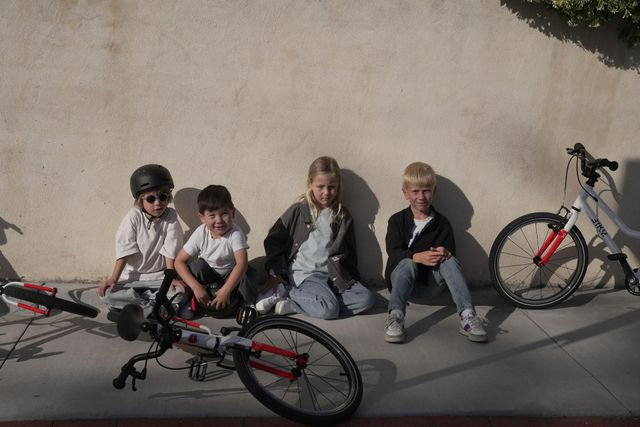
Bike rides can fit this pattern when the goal is shared rather than competitive. The same idea applies outside the game room: kids build confidence when the challenge feels doable, whether they are learning a cooperative board game, planning a backyard mission, or riding a lightweight 20-inch kids bike around the neighborhood with friends cheering at every corner.
The bike is not the point by itself. The point is the shared challenge: “We all reach the mailbox, we check on each other, and we celebrate together.”
Simple Cooperative Play Ideas for Home
Use these ideas when you want play to feel practical, fun, and low-pressure. Keep play short enough that children want to return.
1. Cooperative board games night
Choose cooperative board games that finish quickly and let children make visible decisions. For ages five to seven, start with games for kids that have simple rules, short turns, and bright progress markers. For older kids, choose cooperative games with harder planning or restricted clues. End while the experience is still positive.
2. Puzzle rescue mission
Place a jigsaw puzzle on the table and give everyone a role. One person finds corners, one sorts colors, and one checks the picture. This is a simple way to build teamwork because the puzzle is the shared challenge, not another player.
3. Storybook game with pretend roles
Let children make a story-based game from a favorite picture book. They can rescue animals, cross a river, or help toy animals reach a safe house. The rules can be simple: take turns, solve one problem, and decide together before moving on.
4. Backyard obstacle course
Build an obstacle course where the group has to complete the path together. A child designs the route, one tests it, and one changes the rules if it is too hard. This keeps the activity fun while still practicing cooperation.
5. Five minutes of team cleanup
Set a short timer and give everyone one job. The goal is complete the small mission, not clean perfectly. It works because children see progress quickly and adults can praise helpful behavior immediately.
6. Teach-a-game session
Let a child teach a familiar card game or cooperative game to the family. Ask the teacher to use clear words, show one example, and check whether the group understands. This builds communication without turning the child into a performer.
What to Watch For When Cooperative Play Goes Wrong?
Cooperative play is not automatically successful. Even good play can go wrong when the challenge is too hard. A cooperative board can become frustrating if a child controls every decision, if the rules are too hard, or if adults correct every mistake. Cooperative games can also lose their value when the group talks about winning but ignores listening.
Watch for three warning signs. First, a child answers every question. Second, younger kids stop contributing. Third, the game becomes quiet because grown-ups are managing the whole experience. When that happens, simplify. Give each child one small choice.
Ask quieter children first. Reduce the number of rules and encourage one small decision from each player. Choose shorter cooperative games for kids until the group is ready for more.
The purpose is not perfect harmony. The purpose is practice: players learn to repair a plan, learn to hear another idea, and learn to return to the common goal. Children learn from small disagreements when adults help them slow down, use words, and return to the common goal.
Final Thoughts
Cooperative play gives children a safe structure for trying, listening, helping, failing, and trying again. Cooperative board games make that structure easy to repeat at home.
Cooperative games add fun because everyone faces the same challenge, and children can see that their small contribution matters.
For parents, the strongest approach is simple: choose a cooperative board, keep the rules clear, let kids make choices, praise the process, and connect the lesson to real life.
Board games, puzzles, pretend missions, outdoor play, and bike rides can all support the same confidence loop when the challenge is shared.
Kids do not need perfect family game nights. They need many small chances to solve, talk, create, and enjoy time with others.
That is how confidence becomes something they practice, and it can encourage them to learn from mistakes instead of avoiding the next game.
FAQs
How often should families use cooperative board games?
Once a week is helpful, but consistency matters more than frequency. Even twenty minutes of cooperative play can support patience, teamwork, and confidence when the game is short, clear, and fun.
Are competitive games bad for children?
No. Competitive games can teach disappointment, fairness, and recovery. But cooperative games are often easier for children who get discouraged quickly because everyone works through mistakes together.
What are the best cooperative games for kids who hate losing?
Start with short cooperative games for kids where the group can recover after mistakes. Hoot Owl Hoot, a simple puzzle, or a short cooperative board activity usually works better than a long strategy game.
What if one child always wants control?
Give that child a helpful job, then require shared decisions. For example: “You read the card, then your sister chooses between the two options.” This protects cooperation without shaming the confident child and keeps play fair.
Can outdoor play count as cooperative play?
Yes. Outdoor play counts when children work toward a common goal, share rules, and solve problems together. A fort, a treasure hunt, a group ride, or an obstacle course can all become cooperative play when the focus is shared success.
