
Mexican Train Board Game Review

Mexican Train, designed by Roy and Katie Parsons and published by Cardinal in 1994, is a domino tile-placement game for 1 to 8 players. It plays in 20 to 30 minutes per round, suits ages 10 and up, and uses a double-twelve domino set with small plastic trains for theme. This review covers how the game plays, what comes in the box, and whether it earns a place on your shelf.
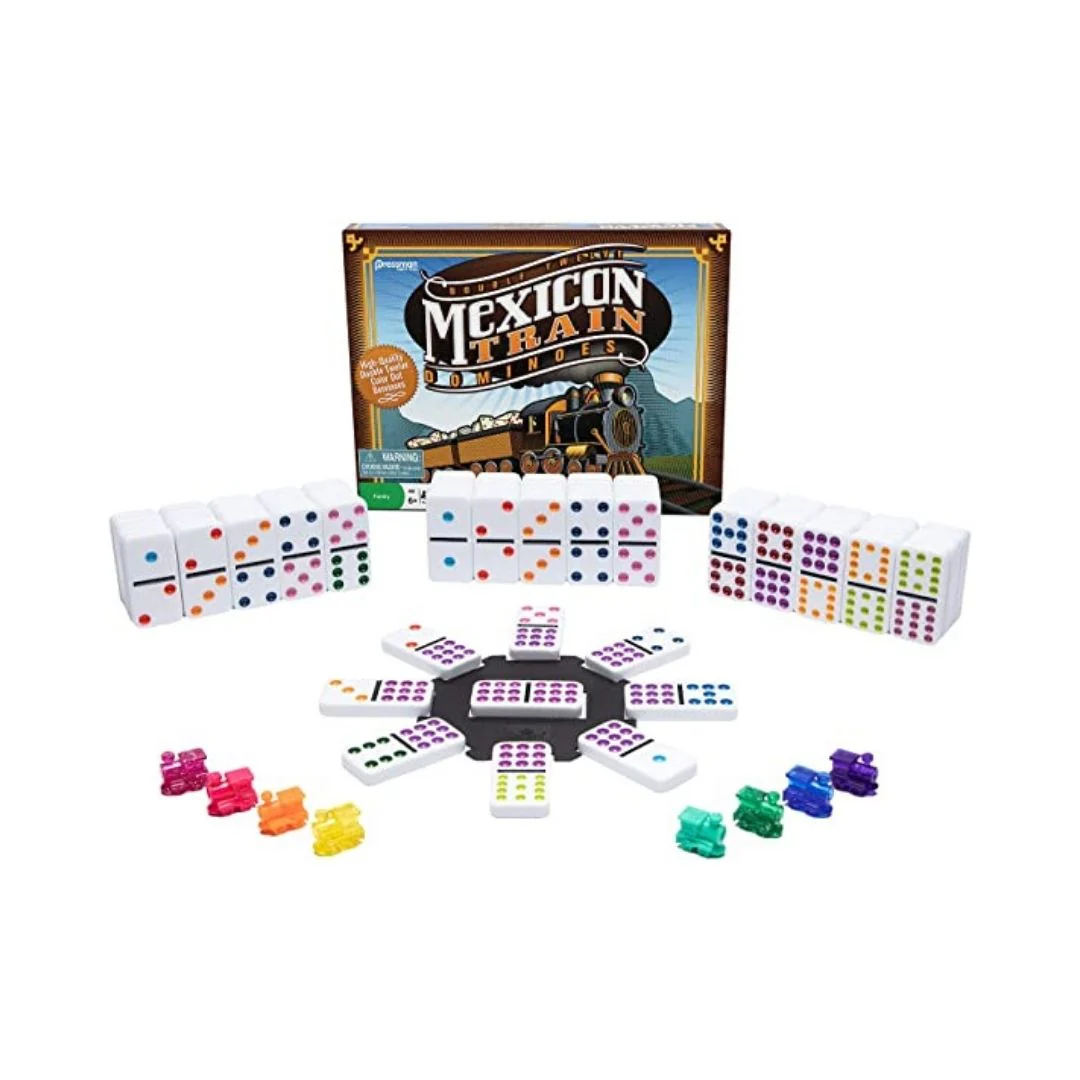
Mexican Train Game Overview
Players race to get rid of all their dominoes before anyone else. Each player builds a personal train (a line of dominoes) starting from a central hub, matching end-numbers as they add tiles.
A shared Mexican Train sits open for everyone to play on. Scoring runs across multiple rounds, and the lowest total at the end wins.
| Designer | Roy Parsons, Katie Parsons |
|---|---|
| Publisher | Cardinal, Tactic, Goliath, Pressman, and others |
| Year Released | 1994 |
| Players | 1 to 8 |
| Age Range | 10+ (some editions list 7+) |
| Playing Time | 20 to 30 minutes per round |
| Game Type | Abstract, Family, Domino |
| Complexity | 1.25 / 5 (light) |
What’s in the Mexican Train Box
Contents vary by publisher, but most retail editions include the same core pieces.
- 91 double-twelve dominoes, numbered 0-0 through 12-12
- One central train hub that holds the starting double tile
- Nine train markers, one per player plus the Mexican Train
- Score pad and pencil
- Storage tin or hard plastic case
The Cardinal and Tactic editions use thick composite dominoes with painted pip dots. They feel solid and stand up to years of play. Some deluxe sets include a battery-powered train whistle that mimics a real horn.
Mexican Train Pros and Cons
An honest take after multiple plays at different counts.
Pros
- Scales from 2 to 8 players without dragging at high counts
- Rules teach in about five minutes
- Low complexity works across age gaps, grandparents and kids included
- Plenty of decisions despite the simple core
- Compact box travels easily for holidays and game nights
Cons
- A full 13-round match can stretch past two hours
- Heavy luck element when drawing from the boneyard
- Some retail editions ship with chipped or warped dominoes
- Score tracking gets tedious without the included pad
How to Play Mexican Train
Setup
Place the train hub in the middle of the table. Shuffle the dominoes face-down. Each player draws a starting hand based on player count: 15 tiles for 2 to 4 players, 11 for 5 to 6, and 10 for 7 to 8. The remaining tiles form the boneyard.
Starting the Round
The round leader is the player holding the highest double matching the round number. In round one that is the 12-12 tile. They place it in the hub, and play passes clockwise.
Turn Structure
On your turn, add one domino to your own train, the Mexican Train, or another player’s marked train. The added tile must match the open end of that line. If you cannot play, draw one tile from the boneyard. Still no play possible? Place a marker on your own train, which opens it to other players.
Doubles
Playing a double requires a follow-up tile on the next turn. If the active player cannot satisfy it, the obligation passes around the table until someone does.
Winning
The first player to empty their hand ends the round. Everyone else counts pip values on their remaining tiles and adds them to their running score. After 13 rounds (12 down to 0), the lowest total wins.
Where to Buy Mexican Train
| Platform | Notes |
|---|---|
| Amazon | Cardinal, Pressman, and Tactic editions widely stocked |
| Target | Cardinal deluxe edition with metal tin |
| Walmart | Budget-friendly Pressman set |
| eBay | Vintage and out-of-print editions, plus single-player copies |
| BoardGameGeek GeekMarket | Private resale listings, often discounted |
| Tactic Direct | Travel edition in tin with viewing window |
Mexican Train Game Mechanics
The core mechanism is tile placement with hand management. Each turn you weigh which line to extend, your own train, the public Mexican Train, or an opponent’s open one.
Choices matter. Dumping a high tile like the 12-9 or 11-10 early protects you from heavy scoring if someone goes out fast. Holding doubles lets you steer the table, since unresolved doubles force everyone to play to them.
Player interaction sits between light-strategy games and pure family fillers. You will not block opponents directly, but tracking the numbers others need shapes your play. Saving a tile to extend your own train rather than a marked one stops rivals from offloading.
Who Should Play Mexican Train
The game works best for families, mixed-age groups, and lighter game nights. It handles seven or eight players gracefully, something few modern games manage without breaking down.
Hobbyists used to heavier titles like Brass or Terraforming Mars may find the luck factor too high. Compared to Ticket to Ride, the rules are simpler but the runtime is longer. Compared to standard dominoes, it adds more interaction and longer arcs of play.
Skip it if your group wants tight strategy or quick filler. Pick it up if you host multi-generational gatherings or take games on vacation. For more options at this weight, see our picks for the best family board games and games that work at large player counts.
FAQ
Is Mexican Train good for beginners?
Yes. The rules fit on one printed page, and most new players pick them up inside one round. The matching-pips system is intuitive, and you can coach newcomers through their first few turns without slowing the game for everyone else.
How long does Mexican Train take to play?
A single round runs 20 to 30 minutes depending on player count. A full 13-round match takes two to four hours, so most groups play shorter sets of three to five rounds in one evening instead of a complete match.
What is the best player count for Mexican Train?
Four to six players hits the sweet spot. Two-player games feel quiet without busy public trains, and eight players slow the turn cycle. Five works especially well, with enough open trains to create useful choices each round.
Is Mexican Train worth buying?
For families and groups that play with non-hobbyists, yes. A Cardinal or Tactic set costs around 20 to 30 dollars and lasts decades with normal care. Strategy gamers who dislike luck-heavy games should borrow a copy first before committing.
What games are similar to Mexican Train?
Chickenfoot uses the same double-twelve dominoes with a different layout. Spinner adds wild tiles to the standard rules. Outside dominoes, Five Crowns and Phase 10 hit similar light-strategy notes. See our list of abstract strategy games for more.
