
Fromage Board Game Review

Fromage, designed by Matthew O’Malley and Ben Rosset and published by Road To Infamy Games in 2024, puts 1 to 4 players in charge of competing French creameries in the early 20th century. The game uses a rotating board that ages cheese as turns progress, with each player working their own quadrant. Recommended for ages 14 and up, it plays in 30 to 45 minutes at a mid-weight complexity of 2.38 out of 5. This review covers the components, gameplay, and mechanics to help you decide if Fromage belongs on your table.
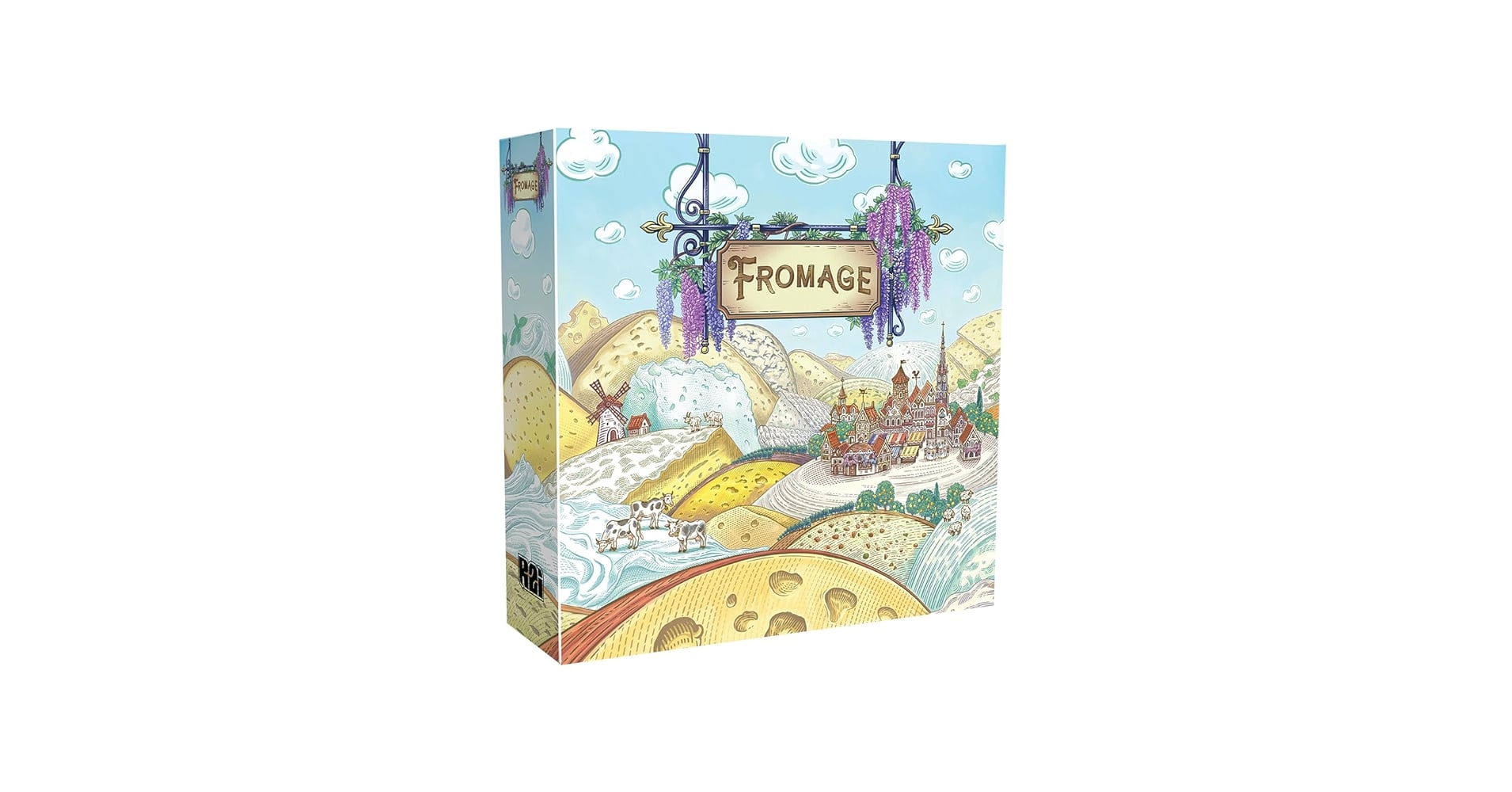
Fromage Board Game Overview
Players take on the role of artisanal cheesemakers producing, aging, and selling cheese across four locations: the Village, Château, Monastery, and Picnic. The goal is to earn the most Prestige Points by the end of the game.
Cheese aging is tied to a rotating central board. Workers placed in one quadrant must wait while the board turns before their cheese is ready to sell.
| Specification | Detail |
|---|---|
| Designers | Matthew O’Malley, Ben Rosset |
| Artist | Pavel Zhovba |
| Publisher | Road To Infamy Games (R2i Games) |
| Year Released | 2024 |
| Players | 1–4 |
| Age Range | 14+ |
| Playing Time | 30–45 minutes |
| Game Type | Strategy / Economic / Farming |
| Complexity Rating | 2.38 / 5 (mid-weight) |
What’s in the Fromage Box
The components stand out for the rotating board mechanism, which is uncommon in tabletop games. Production quality is solid across most pieces.
- One rotating central board split into four quadrants (Village, Château, Monastery, Picnic)
- Four player boards representing each player’s creamery
- Worker meeples in four colors, including different worker types per player
- Wooden cheese pieces in multiple types and tiers, including bronze, silver, and gold
- Structure tiles for creamery upgrades
- Resource tokens (milk and other goods)
- Prestige Point tokens and a scoring track
- Rulebook and player aid cards
The wooden cheese tokens have a tactile shape that fits the theme well. The turntable board rotates smoothly, though some owners report needing to handle it carefully to avoid knocking pieces off.
Fromage Pros and Cons
Pros
- Simultaneous worker placement keeps downtime low, even at four players
- The rotating board creates a fresh tactical puzzle every round
- Multiple scoring paths through the four sale locations reward different strategies
- The 30 to 45 minute playtime suits weeknight gaming
- Solo mode is included and playable straight from the rulebook
- Cheese theme is light and approachable for non-gamers
Cons
- Player interaction is mostly indirect, which may not suit fans of confrontational games
- Bumping the table can shift pieces on the rotating board
- First-game setup and explanation can run 20 minutes for new groups
- Quadrant scoring rules require referencing the player aid often in early plays
How to Play Fromage
Setup
Place the rotating board in the center with each player seated at one quadrant. Each player takes a creamery board, starting workers, and a few structure tiles. Place sale location markers around the board and shuffle any contract or scoring cards as needed.
Turn Structure
Each round, all players simultaneously place their available workers into spots within their current quadrant. Placements produce cheese, generate resources, or trigger structure abilities. Different worker types have different costs and aging requirements.
Once all players finish placing, the board rotates clockwise. Workers placed in the previous quadrant return to their owner aged by one step, with their cheese becoming more valuable.
Selling and Scoring
Players sell aged cheese to the four sale locations for Prestige Points. Each location has its own rules: some reward variety, some reward specific cheese types, and some give bonuses for selling in sequence.
Winning
The game ends after the board completes a full rotation cycle. Add up Prestige Points from sales, end-game bonuses, and remaining assets. The player with the most points wins.
Where to Buy Fromage
| Platform | Region |
|---|---|
| Amazon | US, UK, India |
| Board Game Geek Store | International |
| Miniature Market | US |
| Cool Stuff Inc | US |
| Zatu Games | UK |
| Road To Infamy Games (publisher direct) | US |
Fromage Game Mechanics
Fromage uses simultaneous worker placement with no waiting for turns. Each player has personal workers that can only be placed in the quadrant currently facing them, so the design avoids the typical worker placement problem of one player blocking another.
The rotating board is the central mechanism. It functions as a time tracker and a way to spread the action across asymmetric quadrants. Each quadrant has its own rules for scoring and placement, so players plan placements knowing they will face a different puzzle next round.
Chaining and area majority appear at the sale locations. Selling cheese in connected sequences or claiming dominance at a location gives bonus Prestige Points. Structure tiles add small engine-building elements as players unlock new placement spots and abilities on their creamery boards.
Who Should Play Fromage
Fromage suits players who like mid-weight Euro games with tight decision spaces but short playtime. Fans of Viticulture, Caverna, or Everdell looking for a lighter, faster cousin will feel at home.
The game also works well for couples and small groups thanks to its tuned 2 player experience and included solo mode. Players who prefer heavy aggression, take-that mechanics, or long epic sessions should look elsewhere.
Skip Fromage if you dislike spatial puzzles or get frustrated by rules that change based on board orientation. Pick it up if rotating board gimmicks intrigue you and you want a creamery theme that does not take itself too seriously.
FAQ
Is Fromage good for beginners?
Fromage works for newer hobby gamers but is not a true gateway title. The 2.38 complexity means rules take 15 to 20 minutes to teach. Players comfortable with Splendor or Azul should pick it up quickly. Complete beginners may find the quadrant scoring rules confusing in the first game.
How long does Fromage take to play?
A typical game runs 30 to 45 minutes once players know the rules. First plays take longer due to setup and teaching, often pushing past an hour. Solo games tend to be quicker, often finishing in 20 to 30 minutes once players learn the flow.
What is the best player count for Fromage?
Three or four players gives the most competition for sale locations, which is where the area majority scoring matters most. Two player games are tighter and faster but feel less crowded at the markets. The solo mode is well designed and worth playing for puzzle fans.
Is Fromage worth buying?
If you want a mid-weight worker placement game with a unique rotating board and a short playtime, Fromage delivers. The 6.6 BGG rating reflects a solid game with a clear audience. Skip it if you already own many similar Euros or dislike spatial mechanics.
What games are similar to Fromage?
Players who enjoy Fromage often also enjoy Viticulture for its theme and worker placement, Tucano for its lighter Euro feel, and Hadara for its rotating quadrant style. Formaggio, the Italian standalone expansion, integrates with Fromage and adds new quadrants, structure tiles, and platinum-tier cheeses.
