
Race for the Galaxy Board Game Review

Race for the Galaxy, designed by Thomas Lehmann and published by Rio Grande Games in 2007, is a card game about building space empires through tableau construction. Players settle worlds and build developments by spending cards, with each turn driven by simultaneous action selection. It plays 2 to 4 players, suits ages 12 and up, and runs 30 to 60 minutes. This review covers the components, gameplay flow, mechanics, and who the game fits.
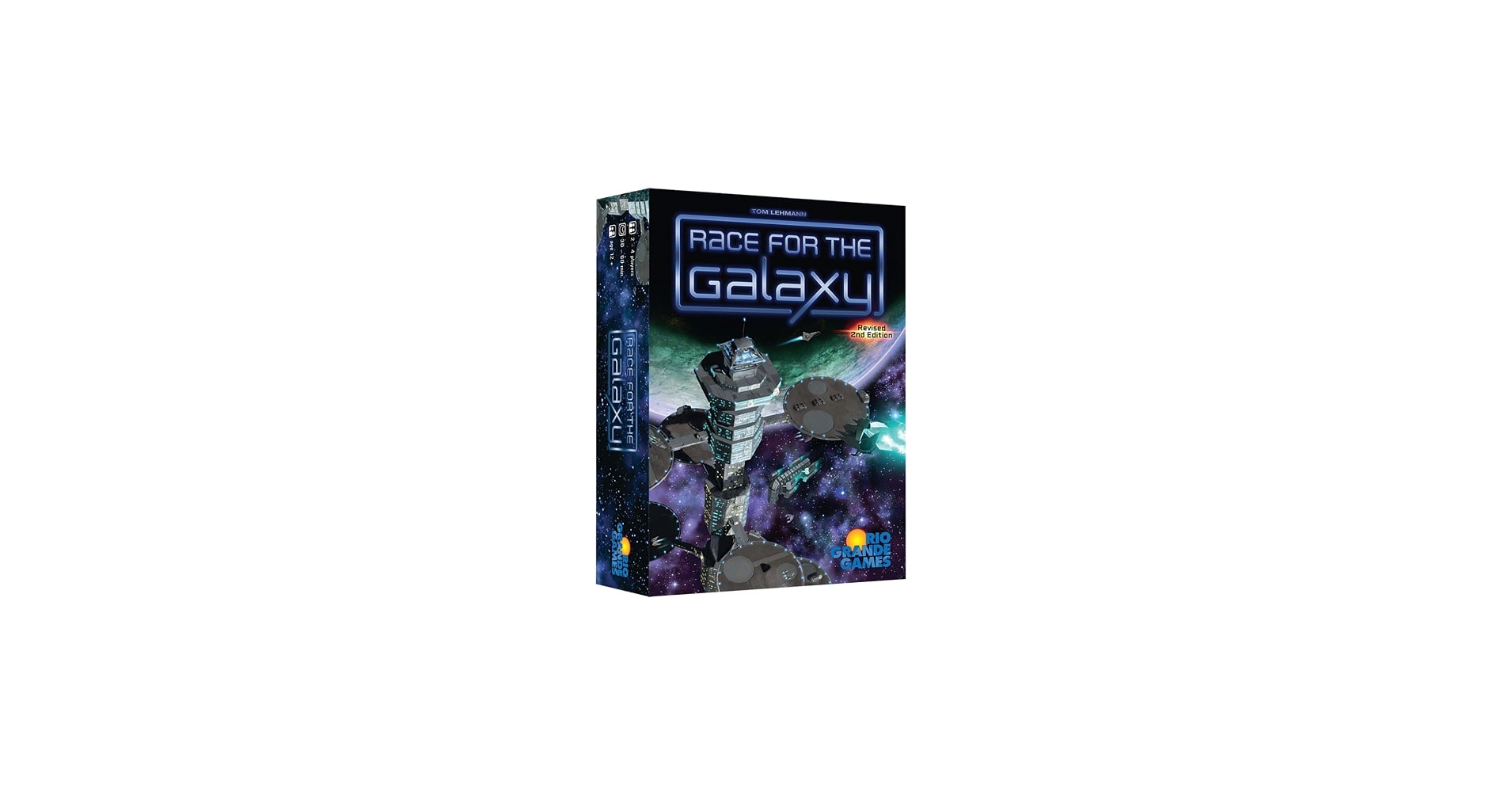
Race for the Galaxy Overview
Each player builds a galactic civilization in front of them using a shared deck. Worlds and developments form a personal tableau, and points come from those cards plus victory point chips earned during play.
The catch is the iconography. Every card uses symbols instead of text, so the early games involve constant reference to the player aid. Once the symbols click, turns move fast.
| Designer | Thomas Lehmann |
|---|---|
| Publisher | Rio Grande Games |
| Year Released | 2007 |
| Players | 2–4 |
| Age Range | 12+ |
| Playing Time | 30–60 minutes |
| Game Type | Strategy card game, engine building |
| Complexity Rating | 2.99 / 5 |
What’s in the Race for the Galaxy Box
The box holds a single deck rather than a board, which keeps the footprint small. The contents are functional and travel well.
- 114 game cards covering worlds and developments
- Action cards in four player colors, each with its own back illustration
- Victory point chips in values of 1, 5, and 10
- Player reference cards summarizing the six phases and their bonuses
- A start world card for each player to begin the game
The cards are standard poker quality and survive frequent shuffling. The VP chips are thin cardboard, which is fine since they only track score. The second edition revised five cards and added color-blind support to the icons.
Race for the Galaxy Pros and Cons
The game rewards repeat plays but asks a lot upfront. Here is the honest split.
Pros
- Turns resolve quickly because everyone acts at the same time, so downtime stays low even at four players.
- The card deck supports many viable strategies, from military conquest to consume-produce engines.
- The small footprint and short length make it easy to bring out as a filler or a back-to-back session.
- Simultaneous selection means you read opponents and exploit the phases they call.
Cons
- The symbol-heavy cards create a steep first session, and new players will pause often to decode icons.
- Player interaction is mostly indirect, so people who want direct conflict may find it dry.
- Card draws influence your options, and a weak opening hand can limit your early choices.
How to Play Race for the Galaxy
The rules fit on a few pages, but the icons carry most of the detail. Setup is quick once everyone has their cards.
Setup
Each player takes a start world and a hand of six cards. Players discard down to keep cards based on their start world. Place the VP chips and the deck within reach. Setup takes about five minutes after the first game.
Turn Structure
Each round, players secretly pick one of six action cards: Explore, Develop, Settle, Consume, Trade, or Produce. Everyone reveals at once. Only the chosen phases happen that round, and they happen in fixed order for all players.
The player who selected a phase gets a bonus during it. Everyone else still acts in that phase but without the bonus. This means a phase you skip might still trigger because an opponent called it.
Winning the Game
The game ends when a player places their twelfth card or when the last VP chip leaves the pool. Players add the points printed on their tableau cards to their collected VP chips. The highest total wins.
Where to Buy Race for the Galaxy
Availability in India shifts between physical imports and the cheaper digital edition. Current options below.
| Retailer / Platform | Edition | Price |
|---|---|---|
| Boardway India | Physical base game | ₹2,999 (from ₹3,300) |
| Amazon India / BoardGamesNMore | Physical import | ₹3,354 |
| Steam | Digital (PC/Mac) | ₹400 |
| Steam (DLC) | Digital expansions | ≈₹330 each |
| Amazon India (third party) | Physical expansions | ₹9,300–₹11,700 |
The digital version on Steam and mobile is the low-cost way to learn the icons, since it handles the phase resolution for you.
Race for the Galaxy Game Mechanics
The core mechanic is simultaneous action selection paired with tableau building. Your card spending creates an engine that pays off in later rounds.
Cards serve double duty. They act as currency you discard to pay costs and as the worlds and developments you place. Every card you keep to play is a card you cannot spend, which forms the central tension.
The phase bonus system shapes most decisions. Calling Settle gives you a discount, but if an opponent calls Produce, your worlds make goods too. Reading which phases the table will trigger lets you call something else and still benefit from theirs.
Engine building ties it together. A strong tableau lets one action cascade into card draws, goods, and points. By the late game, a tuned engine can score heavily from a single Consume phase.
Who Should Play Race for the Galaxy
This game fits players who enjoy optimizing an engine and reading opponents without direct attacks. The fast turns reward thinking ahead during other people’s decisions.
It plays its sharpest at two, where you get a clean read on a single opponent. Groups that usually stick to two but prefer working as a team should know that the best cooperative two-player games sit at the opposite end of this one, since Race for the Galaxy is firmly competitive.
Anyone who enjoyed the tableau logic of San Juan or Splendor will pick this up fast, with more strategic paths and more interaction through the shared phase system. To weigh it against other strategy options before buying, the board game rankings sort titles by type and player count.
Skip it if your group dislikes symbol-driven rules or wants confrontation. Players who bounce off iconography or prefer take-that mechanics will likely find the learning curve more work than reward.
FAQ
Is Race for the Galaxy good for beginners?
Not as a first card game. The symbols replace all text, so the opening session is slow and reference-heavy. After two or three plays the icons become second nature, and turns speed up. Experienced gamers adapt quickly, but new players should expect a learning hump.
How long does Race for the Galaxy take to play?
A game runs 30 to 60 minutes once everyone knows the icons. Two-player games sit near the lower end, while four players land closer to an hour. Simultaneous selection keeps downtime short, so playtime stays steady regardless of player count.
What’s the best player count for Race for the Galaxy?
Two and three players both work well and keep turns brisk. Many fans prefer two for the tighter read on a single opponent. Four still plays smoothly thanks to simultaneous actions, though tracking what others will trigger gets harder with more people at the table.
Is Race for the Galaxy worth buying?
For players who enjoy engine building and quick turns, yes. The small box, short length, and high strategic depth give strong replay value. The digital version at ₹400 is a low-risk way to test the system before buying the physical copy.
What games are similar to Race for the Galaxy?
San Juan shares its designer’s tableau roots, while Roll for the Galaxy uses dice in the same universe. Jump Drive offers a faster, simpler take. Splendor matches the engine-building feel with an easier rules load and no iconography to learn.
