7 Board Games That Became Video Games

Board games and video games have always shared a close relationship. Both rely on strategy, competition, luck, and storytelling to keep players engaged.
Over the years, many tabletop classics have made the leap from cardboard and dice to computer screens and consoles. Some adaptations stayed faithful to their roots, while others expanded into entirely new experiences.

This isn’t the only sector in which certain game types have been adapted from their original format. The same is true of traditional slot machines: titles like Rainbow Riches Megaways that were once tied to physical cabinets can now be found among the slot games available to play online. If you’re curious how wide that shift has gone, it’s worth browsing the full list of slot games online to see how many classic mechanics now live in digital form. Anyway, here are seven memorable board games that successfully made the transition to video games.
1. Space Hulk
Originally released by Games Workshop in 1989, Space Hulk combined tactical board game mechanics with the grim science-fiction universe of Warhammer 40,000. Players controlled heavily armored Space Marines exploring derelict spacecraft infested with alien Genestealers.
The board game’s claustrophobic corridors and tense turn-based combat translated naturally into video games. Several digital adaptations appeared over the years, including Space Hulk (1993), Space Hulk: Ascension, and Space Hulk: Deathwing.
The appeal of the franchise in video game form came from its atmospheric tension. Whether played as a strategy title or a first-person shooter, the experience captured the fear of slowly advancing through dark hallways while enemies lurked around every corner.
2. Sorry!
The family board game Sorry! has been frustrating and entertaining players since the 1930s. Known for sending opponents’ pawns back to the starting point, the game relies on simple mechanics mixed with surprising moments of sabotage.
Because of its straightforward rules, Sorry! became an ideal candidate for digital adaptations. Versions appeared on PCs, handheld systems, and mobile platforms, often bundled with other classic board games from companies like Hasbro.
The digital versions helped preserve the social chaos of the original while speeding up gameplay through automated movement and online multiplayer options.
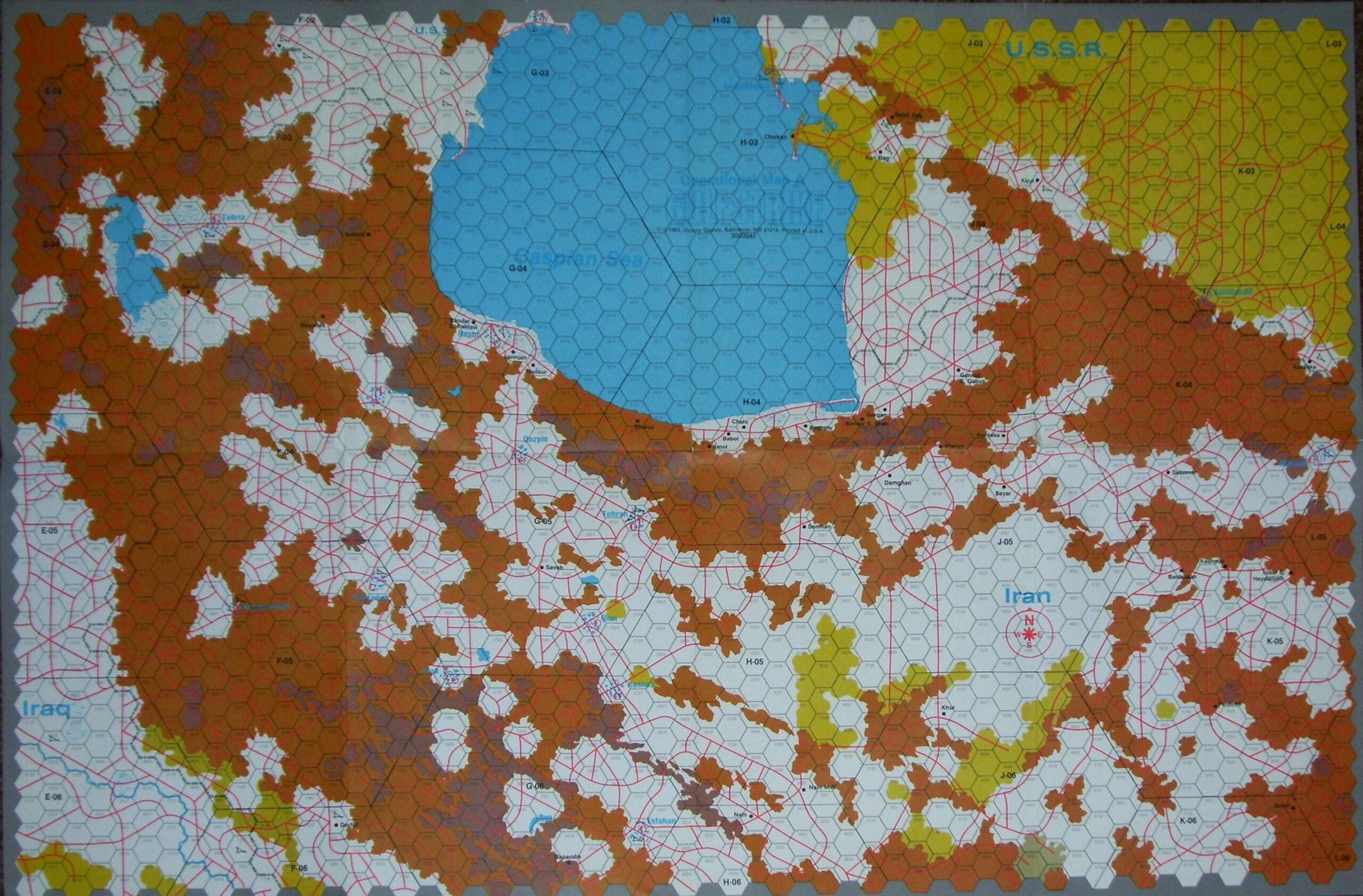
3. Gulf Strike
Gulf Strike was a detailed military strategy board game created by designer Mark Herman. The game simulated hypothetical conflicts in the Persian Gulf region and was known for its realism and operational depth.
Its transition into video gaming reflected the growing popularity of military simulations during the 1980s and 1990s. Computer adaptations allowed players to handle complex calculations, logistics, and combat scenarios far more efficiently than manual tabletop play ever could.
Unlike casual board game conversions, Gulf Strike appealed to hardcore strategy fans who enjoyed detailed planning and historically inspired conflict simulations.
4. Chainsaw Warrior
Another creation from Games Workshop, Chainsaw Warrior mixed horror, post-apocalyptic action, and solo gameplay. Players guided a heavily armed hero through monster-filled streets to stop an evil force from destroying the world.
The video game adaptation preserved much of the board game’s card-based mechanics while adding animated combat, sound effects, and faster pacing. Released for PC and mobile devices, the game retained the original’s brutal difficulty and unpredictable outcomes.
Part of the charm of Chainsaw Warrior was its blend of B-movie horror energy and tactical decision-making, which translated surprisingly well into digital form.
5. Talisman: Digital Edition
The fantasy adventure board game Talisman has been a favourite among role-playing and fantasy fans since the 1980s. Players travel across a magical realm collecting equipment, fighting enemies, and attempting to reach the centre of the board to claim the Crown of Command.
Its digital adaptation, Talisman: Digital Edition, became especially popular because it replicated the full tabletop experience online. Friends could play remotely, expansions were added digitally, and the computer handled all the complicated rules automatically.
The adaptation succeeded largely because Talisman already felt like a role-playing video game before becoming one. Random encounters, character progression, and magical items fit naturally into digital gaming.
6. Zombies!!!
The cult board game Zombies!!! threw players into a city overrun by the undead. The goal was simple: survive the zombie apocalypse while competing against other players for escape.
The game’s modular map system and constant player interaction made it ideal for adaptation into a digital format. Video game versions captured the fast-paced chaos of scavenging weapons, avoiding zombie hordes, and sabotaging rivals.
Long before zombie survival games became mainstream hits, Zombies!!! already delivered many of the same thrills on the tabletop.
7. Monopoly
No board game-to-video-game list would be complete without Monopoly. One of the best-selling board games in history, Monopoly has appeared on nearly every gaming platform imaginable, from early computers and consoles to smartphones and online services.
Digital versions introduced animated boards, themed editions, AI opponents, and online multiplayer. Some adaptations even experimented with entirely new formats, turning the property-trading game into party games or fast-paced economic simulations.
The biggest advantage of computerised Monopoly was convenience. The software automatically tracked money, properties, and rules, removing many of the arguments that traditionally came with the physical version.
Final Thoughts
Board games have provided inspiration for video games for decades because the two media share a common foundation: interactive play.
While some adaptations remain niche experiences for dedicated fans, others have become major digital franchises in their own right.
Whether it’s the tactical terror of Space Hulk, the fantasy adventure of Talisman, or the family rivalry of Monopoly, these games prove that great gameplay concepts can thrive in almost any format.
