
Why Esports Is Becoming a Daily Habit for Millions of Online Users

Esports has long ceased to be a niche hobby for a small circle of gamers. Today, it is a full-fledged industry with a multi-million audience, professional leagues, a tournament ecosystem, and a developed media infrastructure. Millions of players play matches every day, follow tournaments and analyse match statistics.
For many, esports has become as important a part of their day as reading the news or scrolling through social media. In this article, we’ll look at why esports has become so popular and how it is becoming a daily habit for a global audience.
Accessibility and Real-Time Engagement
One of the main reasons why esports has gained such popularity is its accessibility. You don’t need a TV subscription or special equipment to watch matches: all you need is a smartphone and a stable internet connection. Users can watch tournaments via streaming platforms, official broadcasts and even social networks.
The most popular esports disciplines are Counter-Strike 2, Dota 2, and League of Legends, with professional matches taking place almost daily.
Viewers can choose which tournaments to watch, follow the results, and analyse team statistics. The regularity of events creates the effect of a constant presence of esports in the user’s information field. Whether it’s Tier-1 tournaments, qualifiers or regional leagues, they all form a packed calendar that leaves no room for breaks.
Users get used to checking results, watching highlights and reading analytics every day, which gradually forms a stable behavioural model.
In addition, esports broadcasts are distinguished by interactivity. Chats, voting, live statistics, bookmaker odds and instant updates of results make watching matches an active process. The viewer feels an important part of the esports ecosystem, which stimulates a regular return to content.
Competitive Structure and Ratings as a Motivational Factor
Esports has a clearly structured competition system that resembles traditional sports but operates in a more dynamic mode.
The competition calendar is divided into seasons, which include both major and regional tournaments. All this creates a structure that viewers quickly get used to. The presence of rating systems, tournament tables and statistics adds interest to each event.
However, it is important not just to watch the match, but to understand the context: what stage of the tournament the team is at, what its chances of winning are, how its rating has changed throughout the season.
As can be read on gaming platforms such as EGW news, it is this analytical component that turns esports into a daily intellectual process. People read the news, analyse peak/ban cards, study individual K/D, ADR, hero ratings and other information that interests them.
The in-game ranking system plays a rather important role. Players involved in matchmaking often relate their own progress to the professional scene.
Ranks, MMR, and win-loss statistics create a sense of competition even outside of tournaments. This provides an additional incentive to log in every day or watch streams to learn from professionals.
Streaming Platforms and Content Ecosystem
Another important factor is the developed content ecosystem. In addition to official esports matches, users have access to analytical studios, interviews with players, tactical analyses, and other interesting information. Streaming platforms have made it possible to play broadcasts in the background, turning esports into a constant flow of information.
Streamers and content creators form a separate audience segment. They broadcast matches and training sessions, comment on tournaments, analyse mistakes and share their own experiences of improving their rankings.
This format makes it easier for beginners to understand esports and feel like part of the community rather than an outside observer.
Highlights, short clips, analytical articles, news about roster changes and tournaments — all of this is constantly updated. Social media algorithms adapt to the user’s interests, so esports regularly appears in their feed.
In this way, the esports ecosystem is globalising and forming an information environment that is becoming an integral part of online users’ daily media consumption.
It is also important that eSports is integrated into modern culture. There are brands, sponsors, collaborations with musicians and bloggers on the market.
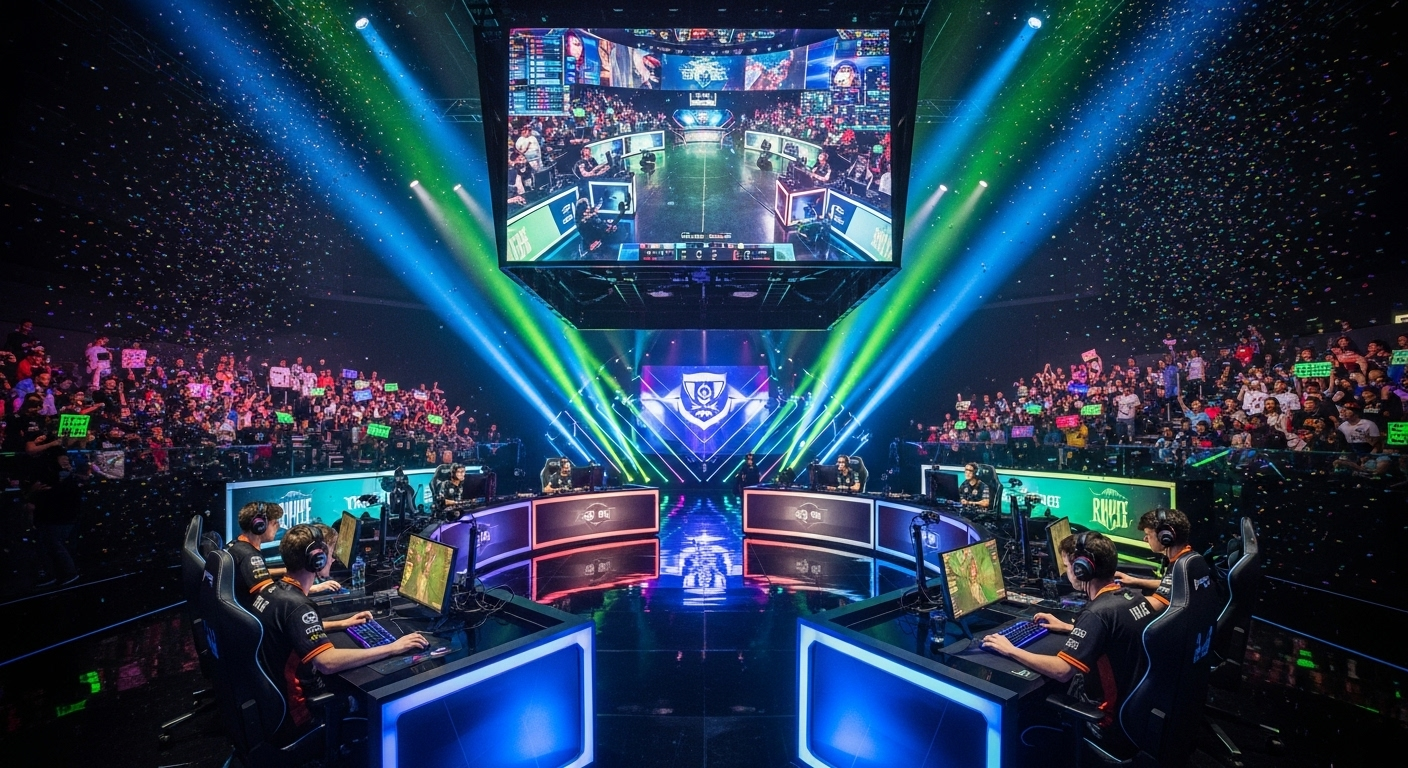
Tournaments take place in large arenas, broadcasts have professional directing, and players become media personalities. All this strengthens the perception of eSports as a professional industry.
Community, Identity and Digital Routine
Esports disciplines have their own communities that bring people together based on their interests. Forums, Discord servers, and clans provide players with a space for discussion. Users discuss strategies, evaluate team results, and predict tournament winners.
Belonging to a particular team’s fan base becomes part of one’s digital identity. People buy merchandise, use nicknames related to their favourite disciplines, and actively support their favourite teams. This creates an emotional connection similar to that in traditional sports, where fans support their favourites regardless of wins or losses.
In addition, esports fits well with the pace of modern life. Matches can be watched during a break at work, in transport or in the evening after school.
The format of tournaments allows you to perform other things in parallel viewing matches. Over time, this turns into a habit – like checking the news daily or watching a social media feed.
Equally important, esports satisfies the need for competition and achievement. Even if the player does not play professionally, he can participate in local tournaments, rating matches or fantasy leagues.
Thanks to this, everyone can feel like an esportsman, become not only a content consumer, but also its creator and an important part of the e-sports ecosystem.
Conclusion
Putting all the facts together, it is clear that esports is becoming a daily habit for millions of online users for a reason. Thanks to a combination of competitive structure, a developed media ecosystem, and strong communities, esports has risen to the forefront of the entertainment industry.
Constant tournaments, statistical platforms, and interactive broadcasts create an environment in which esports is organically integrated into everyday life. For today’s audience, it is not just entertainment, but a dynamic digital space with its own rules, heroes, and events.
