How Board Games Help Student Learning and Critical Thinking

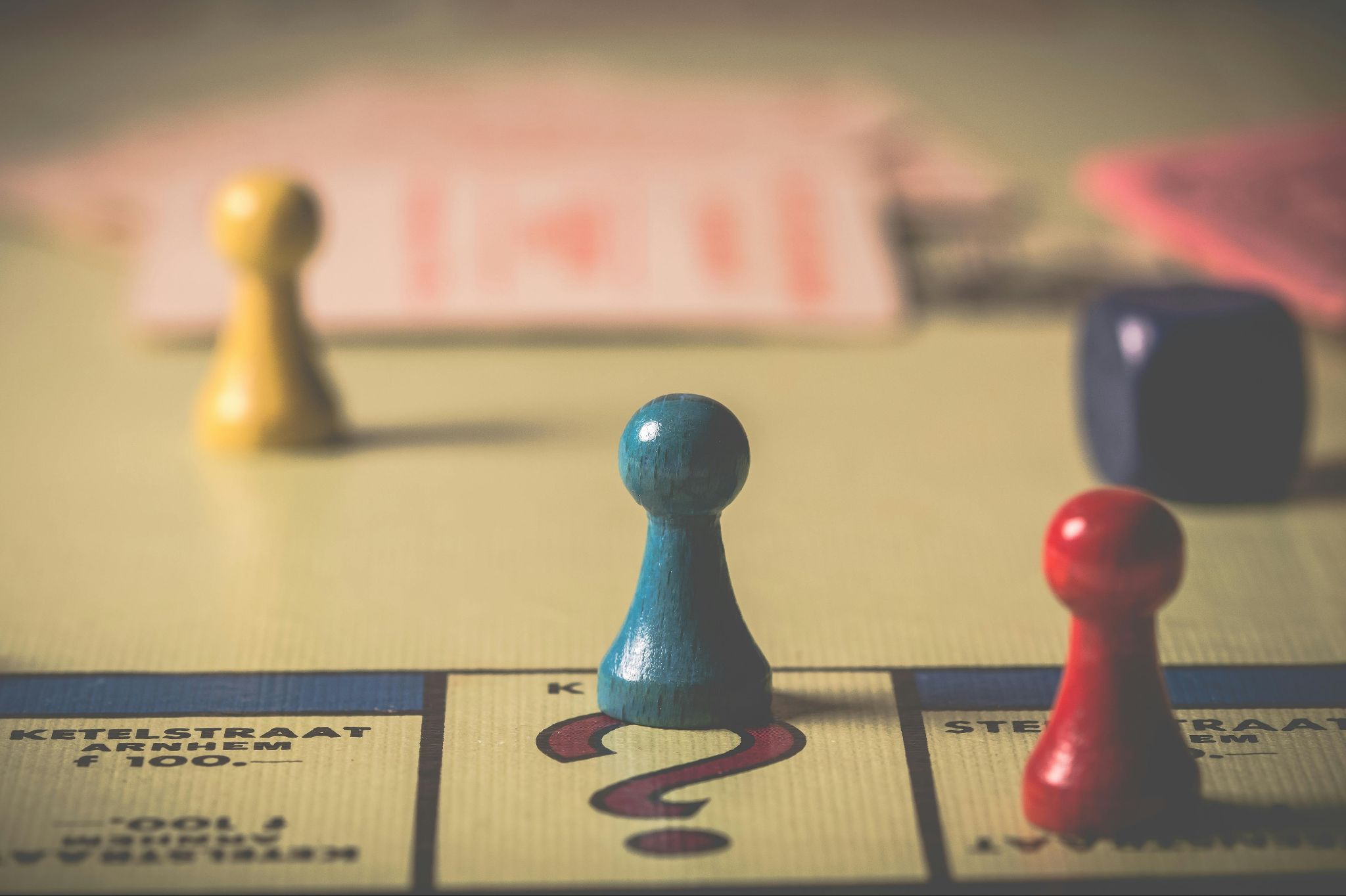
There’s something that shifts when a student stops passively absorbing information and starts having to make actual decisions. You see it happen when someone’s playing Catan or Ticket to Ride. They’re no longer memorizing facts or filling in blanks.
They’re solving a problem that has no textbook answer. The stakes don’t feel artificial because the rules are transparent. Everyone knows what they’re playing for.
This is why board games have quietly become one of the most underestimated educational tools in student development. Not because they’re fun (though they are), but because the learning happens inside the experience itself, not as a separate lecture grafted on afterward.
The Mechanics of Thinking
Board games teach differently than most classroom formats because they force sequential decision-making. Each turn requires a student to assess incomplete information, anticipate opponent moves, and adjust strategy based on feedback.
This isn’t abstract problem-solving. It’s board games critical thinking skills in motion, compressed into minutes rather than semesters.
A student playing Pandemic, for instance, isn’t just learning about disease spread. They’re managing resources, prioritizing threats, and collaborating under pressure.
The game punishes bad decisions immediately. There’s no partial credit. The disease either spreads or doesn’t. This immediate consequence architecture is what makes learning stick.
Researchers at Rochester Institute of Technology studied this effect and found that students who engaged with educational benefits of board games in structured classroom settings showed measurable improvements in collaborative reasoning. The key difference: the game created natural friction. Students couldn’t coast. They had to think.
The board game industry has exploded partly because of this recognition. Designer Reiner Knizia, who has created over 600 games, explicitly designs with learning arcs in mind.
His games like Ingenious and Torres introduce complexity gradually. A beginning player learns the basics in the first ten minutes, but skilled players spend years discovering deeper strategy. That scalability mirrors how actual learning works.
Why Traditional Teaching Misses This?
Most classroom instruction separates knowing from doing. A student learns the concept on Monday, then applies it on Wednesday if they’re lucky. Board games collapse this gap.
Application is immediate. Board games improve student learning because they integrate multiple cognitive layers at once: memory, spatial reasoning, numerical processing, negotiation, and long-term planning all activate simultaneously.
Consider resource management games. A student playing Food Chain Magnate, an infamously complex economic simulation, develops understanding about supply chains, labor costs, and market saturation. They’re not reading about it.
They’re managing it. And crucially, they fail in ways that teach. When their factory shutters because they miscalculated wages, the learning embeds deeper than any lecture on labor economics.
This works particularly well in college environments where students are writing essays on topics like education innovation or alternative pedagogy. A student who’s actually played these games brings concrete examples, not recycled arguments.
An online essay writing service frequently works with students on education topics, and they report that students with personal gaming experience write with noticeably more conviction. They’re describing something they’ve observed, not just assembled from sources.
The Social Layer Nobody Talks About
Strategy games classroom learning assumes a false divide between academics and social skills. But board games blur that line completely. A student playing Diplomacy isn’t just exercising negotiation.
They’re learning how information asymmetry affects relationships, how alliances shift, how trust operates under incentive structures. These aren’t soft skills. They’re practical training in how complex systems actually function.
High schools like the Dalton School in New York have integrated strategy games into their curriculum specifically for this reason.
Not as reward time or enrichment. As core instruction. Students do better on standardized reasoning tests, not because they played more games, but because they practiced thinking in systems rather than isolated subjects.
Where Problem-Solving Happens?
The best board games create scenarios where board games problem-solving skills matter in ways that feel genuine. A player can’t memorize their way through Arkham Horror.
They face genuinely novel situations each game. An investigator facing cultists in 1920s Massachusetts doesn’t have a script to follow. They’ve got resources, objectives, and a changing board state. Everything else is improvisation within the rules.
This is what develops actual problem-solving capacity. It’s not worksheets where the problems have been cleaned up and sorted by difficulty. It’s messiness. Competition. Uncertainty. That’s the environment where thinking gets sharp.
What Actually Matters?
The evidence points somewhere consistent: games work because they’re serious about consequences while being clear about rules. Students understand what they’re optimizing for. They face genuine trade-offs. They can’t success through superficial effort.
A 2019 study from the University of Colorado found that college students who participated in board game sessions showed measurable gains in collaborative problem-solving compared to control groups. Not because board games are magical, but because students spent thirty minutes in an environment demanding actual engagement.
The most overlooked advantage: board games create permission structures for failure. Students fail constantly in games and treat it as information, not judgment.
That reframing, where failure becomes feedback rather than evidence of incompetence, transfers into academic confidence more than years of encouragement sometimes do.
The Practical Reality
Not every game teaches equally. Purely luck-based games teach less than strategy games. Overly complex rules can obscure the underlying concepts. The best educational games balance clarity with depth. What separates effective teaching games from the rest:
- Strategy games with resource management (Catan, 7 Wonders) build long-term planning and economic reasoning
- Cooperative games (Pandemic, Forbidden Island) develop collaborative problem-solving and communication
- Negotiation-heavy games (Diplomacy, Food Chain Magnate) teach social dynamics and strategic thinking
- Pattern-recognition games (Carcassonne, Ingenious) strengthen spatial reasoning and adaptation
These aren’t thick rulebooks. They’re systems that reveal complexity through play.
For students, the takeaway is straightforward: board games aren’t a distraction from learning. They’re a fundamentally different mechanism for how learning happens.
When you’re forced to think in real time, facing consequences you actually care about, against people who are trying to stop you, that’s when growth happens. Everything else is just information transfer.
