
How to Analyse a Cooperative Board Game Loss

The last Infection card lands, a chain of outbreaks follows, and Pandemic ends with the team one cure short. The table remembers that final draw. The decision worth discussing may have happened several turns earlier, when someone spent a useful City card to catch a flight.
A short review works best while the pieces are still on the board. It gives the group a chance to reconstruct what it knew, identify one alternative and carry a specific lesson into the next game. Pandemic makes a useful example because its cards serve several jobs.
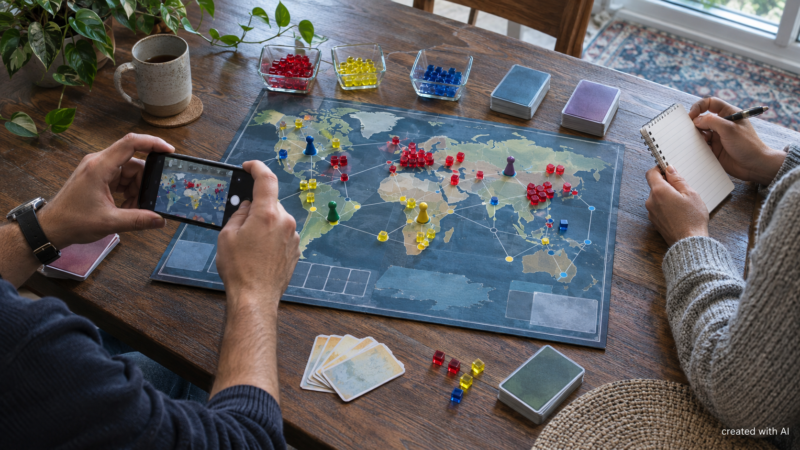
Start With the Way the Game Ended
The base game has three loss conditions: eight outbreaks, an exhausted disease cube supply when more cubes are needed, or too few Player cards for the next required draw. Each points towards a different question. A review of a depleted Player deck might focus on how many turns the group spent travelling before it attempted its final cure.
Before packing away, the group can record three things:
- The loss condition and the board state immediately before it happened.
- Which cures remained undiscovered and who held matching City cards.
- The decision the group wants to revisit, with the information available at that moment.
A photograph can preserve the pawns, cubes and research stations. Hands and discard piles need a separate record. A picture of the final board alone will miss a card spent two turns before the loss.
Find the First Useful Decision to Revisit
Suppose the Scientist is in Paris with three blue City cards. A teammate holds Paris and can reach the Scientist using ordinary movement. Instead, that teammate discards Paris for a Direct Flight to the meeting point. They arrive, but the card that would have completed the Scientist’s four-card set is gone.
A precise record also helps with casino game queries. When reading casino information at Royal Reels, a player can check whether an operator offers a game-history screen. A settled slot round may have a reference number alongside its stake and payout. That reference gives support a specific round to locate when checking a result.
For the Pandemic group, the useful record is the hand before the flight. The review can ask why the team valued the arrival over the card. Perhaps everyone was watching a nearby three-cube city. Perhaps someone forgot that the Scientist needs only four matching cards. Those explanations suggest different things to practise.
The discussion can include the players’ reasons for agreeing to the move. That helps reveal whether the missed option came from a rules error or an overlooked hand.
Rebuild One Alternative With Legal Actions
The alternative needs to work under the rules. Under the standard Share Knowledge action, both pawns must be in the city named on the card being transferred. Getting two players together somewhere else would still leave the Paris card in the wrong place.
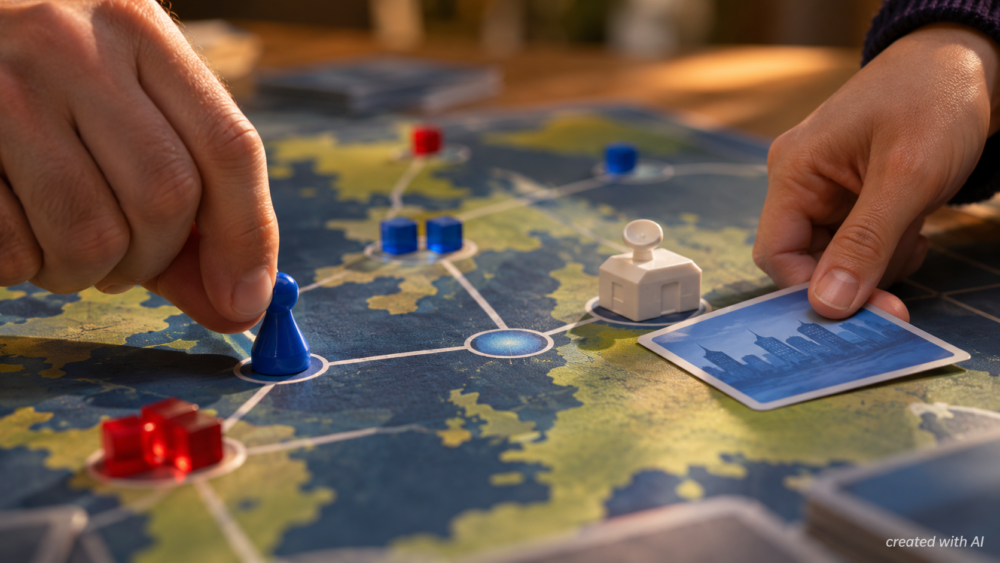
In the example, the teammate can travel to Paris without discarding the card, then use an action to give it to the Scientist. If Paris has a research station, the Scientist can discover the blue cure on their turn by spending the four matching cards and one action.
The group should count that route and check the turn order. Would the teammate have enough actions to make the transfer?
Would the Scientist act before the next dangerous infection? Could another player cover the threatened city? An alternative that requires five actions from one pawn needs more work before it becomes a lesson.
Judge the Choice With What Was Known
Once the final cards are visible, a different route can look obvious. A fair review returns those cards to the unknown part of the problem. It asks whether the proposed plan made sense before the team knew which cities would be infected.
The Infection discard pile can supply useful evidence. Epidemics return its shuffled cards to the top of the Infection deck, so the group may already have known which cities could reappear soon. That is information available during play. The exact order of those cards was still uncertain.
A short review can end with one change for the next session. Before a flight spends a City card, the group checks whether someone needs it for a cure.
That check takes seconds and keeps the lesson tied to a decision everyone can recognise. After the next game, the group can ask whether the check helped preserve a set or revealed a better travel option.
