Dungeons & Dragons Groups Are Associated with Higher Psychological Well-Being Among Players

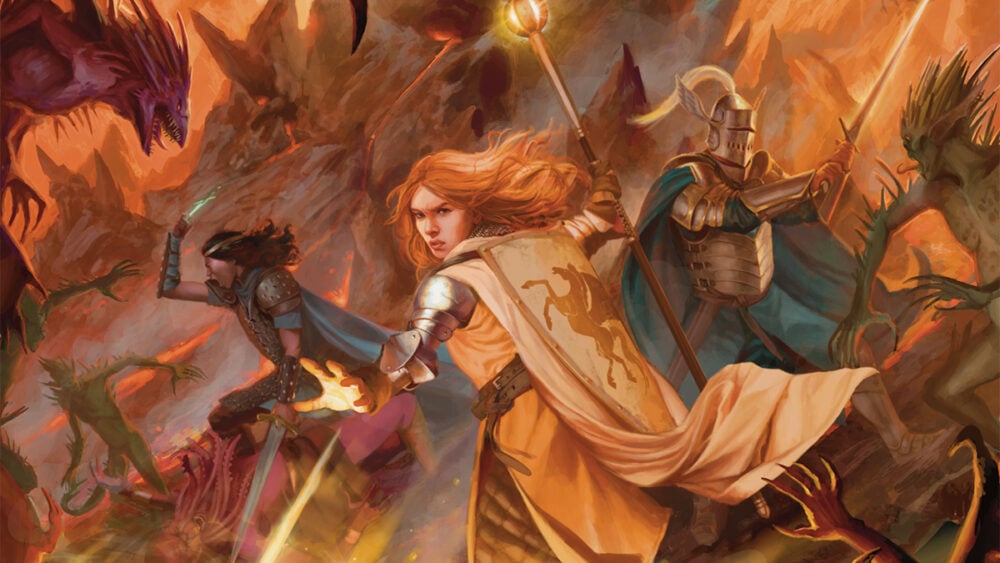
A survey of 305 participants from New Zealand found that D&D communities are perceived as among the most positive and supportive in players’ social lives.
A study conducted at the University of Canterbury in New Zealand examined Dungeons & Dragons tabletop role-playing game (TTRPG) groups through the lens of Social Identity Theory for the first time.
As part of an online survey, 305 adult D&D players and Game Masters (GMs) completed questionnaires on well-being, self-esteem, and sense of belonging, with a subset also completing a visual map of their social groups.
The results revealed that D&D groups received high ratings for positivity, support, and compatibility with other social circles, and that the sense of inclusion in such groups was statistically associated with measures of mental well-being and self-esteem.
Loneliness Is Growing and Becoming a Public Health Issue
According to New Zealand’s Ministry of Health, the proportion of adults who regularly experience loneliness rose from 9.9% in 2016 to 13.3% in 2024.
The World Health Organization estimates the global scale of the problem at approximately one in six people on the planet.
The consequences of chronic loneliness extend far beyond subjective discomfort. Scientific evidence points to persistent links with social anxiety, depression, substance use disorders, as well as a weakened immune system and increased risk of mortality. All of this makes the search for accessible and effective forms of social support an urgent priority.
From Alcohol to Gambling — Specific Risks of Loneliness That Are Discussed Less Often
Beyond depression and anxiety, chronic loneliness triggers a whole spectrum of behavioral problems. People deprived of regular social contact are more likely to engage in compulsive overeating, alcohol abuse, and uncontrolled social media scrolling.
All of these behaviors share one thing in common: they provide a quick dopamine release that people would normally obtain through live interaction and shared activities.
Gambling presents a particular danger. A lonely person finds it easier to get drawn in, because there is nothing to redirect their attention and no one to point out a developing habit in time.
The typical scenario unfolds as follows: first, a person is attracted by a no deposit sign up bonus at casinos, welcome bonuses, and other promotions.
They then begin to place small bets, become hooked on the feeling of excitement from a random win, and gradually what started as harmless entertainment develops into problem gambling. Research shows that people with low levels of social support face a significantly higher risk of developing gambling addiction.
This is precisely why the results of the New Zealand study on D&D groups appear particularly valuable. Tabletop role-playing games provide the same dopamine response through the excitement of dice rolls and the unpredictability of the narrative, yet they are embedded in live social interaction, which in itself protects against destructive behavioral patterns.
A Meaningful Group Matters More Than Formal Membership
Social Identity Theory, on which the study’s authors rely, holds that group membership becomes integrated into a person’s sense of self.
People adopt the values and norms of their communities, and in doing so gain a sense of meaning, trust, and emotional support. The more meaningful groups a person has in their life, the higher, according to available evidence, their quality of life and even their life expectancy.
However, not every group is inherently beneficial. The effect depends on whether a person perceives the community as their own, whether they feel a sense of similarity with other members, and whether they encounter stigma within it.
A running club is unlikely to help someone who feels like an outsider due to physical limitations, and a group with toxic norms may actually cause harm.
Why Researchers Turned to Tabletop Role-Playing Games?
Tabletop role-playing games (TTRPGs), and Dungeons & Dragons in particular, represent a form of cooperative collaborative storytelling in which participants, together with a Game Master (GM), build a narrative by making decisions for fictional characters. This is by definition a social and team-based activity that requires regular meetings and interaction.
At the same time, D&D’s reputation has been controversial for decades. In the 1980s, a wave of Satanic Panic in the United States attributed the game to the promotion of occultism, and certain publications accused TTRPG communities of xenophobia, racism, and cultural alienation. Some psychiatrists in later surveys perceived a link between role-playing games and psychopathology.
However, more recent qualitative research paints a different picture, one in which D&D serves as a safe space for building relationships, developing social confidence, and exploring identity. The authors of the new study sought to determine whether D&D groups constitute a “social cure” or a “social curse.”
The Specific Aim of the Study
The goal was to determine how D&D groups are perceived by participants in terms of meaningfulness and support, how they fit into the broader social network of a player, and whether a relationship exists between the characteristics of these groups and measures of well-being, self-esteem, and sense of belonging.
Who Was Surveyed and What Instruments Were Used?
The study included 305 adults (18+) from New Zealand who were playing D&D or running games as a Game Master at the time of the survey. The mean age was 31.6 years. Recruitment took place through online platforms (Facebook, Discord) using snowball sampling.
Participants completed questionnaires measuring mental well-being, self-esteem, and general sense of belonging, and also answered questions about inclusion and emotional closeness within their D&D group.
A separate component was the online Social Identity Map (oSIM), in which each participant could identify all communities important to them and draw connections between them.
Complete maps with information about D&D groups were provided by 135 individuals, and the conclusions about social network structure are based on this subsample.
D&D Groups Rated on Par with Family and Friends, Despite Less Frequent Contact
The D&D group was one of the most frequently named categories in participants’ maps. In terms of importance, it received a mean rating of 4.19 out of 5, comparable to friends (4.18) and slightly below family (4.48). The “positivity” of the D&D group was rated 8.62 out of 10, support 6.84 out of 10, and the sense of it being “typical of oneself” 7.12 out of 10.
Notably, participants had contact with their D&D group on average approximately 9.87 days per month, compared to 19 days with family and nearly the same with colleagues.
In other words, despite a comparatively low frequency of meetings, the D&D group retained a subjective significance comparable to that of one’s closest social circle.
Easy Compatibility with Friends, Not Always with Family
Among participants who completed the connection maps, 94% indicated that their D&D group was compatible with at least one other group. In total, 252 compatible and 48 incompatible connections were drawn between D&D and other communities. The picture proved to be nuanced:
- The greatest compatibility was recorded with friends (45 connections) and family (36 connections).
- The greatest incompatibility also fell on family (17 cases), followed by work (10) and sports (5).
This duality may suggest that a D&D group sometimes addresses needs that are not met within the family circle, and that its values do not always align with family norms.
D&D at the Center of the Social Map, but Centrality Alone Does Not Guarantee an Effect
D&D groups proved to be the most “connected” to other groups and occupied a central position in 55% of maps, ahead of friends (30%), family (26%), and work (11%). The more compatible connections a D&D group had, the higher players rated its positivity, support, and closeness to their identity.
However, a direct statistical relationship between this “centrality” and overall well-being measures did not emerge. The sheer number of overlaps between groups does not, in itself, appear to be a sufficient condition for psychological benefit.
The Key Mechanism Proved to Be the Subjective Experience of Inclusion
Analysis of correlations and regression models revealed a more nuanced chain of effects. Ratings of D&D group positivity and support were associated with how included and emotionally close a person felt with other members. Inclusion and closeness, in turn, showed significant associations with mental well-being and general sense of belonging.
In models predicting mental well-being, the greatest contribution came from the general sense of belonging in life, though the sense of inclusion in the D&D group also added a statistically significant contribution.
For self-esteem, the primary predictor was likewise general belonging, while the measure of emotional closeness within the D&D group unexpectedly emerged with a negative sign — meaning that greater emotional attachment to the group was associated with somewhat lower self-esteem.
The authors note that such paradoxical findings appear in the literature and may be explained by the fact that self-esteem is shaped not so much through attachment to a specific group as through personal achievements or the fulfillment of basic psychological needs.
What This May Mean for Everyday Life?
A D&D group, based on the data obtained, may serve as a regular safe space for cooperation and acceptance, even when meetings are infrequent.
Its compatibility with friends and family suggests it is not necessarily a closed “parallel world,” although value tensions with certain social circles are entirely possible. The accessibility of the format also deserves particular attention.
D&D requires no expensive equipment or specialized training, and the game’s growing popularity is attracting an increasingly diverse audience. In this sample, approximately 17% of participants identified as transgender or gender-diverse people, even though no targeted recruitment from these communities was conducted.
Caveats Worth Keeping in Mind
- The cross-sectional design captures associations but does not prove that D&D itself causes improvements in well-being.
- Participants were people already playing D&D, meaning they were predisposed to this format from the outset.
- Not all participants completed the social group map; the network-based conclusions are drawn from a subsample of 135 individuals.
- The data were collected in New Zealand and predominantly from an online-active community; their transferability to other countries and offline groups requires further investigation.
- The study focuses exclusively on D&D; whether the findings extend to other tabletop role-playing games remains unknown.
The Prospects of “Hobby Therapy” for Loneliness Exist, but Without Guarantees
Against the backdrop of a growing epidemic of loneliness, the findings point to the potential of D&D groups as an accessible and engaging form of social support.
Participation is associated with higher measures of well-being and sense of belonging; however, longitudinal studies and experimental research are needed to confirm causality and assess applicability as a full-fledged intervention.
